Showing posts with label Russia. Show all posts

Monday, September 20, 2021

Russia’s Rigged Election and Restrictions on Human Rights

 The results are out from Russia’s three day long election and unfortunately no surprises have been sprung upon the citizens who are sentenced to another term of Putin’s rule. Unlike elections before, there is yet again large suspicions of the elections legitimacy being raised. 

There have been multiple reports of ballot boxes being stuffed, forced elections, and most likely major miscalculations of online ballots. According to the New York Times, “Political analyst Tatiana Stanovaya, founder of independent R. Politik political consultancy, said Russia’s parliamentary vote was not really an election but “the administering of a planned result.” Eight parties, including Kremlin-friendly factions and several independents, were expected to get seats.” On a few separate occasions, the electoral commission CCTV cameras caught incidents of people shoving hundreds of papers to throw off the actual numbers of the election. Although Russia's Election commission has stated that all fraudulent votes have been annulled, critics continue to argue otherwise insisting that there must be at least thousands of different occasions in which unlawful voting has occurred, “A U.S. State Department statement said the conditions surrounding the election were “not conducive to free and fair proceedings.” It criticized both the “widespread efforts to marginalize independent political figures” before the vote and use of laws to restrict people’s political rights”. 
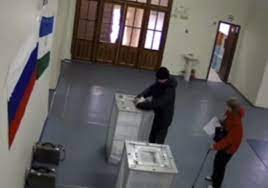
Another huge concern of the citizens is the new online election ballots, which Putin’s administration implemented for several areas in an attempt to supply safer voting options during the pandemic. Although it should have been a fairly simple process of counting these ballots through computer programming systems, there was quite a delay in getting the online polls out. The online ballots also have few ways to prove their legitimacy and have an inconsistent rate in which their votes are leaning towards Putin.

There have been several anonymous polls taken over the past few years analyzing the Kremlin party and Putin's presidency. The most recent of the polls concluded that there was only a 30% percent approval rate of his terms, and yet somehow he won with a 50% vote, over 10% higher than his election of 2016. By winning with a 50% majority vote, this also means that he won with a supermajority, allowing for him to change the constitution, dominate committees, and ram through laws with very little opposition or debate on the matter. There have also been other incredibly sketchy occurrences dealing with those who disagree from the United Russia party. “Opposition leader Alexei Navalny is in jail. His electoral network was declared an extremist organization in June and effectively banned. Its leaders, other opposition figures, human rights activists, human rights lawyers and independent journalists have been arrested or fled the country.”
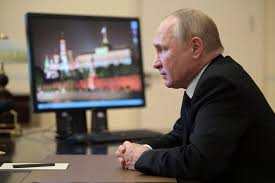
These are all signs of a democratic downfall, and the public says that there is little hope for change of the dictatorship like rule of the Kremlin party anytime soon. An American reporter writes, “We call upon Russia to honor its international obligations to respect human rights and fundamental freedoms and to end its pressure campaign on civil society, the political opposition, and independent media,” and one can only hope change is enacted sooner rather than later. 

https://www.cnn.com/2021/09/20/europe/russia-election-analysis/index.html

https://www.washingtonpost.com/world/europe/russia-election-results/2021/09/20/351973a4-1a05-11ec-bea8-308ea134594f_story.html

https://www.theguardian.com/world/2021/sep/20/pro-putin-party-wins-majority-in-russian-elections-despite-declining-support


France Alarmed by Russian Mercenary Deal with Mali

On September 9th, France 24 news reported an alleged deal between Mali’s ruling military junta and the shadowy Russian-backed security contractor Wagner Group. This comes at a time when France has begun withdrawing its forces from the Sahel region, an area of Africa which encompasses Mauritania, Mali, Niger, Chad, Burkina Faso, and several other African countries. The Sahel is a semi-arid zone bordering the Sahara desert, with its frequent droughts and sandstorms being exacerbated by climate change. Moreover, countries inside of it are known for extreme instability, leaving large parts of the Sahel an ungoverned haven for extremist groups.


France has been involved in fighting Islamic extremism in the Sahel for over 8 years alongside its former colonies, earning the nickname France’s Forever War. According to the New York Times, just this past year Niger, Mali, and Burkina Faso have “lost hundreds” of soldiers due to raids by Islamic terrorists on military outposts.
French Foreign Legionaries in the Sahel


As French commitment seems uncertain, another powerful player has moved into the conflict: The Wagner Group. First appearing during Russia’s fighting in Ukraine and annexation of Crimea in 2014, Wagner has been on the ground wherever Russian interests are. In Syria, they aggressively backed Bashar Al-Assad’s regime, even at one point engaging US special forces in the region in 2017. In 2019, they provided security for Venezuelan dictator Nicolas Maduro, a close friend of Russian oil companies, during wide scale protests. Since then Wagner Group has moved into Africa, including Libya, Sudan, Central African Republic, Zimbabwe, Madagascar, and Mozambique.

Wagner Group acts like a multinational corporation directly under Russian government control, except one problem: it doesn't exist. The name Wagner is a name given to a intentionally confusing web of overlapping ownership of shell companies, mercenary groups, and logistic chains linked to the very top of the Russian government tracked down by investigative journalists and government agencies. The fact that it appears decentralized allows it to avoid legal troubles. Using its connections to Russian Military and Intelligence agencies, Wagner provides trained and experienced personnel to the rulers of destabilized countries in exchange for highly profitable drilling and mining concessions to Russian companies. Many of these areas are often too dangerous for regular companies to operate, due to rebel or extremist groups; however Wagner has the firepower to protect its assets, but often at the expense of innocent civilians. All of this comes with complete plausible deniability for the Russian government, who do not have to answer for war crimes and human rights violations committed by the mercenaries in foreign countries. Arguably, Wagner profits from these conflict zones, and has no desire to improve their situations.
In response to Wagner's deal with Mali, French Foreign Minister Jean-Yves Le Drian said: "Wagner is a militia that has shown itself in the past in Syria and Central African Republic to have carried out abuses and all sorts of violations that do not correspond with any solution and so it is incompatible with our presence."
In a recent update September 16th, French forces announced that they had killed Adnan Abou Walid al Sahraoui, leader of the Islamic State in the Grand Sahara (ISGS), mastermind behind attacks on French aid workers and US special forces in the region of the Sahel. Despite this good news, the fact remains that at some point France will leave the Sahel, with almost nothing achieved; meanwhile, Russian influence in Africa will increase with the involvement of the Wagner Group.


Sources


https://www.france24.com/en/africa/20210915-french-troops-neutralise-leader-of-islamic-state-in-the-greater-sahara-macron-says


https://www.france24.com/en/africa/20210914-reports-of-russia-mercenary-deal-in-mali-alarm-france?utm_source=dailybrief&utm_medium=email&utm_campaign=DailyBrief2021Sep15&utm_term=DailyNewsBrief


https://www.diplomatie.gouv.fr/en/french-foreign-policy/security-disarmament-and-non-proliferation/terrorism-france-s-international-action/article/france-s-action-in-the-sahel


https://www.nytimes.com/2020/03/29/world/africa/france-sahel-west-africa-.html

https://www.csis.org/blogs/post-soviet-post/band-brothers-wagner-group-and-russian-state

https://www.aa.com.tr/en/world/russias-wagner-group-reportedly-deployed-in-africa/2165414

Sunday, February 07, 2021

Protests in Russia: Is there hope for the democratic model?


    President Putin has been in power (either as the Russian president or prime minister) for over 20 years. The constitutional changes made in 2020 allow him to run for reelection two more times and if he is reelected, he will remain Russia’s president until 2036 (Reuters 2020). One of the biggest critics of Putin and an opposition leader is Alexei Navalny who was severely poisoned last year with Novichok, a Soviet-era nerve agent (BBC 2020). Many, including Navalny, believe that Putin is behind the poisoning of the prominent opposition leader. After receiving medical treatment in Germany, Navalny returned to Moscow on January 17th, 2021 when he was immediately arrested. He was sentenced to nearly three years of prison time for failing to report to the police for his suspended sentence from 2014. Navalny’s team argued that these charges were absurd because he had reported to the police twice a month before his poisoning and it was impossible to do so after the Novichok attack since he was being treated in Germany and in a coma for a period of time (BBC 2021). The accused argued that the sentence was fabricated in order to silence him, saying that “[s]omeone did not want [him] to take a single step on the territory of Russia, and we know why. The reason is the fear of the man in the bunker” (Ray 2021).


Macdougall, J. (2020). https://www.themoscowtimes.com/2020/09/02/novichok-use-shows-only-state-could-have-poisoned-navalny-aide-a71326

    Navalny has been challenging the Kremlin and calling for anti-corruption for years. His most recent criticism of President Putin is the video exposé - “Putin's palace. History of world's largest bribe”. In it Navalny explains the history of Putin’s corruption schemes and his rise to power, and he describes the extremely expensive palace by the Black Sea, which Navalny claims was built for President Putin. Navalny’s arrest together with his continued criticism of Putin and work for anti-corruption in Russia has inspired millions of people to protest his arrest and call for a better Russia. Not all protesters fully support Navalny, but they nonetheless risked being subjected to violence because they don’t want to live in a country where people are scared to speak out and they strongly believe Russians deserve better (Roache 2021). Thousands of people are being arrested and authorities are using violence and brutality against the protesters. Amnesty International’s Moscow Office Director, Natalia Zviagina, says that “Russian authorities have arrested so many people in recent weeks that detention centres in Moscow have run out of space, and peaceful protesters are being held in deportation facilities” (Amnesty International 2021). The fact that Russia is a centralized state with a high degree of autonomy and its history as a communist state offer some clarity as to why the government would have a strong reaction to protesters. The Kremlin's response to these peaceful protesters and the use of force to silence critics serve as a reminder of what those in power are willing to do to remain in power, completely disregarding what their citizens demand.


Shemetov, M. (2021). Law enforcement officers detain a man during a rally in support of jailed Russian opposition leader Alexei Navalny in Moscow, Russia [Photo]. Reuters. https://www.reuters.com/news/picture/russia-detains-thousands-at-protests-aga-idUSRTX8SS94

    Russia’s demand for less corruption and a better future is not an isolated case. Many parallels can be drawn between the Russian protests and the protests in Belarus against the electoral fraud in the presidential elections that pronounced a landslide victory for Lukashenko in 2020. Lukashenko has been the president of Belarus for 26 years and the opposition leader, Sviatlana Tsikhanouskaya, was exiled from her country. Like in Russia, authorities in Belarus have used violence against peaceful protesters. The government has subjected many journalists to intimidation, violence and jail, actively trying to silence everybody who would speak against Lukashenko (Bushuev 2021). Last August Lukashenko said that Putin had promised to help him in case he needed assistance to ensure control in Belarus. Both men have been in power for a long time and clearly signal to their citizens that they will not tolerate criticism and opposition. Both countries are facing major challenges with their governments which trying to hold on to power by enforcing means to silence those who voice their discontent.


Fedosenko, V. (2020). An injured man smokes a cigarette as he attends a rally following the presidential election in Minsk, Belarus [Photo]. Reuters. https://www.reuters.com/news/picture/street-protests-in-belarus-after-contest-idUSRTX7OMH7 

    We are yet to see what the protests both in Russia and Belarus result in - whether the vast number of people speaking up and demanding justice will awaken a greater democratic future or if the appalling use of brutality by the government will erase any such hope. Judging from the Russian government’s desire to once again be considered a super power (after loosing that status following the end of the Cold War) and the fact that it seems to be unbothered by threats of sanctions, we may expect authorities to continue to employ violence and for the country to move further and further away from the democratic model. 

Link to relevant information regarding the protests in Russia - https://www.amnesty.org/en/latest/news/2021/01/russia-appalling-use-of-force-and-arrests-of-peaceful-protesters/


References:

Reuters. 2020. “Constitutional changes are the ‘right thing’ for Russia: Putin.” https://www.reuters.com/article/us-russia-putin-constitution-idUSKBN2460OD (February 7, 2021).

Ray, Siladitya. 2021. “‘I Was In A Coma’: Navalny Ridicules Allegation He Failed To Meet Parole Officers In Moscow Court Hearing.” Forbes. https://www.forbes.com/sites/siladityaray/2021/02/02/i-was-in-a-coma-navalny-ridicules-allegation-he-failed-to-meet-parole-officers-in-moscow-court-hearing/?sh=51bd24323771 (February 7, 2021).

BBC. 2021. “Alexei Navalny: Russia’s Vociferous Putin Critic.“ https://www.bbc.com/news/world-europe-16057045 (February 7, 2021).

BBC. 2020. “Navalny ‘poisoned’: What are Novichok agents and what do they do.” https://www.bbc.com/news/world-europe-43377698 (February 7, 2021).

Bushuev, Mikhail. 2021. “The Lukashenko regime’s persecution of Belarus journalists.” DW. https://www.dw.com/en/the-lukashenko-regimes-persecution-of-belarus-journalists/a-56377758 (February 7, 2021).

Roache, Madeline. 2021. “‘The Whole System Needs Changing.’ The Russia Protests Are About More Than Just Alexei Navalny.” Time. https://time.com/5936827/russia-protests-alexey-navalny-inequality/ (February 7, 2021).

Amnesty International. 2021. “Russia: Appalling use of force and arrests of peaceful protesters.” https://www.amnesty.org/en/latest/news/2021/01/russia-appalling-use-of-force-and-arrests-of-peaceful-protesters/ (February 7, 2021).

Навальный, Алексей. (2021). “Putin’s Palace. History of world’s largest bribe.” YouTube. https://www.youtube.com/watch?v=ipAnwilMncI&t=1578s (February 7, 2021).


Featured Post

Turkey's Ban on Insults against Erdogan

 Since 2005 Turkey has had a law against insults against Erdogan known as Article 299. The article declares that citizens can be imprisoned ...