Thursday, October 01, 2020

The Presidential Debate: A Spectacle or Sign of Something More?


(Photo: CNN)


In the United States, there’s no doubt that political debates, particularly presidential ones, are a spectacle. On Tuesday, the country watched what was described by CNN’s Jake Tapper as “a hot mess inside a dumpster fire inside a train wreck” (CNN). Moderator Chris Wallace desperately tried to rein in the President’s frequent interruptions, but to no avail. 90 minutes blew by in a chaotic whirl and many Americans turned off their TVs wondering what exactly it was they just watched. 

Political debates hold a special place in politics across the world. Most countries in the European Union hold televised debates, as do Malawi, Indonesia, India, Uruguay, Iran, and Liberia. The U.S. Commission on Presidential Debates gives assistance to nations who want to establish their own debates and sends teams of experts to advise them on how to form these events, holding workshops where organizers from across the world share ideas and experiences (Trainer). Overall, 78 countries have debates that reflect the US model.

Debates have historically held a great deal of weight in elections. April 14, 1994 marked the day of South Africa’s first presidential debate between Nelson Mandela and F.W. de Clerk before its momentous election (nelsonmandela.org). Many believe Justin Trudeau’s performance in Canada’s 2015 debate contributed to his party’s victory in the general election.

Of course, the purpose of a presidential debate is supposed to be a noble one. A moment when voters can watch candidates go toe to toe, speaking on issues that matter and clearly putting forth their arguments so that the people can make an informed decision on who they want to represent them. To many, a political debate is a reflection of democracy at its finest.

On televisions across the world, America did not shine very brightly two days ago. German public broadcasting service Deutsche Welle called the debate “a complex and utterly disordered and mismanaged situation: a muddled mess.” (Deutche Welle). Bruce Wolpe, chief of staff to former Australian Prime Minister Julia Gillard wrote the event was “a horrible, disastrous, useless session that left viewers utterly disappointed” (Politico). The reviews only get worse. 

Tuesday’s affair is perhaps an excellent manifestation of the rapidly changing political norms we have seen in the past few years. The United States holds a prominent place in the world, but for many other countries, their respect for the US is declining. German political researcher Stephen Bierling shares that “The U.S. has always been a democratic role model, but our motherland of democracy has gone down a dangerous path” (Washington Post). In a majority of countries, those in the general public with a favorable view of the United States is at its lowest point since the topic was monitored beginning two decades ago. 


The above image depicts those with a favorable view of the U.S (Pew Research Center)


                                                                  (Pew Research Center)


A large part of these low numbers is on account of the world’s view of the U. S coronavirus response, which many dubbed disastrous. It is clear that the globe no longer sees the US with the eyes it once did, due to reasons ranging from climate change, its handling of coronavirus, and perhaps its lack of decorum on the world stage. In most other countries, serious political debates are thoroughly immersed in policy and controlled strictly by the moderator. Accordingly, Tuesday’s tumult was watched with wide eyes and a certain level of shock. However, it begs the question if what the world saw in the presidential debate is a sign of something bigger. Is the United States losing its place in the world?


Sources:


https://www.nelsonmandela.org/on-this-day/entry/nelson-mandela-and-president-fw-de-klerk-hold-final-debate-before-south-afr


https://www.dw.com/en/donald-trump-and-joe-biden-clash-in-chaotic-first-debate/a-55098690


https://www.cnn.com/videos/politics/2020/09/30/jake-tapper-dana-bash-debate-reaction-vpx.cnn


https://www.politico.com/news/2020/09/30/the-worst-presidential-debate-in-history-423765


https://www.washingtonpost.com/world/2020/09/30/trump-biden-debate-global-reaction-us-decline/


https://www.pewresearch.org/global/2020/09/15/us-image-plummets-internationally-as-most-say-country-has-handled-coronavirus-badly/


Tuesday, September 29, 2020

Multi-party or two-party system? Echoes of Weimar Republic

As the 2020 presidential election approaches, many US voters find themselves in a difficult situation. With little common ground among the Democratic and Republican candidates, the polarization of both parties has left many voters feeling unrepresented. People start to question the legitimacy of the two-party system--does it undermine democracy? Is it really a favorable system for electing the optimal candidate? Would the introduction of more political parties mitigate polarization and increase representation?

Despite the concern of deviating from electing the best leader, the two-party system unarguably promotes governmental stability, because a single party can win a majority in the legislature. In a multiparty country, on the other hand, the formation of a government depends on the maintenance of a coalition of parties with enough total strength to form a legislature majority. The weakness of ties that bind the coalition may threaten the continuance of a cabinet in power. A constantly changing government is also unstable in terms of law making.

The two-party system tends to maintain the balance of powers and moderate radical ideologies. To appeal for the support of a majority of voters, a party must present a program sympathetic to the desires of most of the politically active elements of the population. An effort must be made to reconcile the conflicting interests of different sectors of the population. This enables the party to resist the demands of policies urged by any particular extremist element. 

A multiparty system could cultivate factions. In the Federalist.10, James Madison warns about the potential dangers of factions and how it disrupts democracy. Against "the minor party," there could emerge "an interested and overbearing majority.” In a multiparty system, under special times, extreme parties could quickly draw dominance and undermine the work of democracy. The collapse of minority governments in the 20s to 30s German Reichstag remains a traumatic failure in the world’s history.

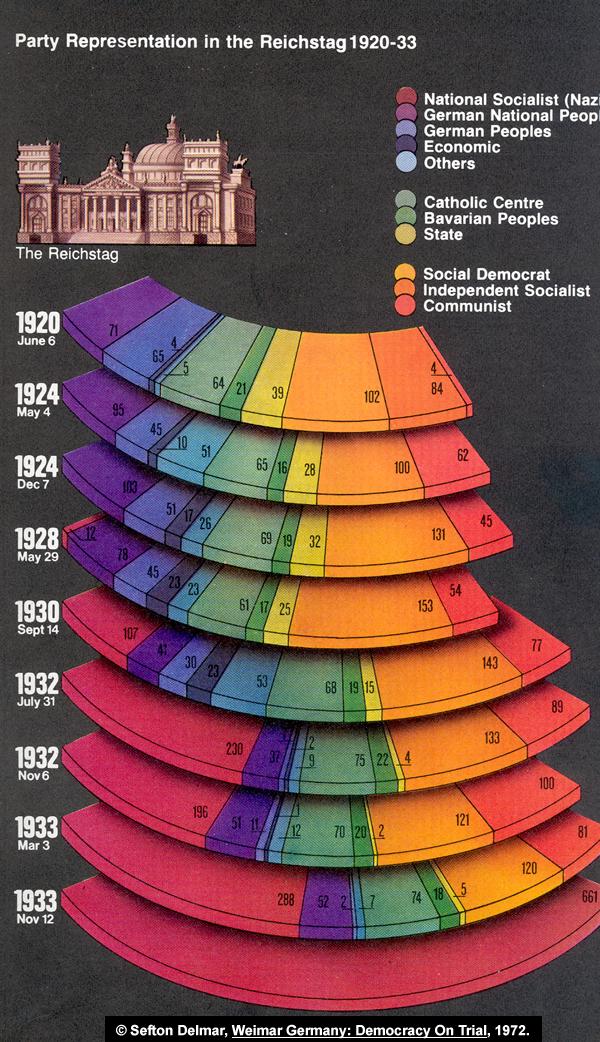
Between 1920 and 1933, the Reichstag was filled with a surplus of middle and small-sized parties, occupying all parts of the political spectrum. With the removal of the authoritarian regime, Germans were curious about the political direction their nation would take. In addition, the Weimar constitution and electoral system encouraged the formation and participation of political parties, no matter their size. A party needed only to assemble 50,000 to 60,000 votes to win a seat and have a voice in the national assembly.


In the 1930s, parliamentarians started to lose the ability to find compromises only once the Great Depression devastated the German economy. The economic turmoil following the Black Tuesday of 1929 attracted people to extreme ideologies in an extreme time of crisis. The Nazi party began to flourish under such circumstances. The rise of the Nazi party in 1932 has dramatically changed the composition of the Reichstag, as the Nazis absorbed votes and seats from other right-wing nationalist parties.


Multi-party systems also tend to be more common in parliamentary systems than presidential systems and far more common in countries that use proportional representation compared to countries that use first-past-the-post elections.  In first-past-the-posts, each district selects one person to fill a seat by a plurality of the vote. This electoral system naturally gravitates toward a two-party system, in which only two parties have a real chance of electing their candidates to office.


Same as in 1929, we are now in a time of unpredictable changes and unprecedented crisis. The pandemic, as well as racial injustices in American society, has torn people apart. These are easy times for the growth of radicalized ideologies. Although some people think this year’s election is disastrously polarized, the adoption of a multi-party system might have escalated the division in the country.

Would a multiparty system work better for the United States at the cost of risking the stability of a two-party system? That’s something worth thinking about.


https://www.nytimes.com/roomfordebate/2015/09/09/the-power-of-third-party-campaigns/the-two-party-system-is-imperfect-but-more-effective


http://cincinnatirepublic.com/federalist-no-10-inevitable-danger-factions/


https://alphahistory.com/weimarrepublic/weimar-political-parties/


https://www.britannica.com/topic/two-party-system#:~:text=The%20two-party%20system%20is%20said%20to%20promote%20governmental,enough%20total%20strength%20to%20form%20a%20parliamentary%20majority


Monday, September 28, 2020

Why does there continue to be a widening gender gap in US voting?

Since the inception of the 19th Amendment, women have voted at a higher rate than men, with over 63% of women stating that they had voted in the presidential election of 2016 compared to 59% of men. This is not a new trend, but rather one dating back to the 1980s. Starting in the presidential election of 1984, a gender gap began to develop in each election, slowly increasing over time (Igielnik, 2020).

While not substantial, a 4 point difference raises some questions into why each gender votes the way they do. Why does this gender gap exist within voting in the United States, and why does it continue to widen? A plausible explanation can be found within the topic and history of women’s rights. Women have been able to vote for a much shorter portion of US history than men, as women’s right to vote was only established a mere century ago. Looking at this, one can assume that women have possibly been motivated by this somewhat recent accomplishment to make their voices heard within the US. In contrast, men, having already had the right to vote for a few centuries, view it with slightly less importance.

Another factor could be the breaking of older, societal norms. As stated by scholar Susan Carroll, “‘Women had been socialized pre-suffrage,... Maybe it wasn’t proper for women to be involved in politics’” (Rampell, 2014). Both men and women had been conditioned to view women’s suffrage as socially unacceptable and inappropriate. When women finally began to realize the falsity of this belief, the societal norm began to break down, slowly causing more and more women to vote. This breakdown has continued to increase, resulting in a slowly-widening gender gap.

A similar gender gap emerged in the 1990s within party affiliation and candidate choice, with women being more likely to identify as Democrats and men more likely to identify as Republicans. This gap has continued to widen over time, hitting an all-time high in the 2016 election with a whopping eleven-point difference between men and women. 52% of men voted for the Republican candidate Donald Trump compared to a mere 43% of women (Center for the American Woman and Politics, 2017).


Female voters’ tendency to affiliate with the Democrat Party is primarily due to the party's stances on certain political issues, particularly abortion, a topic which many women feel passionately about. When Ronald Reagan’s administration announced their opposition to abortion in 1980, many female voters were pushed away from the Republican Party and into the Democratic Party, creating the start of the gender gap in party affiliation (Arnold, 2020). As the Democratic Party continues to espouse socially progressive views, they continue to attract groups, such as women, that are disillusioned by the Republican Party.

The gender gap in US voting will likely continue to slowly increase unless the Republican Party begins to become more involved in social politics in a way that aligns with the political beliefs that align with those of most women. Until then, the gender gap will continue to widen as politics become increasingly polarized.


Works Cited:

Arnold, L. (2020, August 27). The Gender Gap in Voting. Bloomberg. https://www.bloomberg.com/quicktake/gender-gap

Center for the American Woman and Politics. (2017, January). The Gender Gap:
Voting Choices In Presidential Elections. Center for American Women and Politics (CAWP). https://cawp.rutgers.edu/sites/default/files/resources/ggpresvote.pdf

Igielnik, R. (2020, August 18). Men and women in the U.S. continue to differ in voter turnout rate, party identification. Pew Research Center. 

Sunday, September 27, 2020

Do Autocracies Fair Better During A Pandemic?

Within the course of the COVID-19 pandemic there has been debate over whether the structure of government within a country impacts its response to handling and containing COVID cases, particularly in autocracies.

Originally surfacing in China, a country with an authoritarian government, the outbreak spread quickly across the globe. Chinese President, Xi Jinping had major success quelling the spread within the country as “Strong authoritarian regimes excel at mass mobilization” (Yuen Ang

It is often accepted within many nations that with extraordinary circumstances - often come necessary extraordinary measures. Within these circumstances comes a perfect opportunity for autocratic leaders to seize further control. According to an article published in The New York Times in April, "Critics say some governments are using the public health crisis as cover to seize new powers that have little to do with the outbreak, with few safeguards to ensure that their new authority will not be abused." Some of the autocratic regimes who have seized upon the movement include Cambodia, Egypt, El Salvador, Syria, Thailand, Turkey, Uganda, and Vietnam." (Foreign Affairs)

Tools such as contact tracing provide an opportunity for breaches of privacy to occur in the fact that governments can use the spread of disease as a necessary explanation for breaching the privacy of individuals. The Chinese government has been "Collecting a vast swatch of users' data -- including their location -- China's quarantine apps have empowered authorities to use big data to locate threats and take preventive action" (Politico)

Photo Courtesy of CNN

Although Xi Jinping and his government were able to quell the spread of disease, questions arise surrounding the cost at which the spread was controlled. The extreme quarantine measures China adopted appeared reminiscent of wartime. The government enacted measures "banning the private use of cars, forbidding residents from leaving their apartment without permission and requiring purchasers of cold medicine to disclose their temperature address, and identification number at the pharmacy." (NPR)

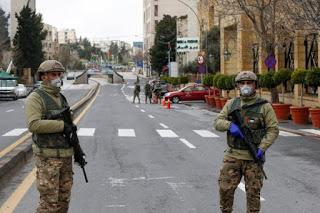
Other mechanisms like free speech can also be threatened in the midst of disease. In Jordan, another autocratic country that successfully contained the spread, the King has “have instituted a series of measures which have limited the space for public debates on the government’s policies (Jorgen) Speech has been threatened in other autocratic governments by detaining critics, health care workers and journalists during the pandemic. 

Photo Courtesy of Egypt Independent

Although China, Jordan and Singapore have seen success, other autocracies have struggled to contain the spread, including Iran. The Iranian government downplayed the severity of COVID, and then proceeded to sit on thousands of tests, which skyrocketed both coronavirus cases as well as unrest amongst Iranians, as well as distrust in the government. (Radio Free Europe

Democracies are no different than autocracies in the fact that they have also had a plethora of failures and successes. The United States, Spain, and Italy have all struggled to contain the virus, experiencing high case counts and poorly enforced safety measures. But others like Germany, Finland and New Zealand have performed amongst the best in the world. 

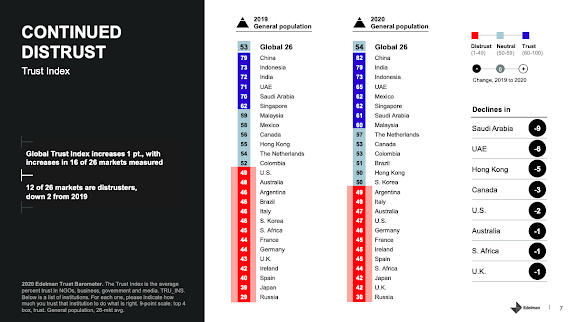
In order for safety measures to succeed, the people must be willing and voluntary to participate in them. According to an artice from  the Carnegie Endowment for International Peace, public trust is what is essential for a successful pandemic response. With high trust in government comes the ability to enforce lockdowns and quarantines. Today, public trust in government doesn’t seem to align with democracies or autocracies. 

According to the Edelman Trust Barometer, some of the most autocratic states have some of the highest numbers of trust from their citizens such as Singapore and China  (Carnegie) While some democratic states like the United States have low levels of public trust. 

Courtesy of the Edelman Trust Barometer

In the following years, we’ll be able to compare the responses of autocratic governments more accurately. But for now, what seems apparent is that trust in government is essential in containing the spread of disease for democracies. Pandemic responses are not necessarily equated to type of governance, but heavily influenced by a country's resources and capacity in tandem with citizen’s perception of their own leaders. 

Sources: 

https://www.politico.com/news/2020/06/08/government-privacy-coronavirus-china-308105 

https://www.nytimes.com/2020/03/30/world/europe/coronavirus-governments-power.html

https://www.rferl.org/a/iran-sudden-spread-of-coronavirus-leads-to-distrust-in-state-handling-of-disease/30447874.html 

https://carnegieendowment.org/2020/03/31/do-authoritarian-or-democratic-countries-handle-pandemics-better-pub-81404 

https://www.nature.com/articles/s41562-020-0872-3 

https://reliefweb.int/report/jordan/jordan-and-covid-19-effective-response-high-cost 

https://www.npr.org/sections/goatsandsoda/2020/02/21/806958341/restrictions-and-rewards-how-china-is-locking-down-half-a-billion-citizens 


https://www.foreignaffairs.com/articles/world/2020-06-13/democracy-versus-pandemic 


Friday, September 25, 2020

Can peace finally exist within the Balkans?


Trigger warning: This post contains images and topics some might find sensitive. Please proceed with caution.


              On September 4th, 2020, President Donald J. Trump brokered an economic peace deal between Serbia and Kosovo, two countries that have historically been at odds with each other, following centuries of conflict. The enacting of the peace deal between the countries marked a step forward for the region, but many are still skeptical about long term peace within the Balkans.

               Most people with familial ties to the region still remember the wounds caused by the Civil War of the former Yugoslavia. Both Serbia and Croatia, states within Yugoslavia, intended to create greater nation states of each. Their “Greater States” would be ethnically pure, either Serbian Orthodox in the Serbian region or Croatian Roman Catholic in the Croatian region. Both Serbian and Croatian forces invaded Bosnian regions, following the secession of Bosnia during a referendum for independence in the Yugoslav congress, marking the beginning of the most brutal conflict on European soil since the Second World War.

               The intertwined communities within Bosnia, which were propped up during the Communist Reign of Tito, caused the war to be a bloody internal conflict between neighbors at times. Multiple concentration camps across the region were established by both Serbian and Croatian forces, leading to countless torturing and killing of men and boys, while rape camps promoted the invaders to “cleanse” the Bosnian Muslim population with their “superior” genetics.

Trnopolje camp, 1992

               One of the most notable occurrences during the war was the Srebrenica Massacre in 1995, which is commemorated on July 11th every year. July 11th, 2020 marked the 25th anniversary of the event that killed a reported 8,372 Bosnian men and boys after Serbian forces overtook a UN Safe Zone in Bosnia. The generals involved in the event, Radovan Karadzic and Ratko Mladic, have been convicted and charged with multiple offenses by the ICTY, but many others are left still roaming the streets.

               The ICTY did not reach their conclusions haphazardly, rather they collected all the evidence they could. This included aerial photographs of all the scenes and witness testimonies, such as Witness K in 2001 reliving his experiences during the Srebrenica Massacre.

“I was not even able to touch the floor, the concrete floor of the warehouse… After the shooting, I felt a strange kind of heat, warmth, which was actually coming from the blood that covered the concrete floor, and I was stepping on the dead people who were lying around. But there were even people who were still alive, who were only wounded, and as soon as I would step on him, I would hear him cry, moan, because I was trying to move as fast as I could. I could tell that people had been completely disembodied, and I could feel bones of the people that had been hit by those bursts of gunfire or shells, I could feel their ribs crushing. And then I would get up again and continue . . . .”

Murder room in the Kravica Warehouse, Srebrenica
               

                A large source of tension between the countries involved is the denial of such acts. In August 2020, Ratko Mladic appealed his case again, continuing to state that nothing had occurred in Srebrenica. Further, in 2019 Karadzic attempted the same in the courts. Both are serving life sentences at this point. A major problem lies within the governments and extremists in the regions. The Serbian and Croatian governments have yet to admit to their acts, and both deny the atrocities that have taken place during the war.

               Despite the inactions of the governments and ruling parties, most people believe the true tensions arise within the populations of the countries. Members in all countries involved hold hatred towards the others. Bosnians, who believed in the communist slogan “bratsvo I jedinstvo” (brotherhood and unity), felt betrayed by their neighbors, while other parties involved still view their imprisoned generals as heroes. Evidence of this can be seen in this clip from July 10th, 2020, the night before the 25th anniversary of Srebrenica. Extreme Serbian nationalists gathered in the streets of Belgrade to celebrate and chant “Ratko Mladic” in addition to “Srebrenica wasn’t a genocide”.


Serbian Nationalists, July 10th, 2020, Belgrade, Serbia

               Actions such as these cause some call into question whether peace can ever truly be reached in this region. All parties felt betrayed by the Dayton Agreement that formally ended the conflict in 1995, and much of the hatred from the 1990’s still remains within the population. International courts and statements from world leaders have done little to promote peace and unity within this region, but that does not mean it is impossible.

               The recent deal brokered by President Trump proved this fact. The truth is all regions in the world can become peaceful. Peace requires cooperation on all sides, which with emotion based policy can be harder to achieve. The economic peace deal provided the first step in the uphill battle, but with the potential for more deals on the horizon, peace is absolutely possible. A peaceful and prosperous Balkan would benefit all parties involved, and as more time passes from past events, the chance of them recognizing this fact and working towards a better future grows exponentially. If all continues as is, there is no reason to doubt that a peaceful Balkan can exist in the near future.


https://www.whitehouse.gov/briefings-statements/remarks-president-trump-president-vucic-serbia-prime-minister-hoti-kosovo-trilateral-meeting/

https://www.icty.org/x/cases/krstic/tjug/en/krs-tj010802e.pdf

https://www.theguardian.com/world/2008/jul/27/radovankaradzic.warcrimes2

https://www.bbc.com/news/world-europe-53917671

https://www.instagram.com/p/CCg0y0RDUex/?igshid=grwmtscqivn9

http://www.bosnjaci.net/print.php?pid=34776

Wednesday, September 23, 2020

How many people does it take to oust a political leader?


https://www.bbc.com/news/stories-54142487

What are the qualities that make protest effective? 

How many people need to take to the streets in order to oust a political leader? 

As we know country wide protest can cause tremendous political change. Take for example Zine al-Abidine Ben Ali and the beginning of the Arab Spring where countries across Northern Africa and the Middle East overthrew oppressive governments. For an example we might understand better, look at South Africa and the anti-apartheid movements that we are emulating in class. Historically these are successful protests that actually inspired great change in their regions.

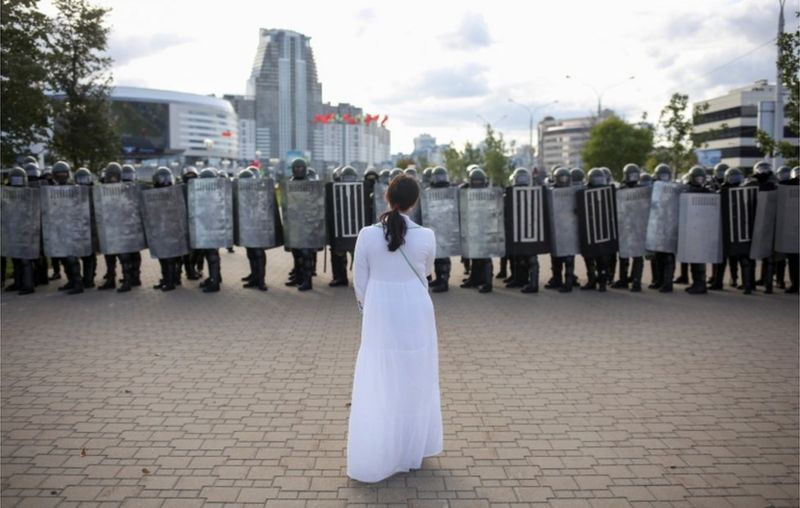
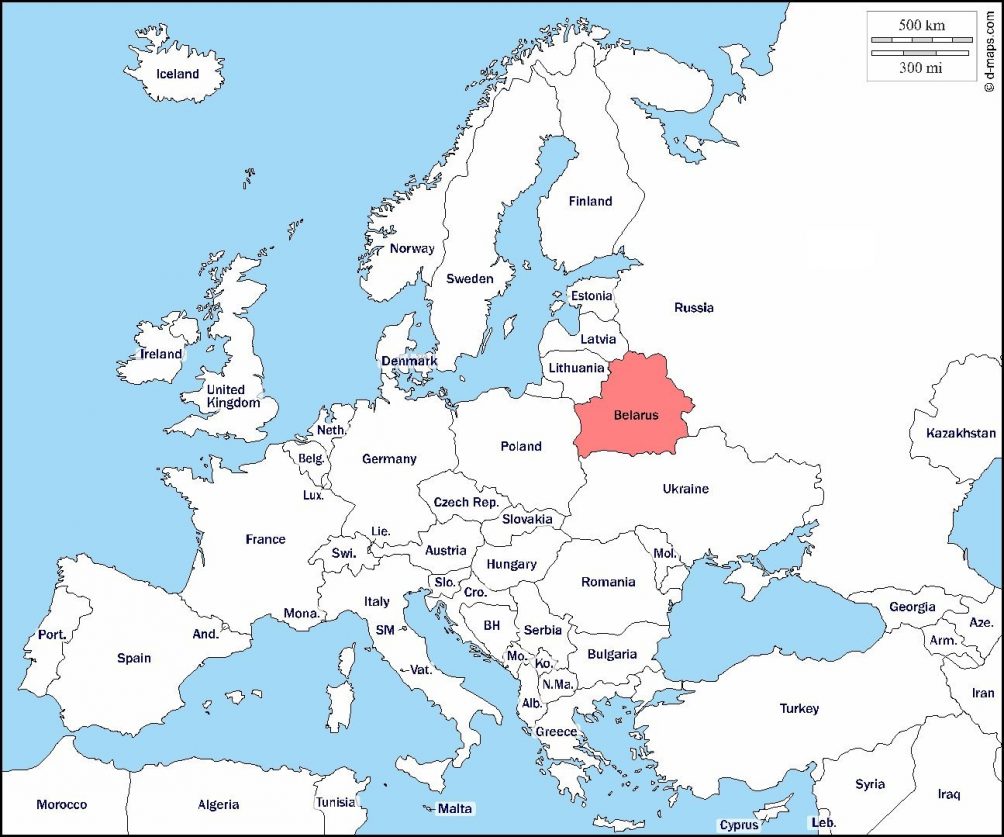
Some of the most recent political demonstrations are from Belarus (pictured here)2


Tens of thousands of Belarusians are marching in response to a disputed election. Police have been arresting non-violent protestors and subjecting them heavy surveillance, sudden detention and torture. The question of whether or not this protest will succeed can be illuminated by the insight of Professor Erica Chenoweth, Professor of Political Science at Harvard University. 

Chenoweth first take time to differentiate between forms of protest by first dividing them into forms of violent and non-violent protest. Violent protests would include assassination or rioting whereas non-violent protests can take many forms like: boycotts, strikes, demonstrations, ect. In fact Prof. Chenoweth cites 198 diffrent forms of non-violent protest from her research. And nonviolent forms of protest are also more effective than violent protest because people are more likely to commit to non-violent protest for a variety of reasons like a low risk or injury among others. Because non-violence has a lower risk it is more likely to draw on more groups of people, often involving women, children, the elderly and the disabled. The Professor ways that it only takes on average 3.5% of a country's population to launch a successful protest. Chenoweth's latest research has shown that the rate of armed insurrection and violent protest is on the decline whereas the rate at which non-violent forms of protest are being used is increasing. A much more disturbing statistic is that 9/10 protest movements of these sorts fail.

Chenoweth's argument seems reasonable, if great change can only be achieved by the masses, then making it more inviting for the masses to take to the streets would in turn garner more support for that protest. Violence on the side of protestor seems to alienate all those other groups who may have joined should the protest have been peaceful. The lesson of this thought seems to be firstly; that those who take up violence only serve to alienate themselves from the rest of their base, and secondly, that non-violent protest is the most effective way to gain public support.

Questions for the Reader:


  • Professor Chenoweth says that it takes 3.5% of the population of a country to be in protest of the leadership to oust a political leader. What do you make of this?

  • What would you define as "violent" protest? Are attacks on property violent? What about verbal abuse that doesn't involve a physical confrontation?


Sources:

1. Edmonds, D. (2020, September 19). How many people does it take to oust a political leader? Retrieved September 23, 2020, from https://www.bbc.com/news/stories-54142487

2. Koltsova, O. (2019, October 12). Why the tech scene in Belarus is growing. Retrieved September 23, 2020, from https://innovationorigins.com/why-the-tech-scene-in-belarus-is-growing/


Tuesday, September 22, 2020

Danish Vegan Party gains enough support to run for Parliament


The Little Mermaid statue as a result of a protest by the Danish Vegan Party https://www.euronews.com/2020/08/07/denmark-s-vegan-party-says-it-has-enough-support-to-run-for-parliament 


Unlike the United States, Denmark isn’t overruled by two main political parties. They have a multi-party system in place that currently has 13 different political parties. The Constitutional Act was created in 1849 and has been used as the base of democracy in Denmark ever since. Every four years a general election occurs, and the next one will be held in June 2023. They have similar checks and balances of power (like the U.S.) by splitting power into branches (legislative, executive, judicial). New political parties must obtain 20,000 signatures to be deemed legitimate or occupy one or more seats in the Parliament already.


  https://www.politico.eu/europe-poll-of-polls/denmark/ 


The Danish Vegan Party (Veganerpartiet) was founded in around 2018 as a political party that calls for animal rights, and improvement in not only the environment but also public health. As of July, the Danish Vegan Party acquired 20,182 signatures which would entail that they would be allowed to operate as a functional political party for the election. It is not unusual to see Green parties pop up in various countries in Europe, yet it is rare to come across a vegan specific political party. 


Excerpt from the official website of the Danish Vegan Party 

https://vgpt.dk/ 


The idea behind this blog post was not to argue the legitimacy of the Danish Vegan Party or if this sort of political party could be viable in the United States. I chose this article to continue the dialogue on the comparison between the U.S. and Denmark on how they view/conduct their political parties. What are your thoughts on having 13 different parties represented on your voting ticket? Is it unnecessary or does it provide more representation in politics? Even looking at how polarized the U.S has become with the Democratic party and the Republican party being the top two ruling parties, would introducing more parties aid in alleviating this polarization? 


Sources:

https://www.euronews.com/2020/08/07/denmark-s-vegan-party-says-it-has-enough-support-to-ru n-for-parliament
https://www.thedanishparliament.dk/en/political-parties https://tyrkiet.um.dk/en/about-denmark/government-and-politics/ https://www.thedanishparliament.dk/en/democracy/elections-and-referendums https://www.politico.eu/europe-poll-of-polls/denmark/ https://www.thelocal.dk/20190510/the-locals-guide-to-denmarks-election-parties-part-one-the-ri ght 

Sunday, September 20, 2020

Should Trump Fill the Supreme Court Vacancy?

 Before diving into this post, I would like to first start by honoring Justice Ruth Bader because she was a tremendous judge.

This topic that we are about to discuss is, is Trump in the right of filling the Supreme Court Vacancy?

In my opinion, Trump as or right now is the sitting President of the United States, so that births him authority to nominate a Judge to the Supreme Court. That being said there is around 40 days to the election and will be difficult to fill the empty seat. However, Trump has said that he will be announcing his nominee later this week. Also, I can't wrap my head around why Trump wouldn't nominate someone because Obama did the same exact thing following the death of Supreme Court Justice Antonin Scalia. 

When she past away Democratic leaders said: 

Joe Biden: " The American people deserve a fully-staffed court of nine"

Hillary Clinton: "The president nominates and then the Senate advises and consents, or not but they go forward with the process"

Nancy Pelosi: "What we're seeing here, and I hope this is temporary, is a disrespect for the Constitution... The American people expect the president's nominee to be given a fair hearing and a timely vote in the Senate".

Bernie Sanders: "The Constitution is 100% Clear. The President of the United States has the right to nominate someone to be justice of the Supreme Court. Senate's function is to hold hearings and to vote."

Chuck Schumer: " Every day that goes by without a ninth justice is another day the American people's business is not getting done". 

So what has changed? Why are democrats saying Trump can't fill the spot and wait? 

In 2016, the Senate was majority Republican's and voted no on Obama's nominee. Now in 2020, the Senate is majority Republicans and the path of getting another Trump Supreme Court Justice will start this week. 

Source:   https://www.dailywire.com/news/watch-republican-party-highlights-what-top-democrats-said-about-filling-scotus-seat-in-2016

Thursday, September 17, 2020

Italy: Immigration in the Era of COVID-19 and Beyond

Earlier this year the world watched as COVID-19 devastatingly swept through Italy. At the time, Italy was the epi-center of the pandemic and was under the lens of many western cultures to learn from. 

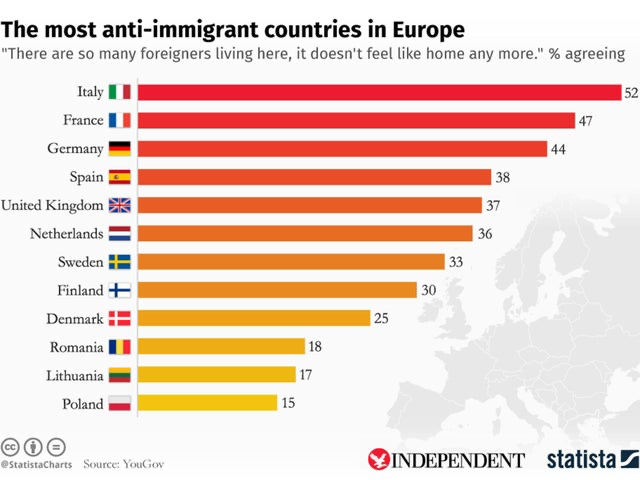
Only a few months earlier, before the world could even comprehend what a global pandemic would entail, a young, left-wing organization known as the Sardines, was protesting in piazzas over a politician who was not even in power. Matteo Salvini, the leader of the far-right, dominant party, the League, has become incredibly influential in Italy due to his anti-immigration and anti-muslim ideologies. Italians have embraced Salvini’s views towards immigrants, refugees, etc., and although the next Italian national election is a few years away, Salvini is expected to be the next prime minister. 

Today, Italy has not forgotten their dark days with COVID-19, as it suffered a large fatality rate of 12.3% and has gradually opened with many precautions in place. Salvini has used his view on immigrants and how they have pertained to COVID-19 to continue his anti-immigrant agenda. Many areas of Italy, such as Sicily, are not accepting immigrants due to the fear imposed by the media that immigrants are allowing COVID-19 to flourish in Italy. However, only 3-5% of positive cases in Italy are due to migrants and refugees, unlike the 25% that is a result of tourism. Salvini has also called on his supporters to protest the arrival of immigrants at ports, stopping them from being able to get off their ships, instilling in them that immigrants are a great threat to Italians in terms of COVID-19. Salvini’s influence has played a massive role in the capacity in which centers can account for taking care of migrants as well. For example, centers used to receive roughly 35 euros a day per migrant, now they are only provided 19 euros a day. This cut in funds has had profound effects on refugee centers that are now overcrowded, dirty, and a place for COVID-19 to spread with little consideration on the wellbeing of migrants. 


Italy’s prime minister is determined through appointment by the party with the majority. In the coming years, it will be interesting to see if the League rises to be the majority in the government and if Salvini will be appointed to be the prime minister. Italians are eager to support Salvini’s anti-immigration views and have continued to do so in the era of COVID-19.


Credit: Fabio Bucciarelli from The New York Times (https://www.nytimes.com/2020/08/28/world/europe/coronavirus-italy-migrants.html


Credit: The Independent, Statista (https://www.independent.co.uk/news/world/europe/europe-immigration-most-anti-immigrant-countries-italy-france-germany-uk-a7460301.html


Resource for migrants to Italy: https://cidisonlus.org 

Sources:

https://www.nytimes.com/2020/08/28/world/europe/coronavirus-italy-migrants.html


https://www.washingtonpost.com/world/europe/packing-into-piazzas-italys-sardines-are-demonstrating-against-a-politician-who-isnt-in-power/2019/12/22/007b78f2-211b-11ea-b034-de7dc2b5199b_story.html 


https://www.aljazeera.com/news/2020/09/refugees-italy-bear-brunt-coronavirus-angst-200906223712235.html  


https://ourworldindata.org/coronavirus 


https://www.britannica.com/place/Italy/The-legislature#ref258796 


Featured Post

Turkey's Ban on Insults against Erdogan

 Since 2005 Turkey has had a law against insults against Erdogan known as Article 299. The article declares that citizens can be imprisoned ...