Wednesday, February 17, 2021

Failed Elections Trigger Havoc to Myanmar’s Democracy

In 2010, Myanmar transitioned from a military dictatorship to a democracy (The Convo 2020). There was hope that this opportunity could put away Myanmar governments ongoing discrimination and violence towards the diverse ethnic minorities and institute a democratic regime that would support equal human rights of all ethnicities. Thousands of pro-democratic activists, who were previously suppressed by the Tatmadow, Myanmar’s military force, were released from their imprisonments following this change(The Convo 2020). One particular activist was Nobel Prize Winner Aung San Suu Kyi. Once released from house arrest, she took charge of the pro-democracy activist movement and developed the democratic political party, National League for Democracy Party (NLD) (The Convo 2020). In the following 2012 by-election for parliament, the NLD emerged as the favorites, but lost the election. Instead, the opposing party, the Union Solidarity & Development Party (USDP), won because of their continuous help from the Tatmadow leaders who have been in the government for awhile. It was obvious that some of the election ballots were tampered with, and most likely was rigged by the USDP(BBC 2012). Despite this loss, the country's demand for democracy was evident, and in 2015, a fair election led to the NLD securing the super majority in parliament, and Suu Kyi to be elected as state counselor.
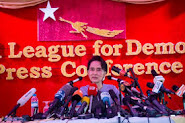


Fig. 1. Aung San Suu Kyi  at press conference post 2015 election

from : May Ng. "Aung San Suu Kyi and.." Mizzima, 8 Nov 2015

Suu Kyi’s biggest challenge was to solve the ongoing Rohingyas refugee crisis. For decades the Tatmadaw, under government order, has been forced to kill off the Muslim minority known as the Rohingyas (CFR 2015). To avoid being part of the genocide, most Rohinyas have fled to boarding countries such as Bangladesh(CFR 2015). This was a challenging task for Suu Kyi because the Tatmadow still had several military leaders in key positions of the government who used their power to ensure the continuity of the crisis (The Convo 2020).

Fig. 2. Tatmadaw soldiers controlling a Rohingya refugee camp

from: Reuters. "Acts of Genocide.." DNA, 8 May 2018.

Suu Kyi had lost  international support due to lack of change in Myanmar. With the 2020 election near, Suu Kyi had intentions to be re-elected. In 2019 Suu Kyi defended the Tatmadaw actions of genocide at the international court of justice (Guardian 2019). Her defense towards the Tatmadow was most likely a tactic to gain support in the next election.                                                         

In November 2020, Suu Kyi’s NLD dominated the election, but the USDP and the Tatmadaw military denied their winnings. They made claims that the election was rigged, and detained Suu Kyi and other members of the NLD (VOA 2021). In what looks to be a military coup, Tatmadow has wreaked havoc on NLD protestors throughout the country evoking chaos. The neglect to leave power is similar to the situation that occurred in the 2020 United States Election. Instead of using military forces, President Trump allegedly influenced a riot on the capitol building by some of his radical supporters. During the U.S. Supreme Court's ruling on the legitimacy of the 2020 presidential election, havoc broke out in and outside of the capital. The failure to step down from power and the lack of accountability of their positions in both countries has led to devastating impacts on their democracies. President Trump has stepped down, but if the USDP is to not step down soon, civilians are to going to continue to be negatively effected.


Fig. 3. Protestors are held back by police following rigged 2020 election from: Reuters. “Anger over Protests..” East Asia Pacific, 13 Feb 2021


Works Cited 

Abdullah Yusuf Lecturer in Politics. (2020, December 14). Myanmar's election, the Rohingya crisis and the road to democracy. https://theconversation.com/myanmars-election-the-rohingya-crisis-and-the-road-to-democracy-143161. 

Aung San Suu Kyi TELLS court: Myanmar genocide claims 'factually misleading'. (2019, December 11). https://www.theguardian.com/world/2019/dec/11/aung-san-suu-kyi-tells-icj-myanmar-genocide-claims-factually-misleading. 

Burma's Aung San Suu Kyi wins by-election: NLD PARTY. (2012, April 1). https://www.bbc.com/news/world-asia-17577620. 

Myanmar leader Aung San Suu Kyi, Others detained by military. https://www.voanews.com/east-asia-pacific/myanmar-leader-aung-san-suu-kyi-others-detained-military. 

What forces are fueling myanmar's rohingya crisis? https://www.cfr.org/backgrounder/rohingya-crisis.

Tuesday, February 16, 2021

Yemeni Civil War: What is behind the denying of targeting children?


    In 2014, After several weeks of street protests against the former president of Yemen Hadi’s administration, which made cuts to fuel subsidies that were unpopular with the group, the Houthis fought the Yemen Army forces under the command of General Ali Mohsen al-Ahmar and drove the internationally accepted government from the capital, then Yemen's civil war began. (Wiki)

    Until now, the Saudi-led alliance, attempting to return power to the country, that supported by Britain, still remained deadlocked with the opposition Houthis who are funded by Iran. 


Humanitarian crisis

    According to human rights workers in The Yemeni city of Taiz, over 450 children have been killed or injured by Houthi sniper fire (BBC, 2021), though the Houthis refute to recognize the claim. In fact, the Houthis are not alone: children with more than one-third of fighters reported to be under the age of sixteen, the age that was meant to receive educated, are also constantly recruited by various parties to the conflict (Giulio, 2018).


Orla Guerin, Goktay Koraltan, Claire Read, Suad Al-Salahi, and Wietske Burema (2020). Ruweida was shot in the head and her brother, Amri, was dragging her to safety [documentary]. BBC News. https://www.bbc.com/news/av/world-middle-east-56072279

    Besides child abuse, the famine in Yemen became an emergency. In 2016, the United Nations reported that more than three-quarters of Yemen's population lacked access to clean drinking water and sanitation, while almost half lacked access to adequate food and medicine. Then in 2018, the battle of Al-Ḥudaydah effectively blockading the main source of food imports. By the end of 2018, nearly 16 million Yemenis were on the brink of starvation, and the country was facing the world’s worst famine in a century. (Britannica)


Famine risk in Yemen. Via. Coppi Giulio

And until 2020, It is estimated by the United Nations that about 80 percent of Yemenis dependent on food aid, and around half of all children suffer from stunted development due to malnutrition. The U.N. on Nov. 20, The Secretary-General, Antonio Guterres, said Yemen was “now in imminent danger of the world's worst famine in decades.” (New York Times, 2021)

    Instead of being sympathetic towards citizens that have been killed and a passion for the state’s future, the eyes of Yemeni look indifferent and hopeless. 


The Loss of the National identity

    The loss of the national identity was the first thing that jumped into my head and it can be largely explained by the association between history and the political system. Even though Yemen, officially, transformed into a multi-party representative democracy after the re-union, each government still remained its own governance; for example, in the north, each province was subdivided into district and tract levels, sensing a decentralized government. The South, in contrast, was composed of the indigenous centralized British government and tribal affiliations in the hinterland. Different governance turns out different local civilizations. Suffering such a long-term difference, also, even they changed into a federal government, people would not simply change the way of thinking and recognize others’ culture based upon the tradition. Moreover, the incumbent government of Yemen actually failed on becoming a genuinely democratic country but an authoritarian regime (EIU Democracy Index, 2020), showing a high autonomy that the head of the state is able to fulfill basic tasks with a minimum of public, which limited individual freedom to some extent. An authoritarian government seems reasonable when recalling the past that “in order to eradicate both the remnants of British occupations and traditional socio-political structure of Yemeni society, the South Yemeni started the Marxist experiment on the new, socialist state, but found it inappropriate at the end (Müller, 2015).” In general, the traditional norms and rules and the experience of communism both indirectly caused people a less sense of belonging and identity. 


    Warfare as the lack of regulation and the absence of the national identity, any of both would be fatal for the democratic future of Yemen.


References


BBC News. 2021. “Yemen: The boy who saved his sister from a sniper.” (February 16, 2021)

https://www.bbc.com/news/av/world-middle-east-56072279

The New York Times. 2021. “The U.S. to Declare Yemen’s Houthis a Terrorist Group, Raising Fears of Fueling a Famine”. (February 16, 2021) 

Britannica. 2021. Yemen. (February 16, 2021)

https://www.britannica.com/place/Yemen 

Giulio (2018). The Humanitarian Crisis in Yemen: Beyond the man-made disaster. (February 16, 2021)

https://css.ethz.ch/content/dam/ethz/special-interest/gess/cis/center-for-securities-studies/resources/docs/IPI%20Humanitarian-Crisis-in-Yemen.pdf  

Müller (2015). A Spectre is Haunting Arabia: how the Germans brought their Communism to Yemen. transcript Verlag. (February 16, 2021)

https://library.oapen.org/handle/20.500.12657/45632

The Economist Intelligence Unit Democracy Index. (February 16, 2021)

https://www.eiu.com/topic/democracy-index

The New York Times. 2021. “The U.S. to Declare Yemen’s Houthis a Terrorist Group, Raising Fears of Fueling a Famine”. (February 16, 2021)

https://www.nytimes.com/2021/01/10/us/politics/us-yemen-houthis-terrorist-group.html


The rise of new generation--Protest really help now?

   Just around last October, a large-scale student protest broke out in Thailand. Thailand's government, led by the army chief turned Prime Minister Prayuth Chan-ocha, announced after the protest that it would not be allowed with public meetings and should censor the media in response to the growing student protests. The protestors refuted the emergency decree as another attempt by the government to take their rights away and vowed to incite. Bunkueanun Paotong(Peck, G., & Blake, C.,), the one leader of the student movement, is also regarded as a criminal organization leader. The crime charged may lead to his life in prison.   

                                                 Picture of students hold three salute fingers represent in resisting in protest                                                    Photo via AP photo/Gemunu Amarashinghe, File

    The reason for this massive student protest is Thailand's monarchy, which dates back to the political coup in 2014 when Prayuth came to power and continues. The so-called monarchy is a political system based on one's indivisible sovereignty or rule. It applies to countries where the supreme power belongs to the monarch, the individual ruler as the head of state, and obtains status through heredity. These rules also strengthened the military government's control overpower and the people. In 2014, many critics of the monarchy disappeared in the end. The reason was apparent. In 2015, it spent the US $540 million, more than the Ministry of foreign affairs' budget, to launch a propaganda campaign called "worship, protect and defend the monarchy". In the 2016 budget, the ruling military government increased the expenditure on "maintaining, protecting and maintaining the monarchy" to 18 billion baht (514 million US dollars) (Wikipedia). Moreover, the money distribution to the monarchy caused a series of wealth gaps in Thailand. When an anti-monarchy candidate took part in the election, it disappeared in the end, and the students' hope dashed.

                                                            Picture of the reform Thai monarchy

                                                                Photo via: AP photo/Gemunu Amarashinghe, File

   As more and more students learn about politics, they learn different things. They wanted the king's assets to be separated from the State Property Bureau. Banned the king from expressing his political views, called on the prime minister to resign, formulated a new constitution, gradually adopted the Democratic regime to produce a fair, transparent election, and stopped attacking dissidents and opposition parties. This request is unprecedented because if someone talks about the disadvantages of the monarchy in Thailand, he/she may be sentenced to 15 years in prison. But the students chose to do it. As a result, the police arrested some of the protest leaders, the government started a state of emergency and warned students not to challenge and discredit the monarchy. If they do so, the government will take more severe actions.   

   Let us review the riots in Hong Kong in 2019. From the most straightforward point of view, this unprecedented riot is also because the Hong Kong students are afraid that they will lose their high degree of autonomy. Therefore, they want to make Hong Kong Independent through their radical actions. They want to have self-government and use democracy to rule their "Country," so if these radicals want to get rid of the "one country, two systems" and Beijing's control, they use the worst tactics and methods. Nevertheless, in the end, what did the students in Hong Kong get? Students of different ages were arrested. Some of them were only seven years old. Furthermore, the government introduced the national security law in Hong Kong to restrict them. And the leader of the riot was arrested in 2020.

                                                Picture of HongKong police capture the radicals

                                                                       Images via Shutterstock

   The protest in Thailand and Hong Kong have common characteristics:

   1. They are all led by young students.

   2. They all have common aspirations, and their goals are a democracy.

   3. They all want to achieve their goals through protest.

Nevertheless, does protest help them with the democracy or autonomy they want? All of the results are that the protest leaders were arrested in the end, and the government has become more sensitive to the issues they want to protest against and strengthen its prevention. It also makes students' ideas more and more impossible to realize.


References: 
Johny, S. (2020, October 19). Explainer: Why are Thai STUDENTS protesting? Retrieved February 10, 2021, from https://www.thehindu.com/news/international/explainer-why-are-thai-students-protesting/article32873772.ece

Monarchy of Thailand. (2021, February 08). Retrieved February 10, 2021, from https://en.wikipedia.org/wiki/Monarchy_of_Thailand#The_monarchy_in_the_21st_century

Peck, G., & Blake, C. (2020, October 27). Thai student-protesters aim for ambitious political change. Retrieved February 10, 2021, from Bbc.co.uk/news/world-asia-53589899


Sunday, February 14, 2021

Petrobas and Brazil's Economy

In 2014, Brazil’s GDP was valued at 2.4 trillion dollars (World Bank 2019). However, only one year later, in 2015, Brazil’s GDP would drastically fall to 1.8 trillion dollars (World Bank 2019). Two years later, in 2017, Brazil’s GDP would rise to 2 trillion dollars (World Back 2019). Brazil’s GDP would only decline from that point on, a trend that is still occurring today. 


What caused this significant drop in GDP? Was it caused by a change in leadership or was it a drop in the amount of natural resources? Was the corruption that existed in the country to blame?


I am leaning towards the latter of the three potential reasons for one main reason. If you look closely at the GDP values of Brazil over the years, you can see that Brazil’s GDP was steadily increasing. It was only in 2014 that the GDP began to fall; it just so happens that, also in 2014, a federal investigation coined Operation Car Wash began. 


Operation Car Wash, which initially started as a simple money laundering investigation into the majority state run oil company Petrobas, would blow the cover on the corruption happening within the government (Sotero 2018). Investigators on the Operation Car Wash task force found that millions of dollars were given illegally to both politicians and to the officials who owned Petrobas (Sotero 2018). They were able to generate this massive amount of money by adding inflation to the cost of a contract with Petrobas (Sotero 2018). The co-conspirators would then take up to 3% of the total contract value for themselves (Sotero 2018). In the end, Operation Car Wash investigators would recover $803 million from the 278 people charged (Brito and Slattery 2021). 


Image Source: International Anticorruption Media 


But that is not the end of the story because, in February of this year, Brazil shut down Operation Car Wash, the country’s only anti-corruption squad (Brito and Slattery 2021). The reasoning is that many people from both sides of the political aisle were growing uneasy with the corruption investigations (Brito and Slattery 2021). I think that there is more to the story than the government is letting on.  


The question remains on what will happen to Brazil’s economy now. Will Brazil’s GDP reverse course from its downward spiral now that Petrobas (hopefully) is on the right track? Will the Brazilian government revert back to their old ways of corruption with another company, thereby continuing the downward spiral? We will have to watch to find out. 


References:

 “Brazil: Operation Car Wash Widens to Include US & Greek Firms.” International Anticorruption Media, August 24 2017. http://anticorr.media/en/vlasti-brazilii-operaciya-avtomojka-ne-poshhadit-zarubezhnye-kompanii/


Brito, Ricardo and Slattery, Gram. 2021. “After Seven Years, Brazil Shuts Down Car Wash Anti-Corruption Squad.” US News, February 3. https://www.usnews.com/news/world/articles/2021-02-03/after-seven-years-brazil-shuts-down-car-wash-anti-corruption-squad


Martins, Luciano. 2021. “Brazil.” Encyclopedia Britannica. https://www.britannica.com/place/Brazil/Settlement-patterns


Sotero, Paulo. 2018. “Petrobras Scandal.” Encyclopedia Britannica. https://www.britannica.com/event/Petrobras-scandal


World Bank. 2019. “GDP (current US$)- Brazil.” https://data.worldbank.org/indicator/NY.GDP.MKTP.CD?locations=BR


Saturday, February 13, 2021

Trumpism Shaping Salvadoran Politics

Two years ago, the small Central American country El Salvador elected former mayor of San Salvador Nayib Bukele as their next president. Bukele offered hope to a nation that was plagued with gang violence and political corruption. Nayib Bukele ran as a third party reformer against candidates from the conservative Nationalist Republican Alliance (ARENA) and the leftist Farabundo Marti National Liberation Front (FMLN). Bukele ran a great campaign using social media to his advantage. He promised to bring about new change, revive the nation's economy, and aspired to improve their widespread poverty. Salvadorans were eager to see what Bukele would accomplish in his term as he was much different than his opponents.

Bukele after his victory in February 2019.
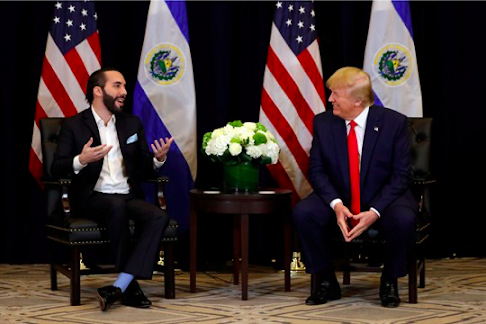
We are now two years removed from his historic victory and the perception of Nayib Bukele has shifted. Bukele pledged to be a different politician, but has turned out to be just as corrupt as his counterparts. Bukele has mistreated the coronavirus, negotiated with gangs, and been a corrupt politician. A Latin American digital newspaper , El Faro ,  has been critical of Bukele and his administration. In September of 2020, they found that there had already been almost fifteen accounts of corruption in his first fourteen months. This includes a mishandled coronavirus response and using his position to benefit his friends and family. There have also been stories about his negotiations with the infamous MS-13 gang. Bukele ran to end gang violence, but instead, has promised gang members better prison sentences if they were less violent and supported his political aspirations. However, Bukele has denied all of this. He accused the editors of El Faro of being involved in money laundering. El Faro is not the only news outlet he has attacked. There have been over sixty instances where he has criticized media outlets for tainting his image. Bukele has also targeted democratic institutions like the Supreme court and Congress. More recently, members of FMLN and ARENA have called for his removal stating that he is “mentally unfit” and “divisive”. However, this attempt was halted because they fear it would divide the country in a time when they need stability. Bukele’s actions have even troubled the Biden administration. The Biden administration is unwilling to meet with Bukele because they are discouraged by his idea of democracy. 


Doesn’t this all sound a little familiar. Nayib Bukele used Trumpism to gain power in El Salvador. When you compare the two, they have a lot in common. Both used social media (and specifically twitter) to campaign for their elections. Both denounce news outlets as  “fake” and seem to have a history of corruption. Here is the biggest comparison of them all: Both Bukele and Trump have tried to undermine democracy by sending supporters to Congress to pressure lawmakers. For Bukele, he sent troops to congress to pressure them to fund the fight against gang violence. While Trump encouraged his supporters to storm the Capitol to overturn a fair election. Trumpism has leaked into surrounding countries and is hurting their democracies. Even though Bukele has seemed to undermine democracy, he still carries a high approval rating from the Salvadoran people. El Salvador proves that Trumpism is not only in the United States and may be problematic to democracy for the foreseeable future. 


Sources


Aleman, M. (2021, February 10). El Salvador OPPOSITION reverses proposal to OUST PRESIDENT. https://www.washingtonpost.com/world/the_americas/el-salvador-opposition-proposes-presidents-removal/2021/02/09/23ab763e-6b38-11eb-a66e-e27046e9e898_story.html

Gressier, R. Series of Corruption Allegations Stains El Salvador's Promise - What Political Impact Will It Have?elfaro.net. https://www.elfaro.net/en/202009/el_salvador/24796/Series-of-Corruption-Allegations-Stains-El-Salvador’s-Promise-—-What-Political-Impact-Will-It-Have.htm 

Press, T. A. (2021, February 9). Biden officials turn down unannounced visit with El Salvador Pres. Nayib Bukele. NBCNews.com. https://www.nbcnews.com/news/latino/biden-officials-turn-down-unannounced-visit-el-salvador-pres-nayib-n1257160 

Renteria, N., & Torres, N. (2019, February 3). Outsider wins El Salvador presidency, breaking two-party system. Reuters. https://www.reuters.com/article/us-elsalvador-election/outsider-wins-el-salvador-presidency-breaking-two-party-system-idUSKCN1PS03W 

Simon, J. In El Salvador, a beacon of truth under threat. Columbia Journalism Review. https://www.cjr.org/analysis/el-faro-nayib-bukele-press-freedom.php 

1st Picture: https://www.nbcnews.com/news/latino/can-el-salvador-s-president-elect-nayib-bukele-break-previous-n967181

2nd Picture: https://static.worldpoliticsreview.com/articles/28226/a_el_salvador-bukele-09302019-1.jpg 


Friday, February 12, 2021

Uganda's Struggle to Hold a True Democratic Election


    The current president of Uganda, Yoweki Museveni, has held power since 1986. In 2016, he claimed to have won his fifth presidential election. This election was observed by international sources and to not have met international democratic standards. After his win, Museveni began to campaign to change Uganda's constitution, which stated that presidential candidates needed to be under 75 years old. Oppositional protests occurred due to Museveni's antidemocratic attempt to maintain power and resulted in Museveni deploying plaincloth special forces troops to Parliament. Many members of Parliament were injured, some requiring emergency medical aid abroad. Museveni's proposed alteration passed in 2017. This has allowed Museveni to run for president in the 2021 election at the age of 76. Bobi Wine, an avid critic of Museveni and a member of Parliament has been detained and targeted many times. In November of 2020, his detainment resulted in another violent protest. 54 people were killed by security forces during this demonstration.
                                 Current President of Uganda, Yoweri Museveni in 2020.

Recently, Bobi Wine and his team submitted an official complaint to the International Criminal Court about the illegal detainment and abuse he and his colleagues have faced due to Museveni's regime in addition to the violence against their supporters and unarmed citizens. It can be argued that the international community and Western powers have contributed to the ongoing issues seen in Uganda. Museveni has been a military ally of many Western governments. Due to these relationships, these countries ignore the obvious obstruction of human rights and democracy. Museveni was an ally to the U.S. during the 1990s, and his regime gave weapons to Sudanese rebels on behalf of the Clinton administration. More recently, Ugandan forces have been fighting in Somalia under the African Union Mission, supported by the U.S. and many European countries. Additionally, Ugandan forces act as guards in Iraq under the command of the U.S. The Museveni regime continues to receive monetary foreign aid from the U.S., the World Bank, and other Western countries. A significant portion of this money is spent on the military budget and security forces, which aid in the violent attacks on politicians and Ugandan citizens. This past summer, the World Bank gave Uganda $300 million to aid in handling COVID-19; however, this money was used for the military budget.

                          Bobi Wine at a campaign event for the 2021 presidential election.

The 2021 presidential election occurred on January 14, and Museveni won a sixth term in office, although election fraud has been widely suspected. While the Ugandan government has claimed to be a democracy since the country's independence from Britain in 1962, Uganda has been, and is continuing, under authoritarian rule. The U.S. has turned a blind eye to the violence in Uganda for years, but small steps toward accountability have been seen during this recent election. New Jersey Senator Robert Menendez, a member of the Senate Committee on Foreign Relations, spoke out prior to the election, condemning the arrest of Bobi Wine and calling for a fair election and a reassessment of U.S. support if the election were to be fraudulent. Additionally, in January, Facebook and Twitter took down a Ugandan network relating to the Ugandan ministry for information due to fake accounts created to target public discourse before the election.

References

Wine, Bobi (2021). The West Helped Cripple Uganda's Democracy- Now it Must Stand With Those Struggling Against Tyranny. Foreign Affairs. Retrieved 11 February, 2021. http://www.foreignaffairs.com/articles/africa/2021-01-13/west-helped-cripple-ugandas-democracy?utm_medium=email_notifications&utm_source=reg+confirmation&utm_campaign=reg_guestpass

Madung, Odanga (2021). Uganda's election is a key moment for the splinternet in Africa. Quartz Africa. Retrieved 11, February, 2021. http://qz.com/africa/1970547/ugandas-election-is-a-key-moment-for-africas-internet-fragmentation/

First Image by John Muchucha. Retrieved from http://www.worldpolitcsreview.com/articles/29376/after-uganda-elections-will-the-u-s-still-back-museveni-s-brutal-regime

Second Image by Abubaker Lubowa. Retrieved from http://www.foreignaffairs.com/articles/africa/2021-01-13/west-helped-cripple-ugandas-democracy?utm_medium=email_notifications&utm_source=reg+confirmation&utm_campaign=reg_guestpass


Thursday, February 11, 2021

France and the Semi-Presidential system

At first glance, France is a good place to live in when looking through a governmental lens. Elections are free and fair and there is a good dynamic air among the public. However, France is not a full democracy, rather, it has a flawed democracy. France has a "semi-presidential" system; a dual executive system. France has both a president alongside a Prime Minister and a cabinet. This has led to years of representative problems, and can only lead to an interest in other systems of government.

The French president holds considerable power, often been called the most powerful political man in Europe. One reason for this is that he holds significant influence in authority in the fields of national security and foreign policy. His greatest power, however, is that he can pick the Prime Minister. The French National Assembly, which is the lower house of the bicameral French parliament, the upper house being the Senate, has the sole power to dismiss the Prime Minister's government, so the president is forced to name a Prime Minister that can garner the support of a majority in the assembly, but the elections for Prime Minister have been held a handful of weeks after the presidential elections so it is all but guarantee that the Prime Minister in the assembly will support the president roles and policies.


President Emmanuel Macron (left) with Prime Minister Jean Castex (right)


The attraction to other systems of government, however, not only stems from a desire to change the current system of government but from France's reception of U.S. social theories. The new director of the Paris Opera received heavy backlash from far-right leaders after he said he wanted to diversify its staff and ban blackface, which he was claimed to have absorbed from a decade of observing American culture. Mass protests have also spotted French soil, which was claimed to have been inspired by the killing of George Floyd, in opposition of President Macron's appointment of an interior minister who has been previously accused of rape, as well as other officials who publically criticize the #MeToo movement. The French people are likely reaching breaking point. Their flawed democracy doesn't function the way a full democracy would, and because of that, their government doesn't represent the people's interests.


Image result for recent french blm protests
French citizens protest police brutality, mirroring the protests seen in the U.S.

When the presidents' will is a decisive factor in understanding any countries current politics, it is a clear sign that something is wrong. The president and its parliamentary majority barely need to negotiate with the opposition when passing laws. Due to this lack of negotiation with opposing parties, positions have become more polarized. The far left has submitted dozens of thousands of amendments in an attempt to obstruct the lawmaking process. To combat this, the current government has been using a constitutional tool described in the French constitution. In article 49, paragraph three, the French constitution allows the government to impose the adoption of a text by the assembly, immediately without a vote, that the assembly cannot oppose without toppling the government through a motion of no confidence. This means that the government can compel the majority if they are reluctant to adopt a text and also to accelerate the legislative process, which can end any obstruction from the opposition. Quite frankly, it seems unfair and undemocratic.


Boucart, Théo. “France Has a Serious Democratic Deficit. This Is Why We Should All Be Worried.” The New Federalist. The New Federalist, March 30, 2020. https://www.thenewfederalist.eu/france-has-a-serious-democratic-deficit-this-is-why-we-should-all-be?lang=fr. 

Onishi, Norimitsu. “France Sees an Existential Threat from American Campuses,” February 9, 2021. https://www.nytimes.com/2021/02/09/world/europe/france-threat-american-universities.html. 

“Semi-Presidential Systems.” Accessed February 10, 2021. https://www.oxfordbibliographies.com/view/document/obo-9780199756223/obo-9780199756223-0271.xml. 

China Denies COVID Came From Wuhan


The Chinese government has been fervently denying accusations that the COVID-19 virus originated in Wuhan China. If one were to believe what the Chinese media has been publishing, it would be likely that they would assume that the World Health Organization (WHO) agrees with the Chinese government on how the virus developed and spread. This is not the case. A four-week investigation was launched by The WHO: they studied the length of time that infections began to spread in Wuhan, how the city had handled sanitary measures, and how they were able to return to a normal life after a long lockdown process. It was reported that when the WHO sent their team in, the Chinese government provided them access to everything that they requested. This came as a surprise, it was expected that China would have wanted to be more secretive about how they mishandled COVID in the beginning. 

(within hours of the lockdown being lifted, 65,000 people fled Wuhan)


The Chinese media have used statements from The WHO in order to spin the narrative in their favor. They have taken an innocent until proven guilty approach and because the investigation did not bring about any significant findings, the Chinese are holding onto their innocence. The mishandling of the virus has caused a rift in relations between nations. China feels like they are being blamed for the entire spread of the virus: they do not think that they deserve all of the blame as they are holding onto the claim that it did not originate in Wuhan. This criticism has been around since the beginning when China neglected to inform the WHO about a pneumonia-like illness that began to circulate in late 2019. The Chinese National Health Commission (CNHC) told reporters that they do not know how the virus traveled to the Huanan Seafood Market in Wuhan. Contaminated products frozen foods, animals, and infected humans have been cited as possible sources of the outbreak. 

                                     (Medical workers transfer a body through the city of Wuhan)

The WHO also addressed two other origin stories for COVID-19. They did not rule out the possibility that the virus escaped from a lab in Wuhan. China has been pushing the frozen food theory. They believed that the grocery supply chain brought the virus into Wuhan from another country. Scientists from across the world have ruled this out as a possibility. The US Centers for Disease Control (CDC) is firm in its belief that there is no way that it would be possible for the virus to transfer in the way that the Chinese government is claiming. For months, China’s propaganda has been attempting to reverse its image as the origin point of the global pandemic. Along with Chinese politicians, the Chinese Centers for Disease Control have also tried to push a baseless theory that the virus was created in a US lab; but, like many other theories, it has been shut down swiftly.


Sources:

https://economictimes.indiatimes.com/news/defence/us-army-brought-coronavirus-epidemic-to-wuhan-chinese-diplomat/articleshow/74607344.cms?from=mdr

https://www.nbcnews.com/news/world/who-s-covid-mission-china-give-first-report-n1257105


https://www.cnn.com/2021/02/10/asia/who-china-coronavirus-intl-hnk/index.html


https://www.aljazeera.com/news/2020/4/8/chinas-wuhan-ends-coronavirus-lockdown-but-concerns-remain


https://www.voanews.com/science-health/coronavirus-outbreak/china-didnt-warn-public-likely-pandemic-6-key-days


The Deadly Consequences of Colombia's Failed Promises

Over the last four years, hundreds of Colombian activists have been murdered. According to the UN, approximately 120 defenders of human rights were killed in 2019 alone (Hurtado, 2020). These activists do not belong to one group or organization, but they fight for the rights and protections of a diverse group of Colombians in rural areas, some focusing on Indigenous freedoms, and others on the rights of Colombian women and gender minorities (Pappier and Villarreal, 2021).

But why are these people, many of whom peacefully advocate for minoritized groups, being murdered at the highest rates in Latin America? (Pappier and Villarreal, 2021) This violence has a long history in Colombia, but this particular phenomenon has been precipitated by governmental failures since 2016. Specifically, the Colombian government signed a peace deal with the guerilla group Revolutionary Armed Forces of Colombia (Fuerzas Armadas Revolucionarias de Colombia, or FARC for short) in November of 2016 (Pappier and Villarreal, 2021). While this peace deal was intended to stop decades of conflict, demobilize the group, and stop the killings of human rights activists, some former FARC members have given up on peace and other, newly violent groups have stepped into the vacuum left by FARC’s dissolution (Garcia Cano, 2021).

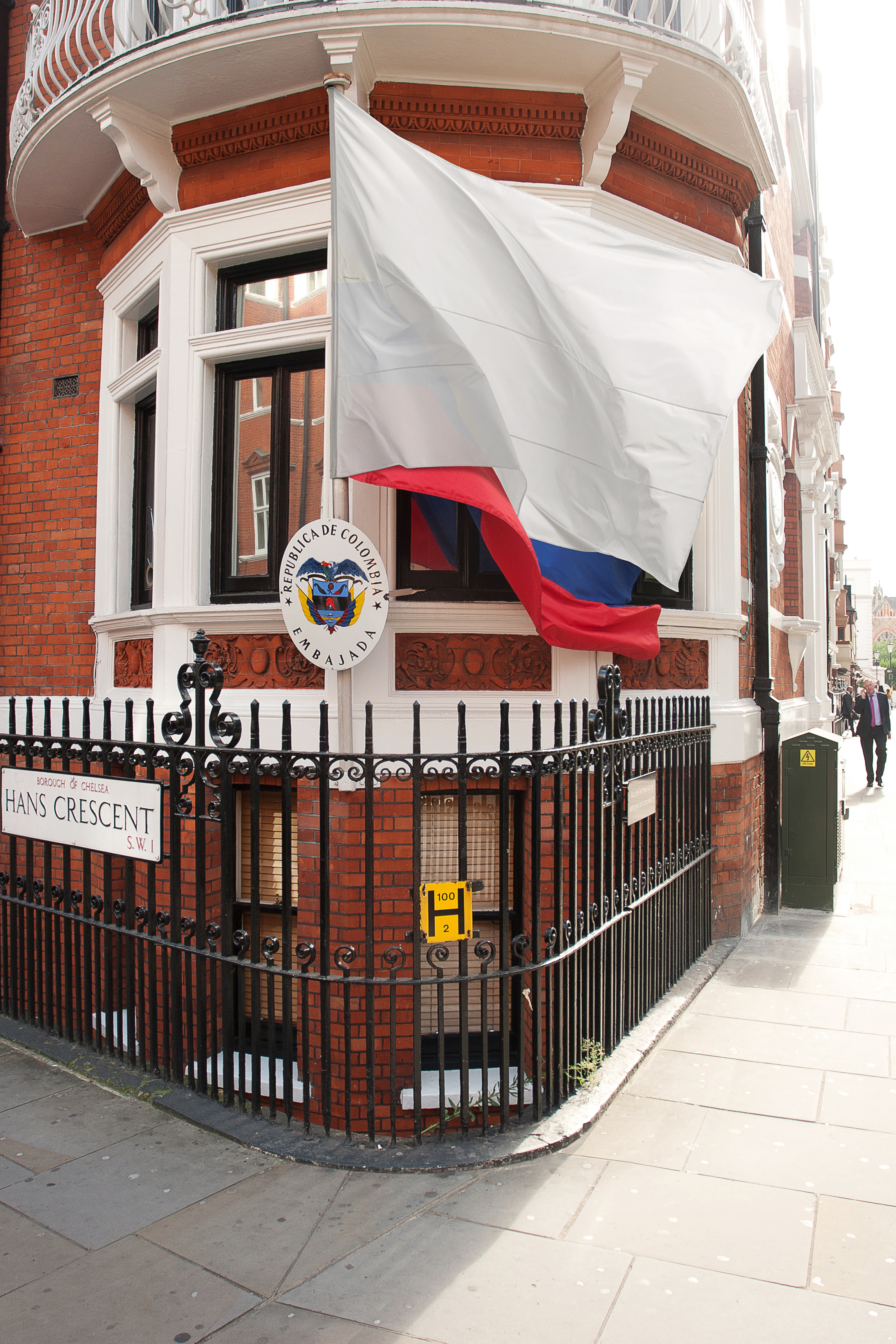
The Colombian Flag of Peace

The Colombian Flag of Peace

Ultimately, however, this is not the fault of one individual or even one group; it is the failure of the Colombian government which has had such deadly consequences. Of the approximately 120 killings in 2019, the United Nations has reported that “the great majority… happened in rural areas,” with 86% of the murders occurring in impoverished villages (Hurtado, 2020). In addition to the stereotypical, international neglect of rural communities by their governments, these killings represent the violent consequences of both a sub-par judicial system and of rights disparities. In this case, the former in particular has contributed to the “limited government efforts to undermine armed groups’ power” (Pappier and Villarreal, 2021). In other words, those who have murdered prominent human rights activists have not been consistently brought to justice for their crimes. Those who opposed human rights activists were not only given leeway by the Colombian government, but they were brought to violence first by their lack of access to public services. Contrary to the promises made in their 2016 peace agreement with FARC, the Colombian government did not ensure that people in rural communities received an education, had opportunities for economic stability, and more (Pappier and Villarreal, 2021).


Iván Duque Márquez, the current President of Colombia

As a result of these killings, Colombia has joined Iraq and the Philippines in the top three countries with the most activists murdered (Garcia Cano, 2021). The Human Rights Watch has recently advised that the United States and European Union assist the Colombian government in addressing this serious human rights violation, by “press[ing] Colombian authorities to… overhaul existing" protections of human rights activists and “exploring new avenues to reduce the power and corrupt influence of armed groups” (Pappier and Villarreal, 2021). While the Human Rights Watch also includes more specific instructions regarding Colombian drug production, these demands of the United States government in particular are vague and unfortunately ironic. With an attack on the United States Capitol building cemented in American history just over a month ago, the “influence of armed groups” is not a problem exclusive to Colombia; rather, it is a problem in the very countries being called upon to assist Colombia (Pappier and Villarreal, 2021). And, with the increase in Black Lives Matter protests (globally and in the United States) in the summer of 2020, the United States exhibited institutional violence against human rights protesters. The causes of these issues might appear disparate, but the result remains the same; activists’ safety is threatened in all corners of the globe, and requires more than “exploring new avenues to reduce the power… of armed groups” (Pappier and Villarreal, 2021). Globally, we need institutions to change and equitably promote education, economic stability, and human rights for all. As the spokesperson for the UN High Commission for Human Rights, Marta Hurtado, stated in regard to the Colombian murders, “any attack against human rights defenders… constitutes an assault against democracy” (Hurtado, 2020).

Sources:

Garcia Cano, R. (2021, Feb 10). Report: Colombia failing to protect human rights defenders. ABCNews. https://abcnews.go.com/International/wireStory/report-colombia-failing-protect-human-rights-defenders-75793952

Hurtado, M. (2020, Jan 14). Colombia: Human rights activists killings. United Nations Human Rights Office of the High Commission. https://www.ohchr.org/en/NewsEvents/Pages/DisplayNews.aspx?NewsID=25461&LangID=E

Pappier, J. and N.C. Villarreal. (2021, Feb 10). Left Undefended: Killings of Rights Defenders in Colombia's Remote Communities. Human Rights Watch. https://www.hrw.org/report/2021/02/10/left-undefended/killings-rights-defenders-colombias-remote-communities

Images:

The Peace Flag. (2013, Sept 21). https://upload.wikimedia.org/wikipedia/commons/1/1a/Colombian_Flag_of_Peace.jpg

U.S. Department of State. (2020, Sept 19). Secretary Pompeo Delivers a Press Statement with Colombian President Duque. https://upload.wikimedia.org/wikipedia/commons/d/d7/Secretary_Pompeo_Delivers_a_Press_Statement_with_Colombian_President_Duque_%2850369491081%29_%28cropped%29.jpg

Featured Post

Turkey's Ban on Insults against Erdogan

 Since 2005 Turkey has had a law against insults against Erdogan known as Article 299. The article declares that citizens can be imprisoned ...