Monday, March 29, 2021

           The Fight for Change-Homophobia in Ghana

According to the 2010 Ghana government census, approximately 71 percent of the population is Christian, 18 percent Muslim, 5 percent adheres to indigenous or animistic religious beliefs, and 6 percent belongs to other religious groups or has no religious beliefs. Whether christian, Islam or indigenous religion, the above religions frown on homosexuality because it is believed to go against “God” and the “gods”.


 In February of 2021, the European Union Opened on new LGBTQIA office in

Ghana to have a safe space for sexual minorities in Ghana. The celebration of this space did not last. Fueled by hate, religious leaders and politicians ensured the violence closure of this site which became a hot topic in Ghana regarding freedom of expression and human rights. With the media,politicians, religious leaders and majority of the citizens supporting the closure of the office, International Humans right activists and the lgbtqia community in Ghana are outraged and seeking justice and protection to have the office open.  

Where then is the line drawn between freedom of expression and freedom of religion in norms of  human rights. I personally believe that change is bound to happen but the longevity and time period before this change is dependent on the values of public opinion. With this theory in mind, I would argue that as long as Ghana is a country whose people are dependent on Christian, Islam and indigenous values, the lgbtqia community will not be welcomed to fully live express themselves in Ghana. Unless there is a strong need and desire for change, this change will not occur.


The two opposing groups have strong compelling arguments for their stance with or against the LGBTQ community. Ghanaians who support the raiding of the lgbtq office are either Christians who believe that homosexuality is part of a satanic agenda intended to destroy and harm their religion or people who do not trust the west and strongly uphold the ideology that homosexuality is from the west and cannot be accepted. Finally, the last group of people who oppose the lgbtq community believe that Ghanaian values do not tolerate such beliefs that go against “nature”. 


Ghanaians who believe that the raid goes against the basic human rights of individual and the democracy and freedom of individuals argue that the church and other religions are hypocritical in their ways because  they seem to pick and choose what rules they follow in their religion. While others who are against the raid also believe that persecution for one’s sexual orientation is inhumane and is a disgrace to the nation. 


With the two opposing sides, it seems that the International community as well is also divided in its stance. Countries like the United states and organizations like the European Union are in support of the lgbtq community compared to other Africa countries alike like Kenya, Tanzania, Nigeria and many more have similar views on the LGBTQ community as Ghana. 


In an interview in 2017 with Ghana’s President Nana Addo Dankwa Akufo-Addo, he was asked “why is homosexuality still illegal in Ghana”.(Al Jazeera) (https://www.youtube.com/watch?v=Oj-HtO9vLTc)


“I don't believe that in Ghana so far a sufficiently strong coalition has emerged which is having that impact on public opinion that will say change it let's then have a new paradigm in Ghana”, President Nana Akuffo Addo. 


The president's response proves that Ghana is a low autonomy country and strongly moved by public opinion. Even though it is a unitary state with rational legal legitimacy, the core of Ghanaian citizens is of traditional legitimacy. In the interview, he stated that the process by which all other European countries became open to the ideals of the LGBTQ is the same process Ghana will eventually pass through when there's a need for it. 


Ghana’s minister-designate for gender, children and social protection, Sarah Adwoa Safo, said last week that “the issue of the criminality of LGBT is non-negotiable and our cultural practices also frown on it”

( https://www.aljazeera.com/news/2021/2/24/ghana-shuts-down-lgbt-office-rights-group )


Some say it is a shame to see that people who are elected in power to tackle such social issues are ignorant and opposing views say that ignorance is not the matter at play but change of identity and religious beliefs should not be warranted in their governmental positions. 


In my personal opinion, change of laws does not equal acceptance.Even if the laws in Ghana were changed to accommodate the lgbtq community,though it is a right step, it will take a long time to change the heart of the people but this mindset will never be erased. 


The United States is a perfect example to illustrate this belief.  I may liken this situation to racism in the United States. There are laws against discrimination and racism yet racism continues to occur and is rampant in our society. Yes, there is a difference between the way people of color are treated now versus the time period of Jim Crow yet because the foundation of the United States is rooted and founded on racism and violence of people of color, it will never be erased. This same principle applies to west African countries like Ghana that are against the lgbtq community. Change is possible so fighting is necessary but I believe that homophobia will always be present to some degree in west African countries. 


Unlike the United States, most governments of West African countries are intertwined with religion and traditionalist culture. Even though “civilization” has forced Ghana to adapt colonial principles of governance, "neo colonisation" as Dr Kwame Nkrumah would say, the foundation of Ghana is based on traditionalistic views. Thus, the LGBTQ community will sadly face a lot of backlash and hate in fighting for change and acceptance in Ghana. Change is possible but at what cost? 


List of additional sources with more information.


Maduro protests Facebook "Freeze"

Maduro respond to Facebook suspension with anger
In recent days, Facebook placed a suspension on Venezuelan president, Nicolas Maduro's, Facebook page after acknowledging the spread of COVID-19 misinformation on the account (Aljazeera). In response, Maduro and the Venezuelan ministry responded with anger and frustration: "“We are witnessing a digital totalitarianism..." (Reuters).

Amidst the COVID crisis, Venezuela has suffered extensively at the hands of the virus and government response. The country has recently reported 155,663 cases, and 1,555 deaths, which are lower numbers in comparison to neighboring countries (Reuters). However, the data suggests that cases have not been accurately reported due to the strain on testing and a recent surge in cases (Aljazeera).

The most controversial aspect of Venezuela's response, however, is its unwillingness to cooperate with internationally approved vaccinations and aid. In this Facebook advertisement, Maduro advocated for a COVID-19 cure based in the country known as Carvativir which is "an oral solution derived from thyme," according to Reuters' article. This "cure" however has not been approved by Venezuelan doctors or the international community, thereby inciting controversy on Facebook. According to Facebook, this required a 30-day freeze of Maduro's account (Aljazeera).

In general, the Maduro regime has handled and received aid for the virus poorly. The Center for Strategic and International Studies reports that due to Venezuela's history of human rights violations and unwillingness to cooperate with Western nations, it has not received the $760 million in aid necessary to combat the crisis (Rendon). Instead, Maduro has continued to reject aid from international organizations such as WHO and criticize their handling of the crisis. Moreover, countries that could donate are ambivalent because of Maduro's reign and his abuses of power, especially seeing as he has used the lockdown to strengthen his stance against opposition within the country (Rendon).

However, another important component to consider in this situation is the role of the United States. Before the pandemic, sanctions were increased on Venezuela in order to pressure the abusive regime, but the effects have been equally, if not more, damaging on the country itself (Rendon). Access to resources has been scarce for a while, but the pandemic has greatly exacerbated this fact (Rendon).

COVID-19 continues to strain Venezuelan communities


Ultimately, there are several questions that arise in response to Facebook's censorship. Maduro and the Venezuelan ministry are clearly stubborn and unwilling to cooperate with the international community, which has inevitably worsened their internal stability. In spreading false information through social media, Maduro is only hurting his cause. Additionally, Facebook is a private company, and its role in the international community, though debated, is not defined. Maduro's accusations are potentially exaggerated, but at the same time, one must ask if Facebook and other social media outlets can truly censor foreign countries and their leaders. It is also important to consider that the international pressures on Venezuela have left consequences for citizens of the country. Although the regime is dangerous, when should the international community recognize that their efforts are hurting more than helping?


Additional readings on Venezuela's COVID-19 status can be found here.

Further analysis of Facebook's role in the international community can be found here.


Cited Articles:

Al Jazeera. “Venezuela Slams Facebook 'Totalitarianism' for Maduro Page Freeze.” Coronavirus Pandemic News | Al Jazeera, Al Jazeera, 28 Mar. 2021, www.aljazeera.com/news/2021/3/28/venezuela-slams-facebook-totalitarianism-for-maduro-page-freeze.

Rendon, Moises, and Lucan Sanchez. “Covid-19 in Venezuela: How the Pandemic Deepened a Humanitarian Crisis.” Covid-19 in Venezuela: How the Pandemic Deepened a Humanitarian Crisis | Center for Strategic and International Studies, 22 Dec. 2020, www.csis.org/analysis/covid-19-venezuela-how-pandemic-deepened-humanitarian-crisis#:~:text=It%20is%20estimated%20that%20Venezuela,Republic%20of%20Congo%20have%20received.

Reuters Staff. “Venezuela Calls Facebook Suspension of Maduro 'Digital Totalitarianism'.” Reuters, Thomson Reuters, 28 Mar. 2021, www.reuters.com/article/us-facebook-venezuela-idUSKBN2BK0H9.


Did France play a part in the Rwandan Genocide?

 The impact that France had on the Rwandan genocide is complicated, and may never really be known. 

 The Rwandan Genocide happened from April to June of 1994. During this time nearly 800,000 citizens died, many blamed this on the death of president Juvénal Habyarimana. Some also blamed it on tensions between ethnic groups, specifically the Tutis and the Hutus. Foreign influences are now also be investigated.

NY TIMES

Organizers of the attack were said to be soldiers and militias who all mobilized, citizens were also "encouraged" to take part. Many would have been nervous to take part in such an attack, but the New York Times writes that "incentives such as money or food" were offered. In a country with not a lot of financial means, that spurred people to join the fight. 

BBC NEWS


After the genocide, the government collapsed and a ceasefire was declared. Rwanda will be forever impacted by this tumultuous event in its history. 

As previously mentioned, France was said to have had an impact on the Rwandan genocide that is currently developing in the news.  President Emmanuel Macron initially questioning the allegations which culminated in a 992-page report released Friday. Many believed he did this to try to save the diminishing relationship between the countries. The report was relatively inconclusive. Sources outside the country overwhelmingly believe that France was '"blind' to the Rwandan genocide but 'not complicit'" writes France 24. The investigation did mention that France was upset about losing power in the country. Ultimately Macron declines the idea that the country could have been an accomplice, but as previously noted was "blind" to it. 


FRANCE 24


Upon researching the issue, it becomes apparent that what Rwanda is most upset about, is the fact that France has done nothing to acknowledge the wrongs that they may have committed. Although Macron has made attempts to restore the relationship between the countries, more needs to be done. The Rwandan Genocide will never be forgotten, and that's something that France needs to remember and reflect on more. 

Officials in Rwanda believe this report is a step in the right direction but say "this will not settle the issue", as reported by BBC. 


SOURCES: 
https://www.bbc.com/news/world-africa-13431486

https://www.nytimes.com/2021/03/26/world/europe/france-rwanda-genocide.html

https://www.vie-publique.fr/rapport/279186-rapport-duclert-la-france-le-rwanda-et-le-genocide-des-tutsi-1990-1994

https://www.france24.com/en/tv-shows/eye-on-africa/20210326-france-was-blind-to-the-rwandan-genocide-but-not-complicit-says-report


Sunday, March 28, 2021

Bolsonaro and his power over media

Brazilian President Jair Bolsonaro — who has been using both military powers and social media to oppress news protestors — has recently been opposed by a Brazilian court, and ordered to pay 20,000 reais (£2,500; $3,500) in damages to Journalist Patrícia Campos Mello. Bolsonaro accused Campos Mello of having sex with her news sources, which was seen as an attack on her honor.

This court decision shows some weaknesses in Bolosnaro’s power over the media. Critiques of the president and his tactics have been arrested in the past. He has, and still is using the national security law to his advantage. It states that the states it is a crime to harm the heads of the three branches of government or expose them to danger. Due to the wording, it can easily be manipulated to enforce the dictator-like behavior of stomping out opposing media. It is important to understand how the manipulation of media can influence the strength of the state and the accountability the head of state can face when challenging it.

A far-right president elected in 2018, Bolsonaro has been targeting opposing media as well as the rights of Sexual Minorites. The F&M Global Barometer of Gay Rights shows that between 2011 and 2018, the head of state of Brazil has been supportive of the legalization of homosexuality, which changed when Bolsonaro was elected. “In removing LGBT concerns from the responsibilities of the human rights ministry, Bolsonaro did not name any agency to consider such things. He has strongly criticized what he calls “gender-based ideology,” saying it is a threat to Brazil’s Christian values.” (Savarese 2019)

Bibliography


AP News Wire. 2021. “Brazil security law being turned on president's critics.” Independent. https://www.independent.co.uk/news/brazil-security-law-being-turned-on-presidents-critics-jair-bolsonaro-protesters-brazil-sao-paulo-o-globo-b1819919.html.

BBC News. 2021. “Bolsonaro: Brazil's president ordered to pay damages to journalist.” BBC Latin America. https://www.bbc.com/news/world-latin-america-56554635.

F&M Global Barometer of Gay Rights. n.d. “F&M GBGR: Brazil.” F&M GBGR. https://www.fandmglobalbarometers.org/countries/brazil/.

Mendonca, Duarte, and Amy Woodyatt. 2021. “Bolsonaro ordered to pay 'moral damages' to journalist.” CNN Americas. https://www.cnn.com/2021/03/28/americas/bolsonaro-journalist-damages-intl/index.html.

Savarese, Mauricio. 2019. “Brazil’s Bolsonaro targets indigenous groups, LGBTQ rights on 1st day as president.” PBS News Hour. https://www.pbs.org/newshour/world/brazils-bolsonaro-targets-indigenous-groups-lgbtq-rights-on-1st-day-as-president.


Israel's Political Crisis Deepened by Most Recent Stalemate

Following Israel's fourth election in two years, final results have indicated a stalemate, in which Prime Minister Benjamin Netanyahu was not able to secure a parliamentary majority. Netanyahu's coalition of right-wing, religious parties was only able to secure fifty-two parliamentary seats, nine short of the needed majority (Kingsley 2021). The remaining fifty-seven seats were split between centrist, left-wing, right-wing, and Arab opposition parties (Kingsley 2021).

Israel's rampant political tension underscores this most recent stalemate, revealing the likely possibility that these results will be hotly contested, to the extent that another election will need to be held (Hendrix, Rubin, and Berger 2021). Israel has been plagued for many years with unrest, the product of a broken electoral system that enables political corruption and further divides the electorate. 

This election actively defied and disrupted expected voting patterns and political mapping. The intensity of opposition against Netanyahu resulted in a large portion of voters aligning themselves with candidates on the basis of their attitude towards Mr. Netanyahu, rather than on the basis of their political ideology (Kingsley 2021). Interestingly, voter turnout was historically low-the lowest since 2009-revealing the public's general mistrust and disenfranchisement with the Israeli government (Kingsley 2021). 

Current Israeli Prime Minister, Benjamin Netanyahu. (Emmanuel Dunand/AFP)
These results allow Netanyahu to stay in power, despite having been indicted and standing trial on charges of political corruption. Israel now stands deeply entrenched in crisis as President, Reuven Rivlin, is expected to ask a political leader (of his choosing) to form a majority party (Kingsley 2021). Unfortunately, regardless of general opposition to Netanyahu's leadership, it may be exceedingly difficult to create an anti-Netanyahu party that could secure a sufficient amount of parliamentary votes. A rough coalition of anti-Netanyahu politicians will encounter great difficulty in forming an effective governing body due to major ideological differences (Miller 2021). 

Ultimately, the confirmed results of this most recent election have further positioned the Israeli government to fall deeper into crisis as it confronts moral and ethical concerns, desperately yearning for freedom from "Netanyahu's iron grip" (Miller 2021).


References: 

Hendrix, Steven, Shira Rubin, and Miriam Berger. "Netanyahu's Party Wins Most Seats in Israeli Election, Still Far Short of Governing Majority." The Washington Post, March 23, 2021. washingtonpost.com/world/2021/03/23/israel-election-netanyahu/ 

Kingsley, Patrick. "Israel's Election Ends in Stalemate, Final Result Show." New York Times, March 25, 2021. nytimes.com/2021/03/25/world/middleeast/israel-election-results.html?searchResultPosition=1

Miller, Jacob. "Why Building a Governing Coalition is Difficult in Israel." Harvard Political Review, March 27, 2021. harvardpolitics.com/building-a-coalition-in-israel/

Staff, Toi. "Netanyahu Reportedly Delaying Approval of Jordanian Request for Water." The Times of Israel, March 27, 2021. timesofisrael.com/netanyahu-reportedly-delaying-approval-of-jordanian-request-for-water/

Merkel is Out: Is her Authority?

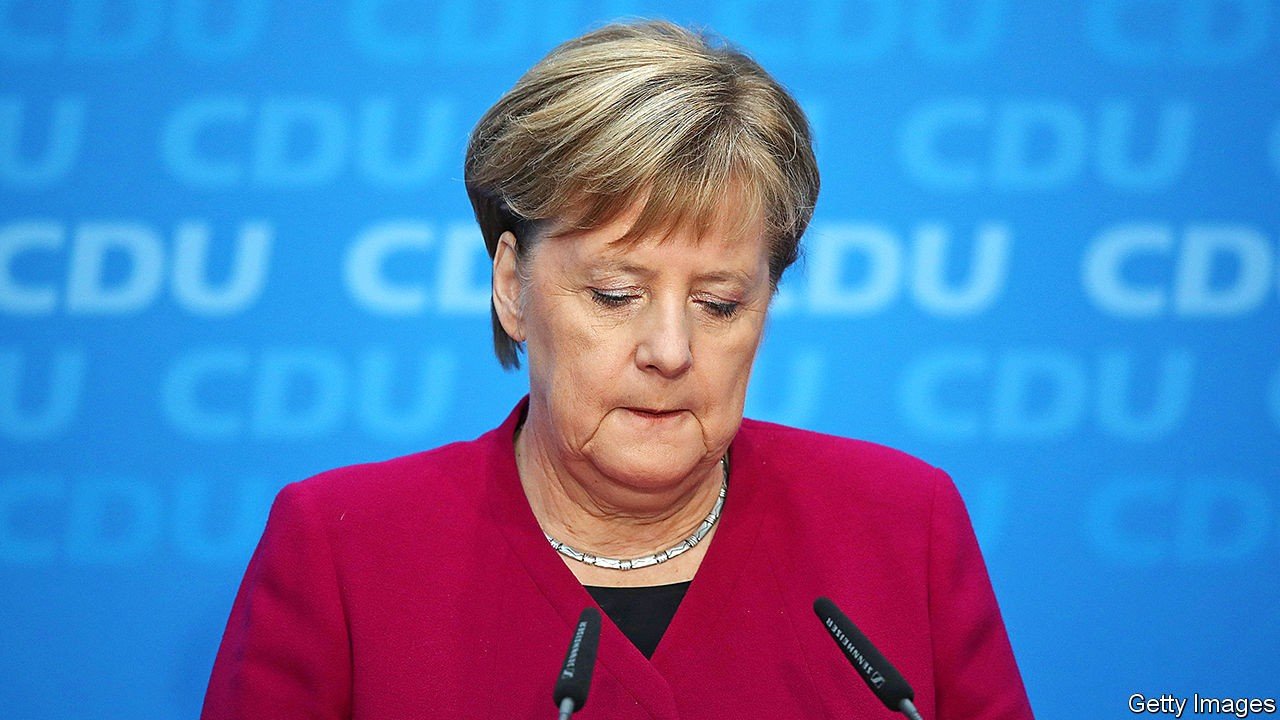
 In October of 2018, Christian Democratic Union (CDU) leader and German Chancellor Angela Merkel announced the end of her four term reign. Now, a little more than two years later, Germany and the European Union are beginning to realize how bittersweet parting with the chancellor during such unprecedented times will be. 

(Merkel announces her 2021 resignation in 2018, The Economist)


While Merkel is still the acting chancellor of Germany, many fear that her leadership has faltered throughout the COVID-19 pandemic. While Germany was initially praised worldwide for its handling of the virus, the situation has changed in the year since the first outbreak of COVID-19 near Munich in January of 2020. Under the direction of Merkel, the German health system handled the initial waves of the virus with moderate ease, isolating cases, tracing contacts and relying on Germany’s state-of-the-art hospital system to  keep fatalities low nationwide. 


How Germany contained the coronavirus | World Economic Forum

(“Keep your distance! Thanks.” World Economic Forum.) 


Last week, Merkel reversed a previously announced plan to lockdown Germany amidst the newest wave of infections, claiming she had “made a mistake.”  Merkel’s statement came after a torrent of warnings from German officials about how reversing lockdown plans would cause a rise in infections and deaths for Germans. While support for Merkel and her party skyrocketed in the beginning of the COVID-19 pandemic, “this is no longer the case” says Holger Schmieding, a chief economist at Berenberg Bank. Multiple recent failures, mainly the "U-Turn" on the Easter 2021 lockdown beg the questions: what is Merkel doing wrong? Is she worn out from an almost 20-year-long term? 


Coronavirus (COVID-19) cases and deaths Germany 2021 | Statista(COVID-19 infections have been spiking in Germany since October of 2020, Statista.)


Multiple factors account for Merkel’s recent struggles to lead in unprecedented times. For one, Merkel is ending an almost two decade term. Merkel assumed office in November of 2005, and has been instrumental in making Germany the strongest economy in Europe, leader of the European Union, and one of the stalwart defenders of democracy, a “leader of the free world” at a time when the United States has sometimes been considered erratic and unreliable . Another reason for her seemingly distracted and disordered pandemic leadership stems from the anticipated change in leadership at the end of her term. Merkel has picked Armin Laschet of the CDU to be her successor as chancellor, but the decision will have to be confirmed by German voters in September. As Merkel’s term ends in what may be seen as a series of erratic decisions and miscalculations, it is important not to misconstrue the chancellor’s decade and a half of steadiness and altruism in office. Merkel’s indisputable confidence in leading one of the most powerful nations on earth for over 15 years has inspired many to be more selfless in politics, and to stress organization over charisma. 


Who Will Be The Next Leader of Angela Merkel's CDU Party? | Time

(Merkel and Laschet in Essen, August 2020, Time.)


References:


Ellyatt, H. (2021, March 26). Confidence in Merkel's Leadership Falters as Germany's Pandemic Drags. Retrieved March 29, 2021, from https://www.cnbc.com/2021/03/26/germanys-merkel-and-cdu/csu-popularity-falls-during-the-pandemic-.html

Angela Merkel Will Step Down as CDU Party Leader in December. (n.d.). Retrieved March 29, 2021, from https://www.economist.com/europe/2018/11/03/angela-merkel-will-step-down-as-cdu-party-leader-in-december

Eddy, M. (2021, March 24). Merkel Reverses Prolonged Easter Shutdown Plan, Apologizing for 'Mistake'. Retrieved March 29, 2021, from https://www.nytimes.com/2021/03/24/world/europe/german-merkel-coronavirus-lockdown.html

Hill, J. (2021, March 27). German Covid Easter U-Turn Shakes Merkel's Cool, Calm Image. Retrieved March 29, 2021, from https://www.bbc.com/news/world-europe-56537390

    Written by Jens Spahn, F. (n.d.). How Germany Contained the Coronavirus. Retrieved March 29, 2021, from https://www.weforum.org/agenda/2020/05/how-germany-contained-the-coronavirus/

Koptyug, E. (2021, March 17). Coronavirus (COVID-19) Cases and Deaths Germany 2021. Retrieved March 29, 2021, from https://www.statista.com/statistics/1105216/coronavirus-covid-19-illness-and-death-cases-germany/

Roache, M. (2021, January 14). Who will be the next leader of Angela Merkel's Cdu party? Retrieved March 29, 2021, from https://time.com/5928556/merkel-cdu-leader-merz-laschet-rottgen/

Friday, March 26, 2021

What is happening about Xinjiang?

Latest sanction


On March 26, the spokesperson of Ministry of Foreign Affairs of China announced sanctions to 9 individuals and 4 entities from UK for their comments regarding to Xinjiang. This sanction is part of sanctions launched as counter-backs to previous sanctions to China from the West. This sanction will be preventing them from entering Mainland China, Hong Kong SAR and Macau SAR. Their asset in China will be frozen and Chinese citizens and entities will not be allowed to do business with them. 


Iain Duncan Smith, Nusrat Ghani, Tom Tugendhat


Amount those who were sanctioned, there are five members of the Parliament: Tom Tugendhat, Iain Duncan Smith, Neil O'Brien, Tim Loughton and Nusrat Ghani. There are 2 members from the House of Lords: David Alton and Helena Kennedy. The other two individuals sanctioned are Joanne Smith Finley, a scholar, and Geoffrey Nice, a lawyer. The 4 entities sanctioned are China Research Group, Conservative Party Human Rights Commission, Uyghur Tribunal, and Essex Court Chambers. 


Previous Sanctions


Chen Mingguo
Sanctioned by UK


Recently, regarding Xinjiang, US, EU, UK and Canada governments launched sanctions to Chinese Officials. Those sanctions including travelling bans and freezing assets. Beside sanctions to UK which is mentioned previously, China also launched similar sanctions to individuals from EU.  


Cotton and Forced Labor Accusations


Some of individuals sanctioned by China claims that there are forced labors in Xinjiang, more specifically, in the cotton industry. Bettor Cotton Initiative (BCI), whose goal is to make cotton industry sustainable, stopped licensing cottons from Xinjiang. As they stated in their website: “Increasing media and academic attention on geopolitical issues, including the treatment of Uyghur Muslims in the Xinjiang area of China, has further demonstrated that production location and sustainability are crucially interlinked.” 


As members of BCI, H&M and Nike issued statements basically saying that they will stop use cotton from Xinjiang due to the forced labor accusations. H&M’s statement was written months ago, but recently, about 2 days ago, it was discovered and criticized on Weibo (Social media similar to Twitter). Then, some people says that they will boycott H&M, Nike and other brands agree with forced labor accusations.


There is a lack of labor for cotton industry in Xinjiang. Actually, many people from other part of China were hired to do the work during busy seasons. However, neither hiring nor forcing people to pick up cotton by hands will solve the problem. To solve the problem, techs are needed. Today, some farmers use drones and tractors to mechanize the industry and improve the efficiency.


On March 1, BCI representative form Shanghai posted "Important Statement about Xinjiang Issue". It says: according to examinations guided by BCI's principles since 2012, there is no case of forced labor found in Xinjiang. 


Comparison, Contrasts, and Why we hear so much human rights accusation about China?


Personally, for some part, I think these are misunderstandings caused by difference between China and the West. Some differences are physical, such as economy and geography. The others are about beliefs and ideology. 


Bad transportation cause by landforms
Le'er, Atule'er, Zhi'ermo, Liangshan, Sichuan
The government built better stairs so people can be safe until moving out


Some problems that Chinese are facing is not significant or does not exist in the west, such as overpopulation and extremely poor transportation system due to landforms (climbing cliff to go to school). So, people from the west may not understand why Chinese governments persuade people to move. 


Cooking class at Forced Drug Addiction Treatment Center
Hainan Province


Additionally, there are some Chinese approaches that west people do not understand because of beliefs. Instead of personal freedom, Chinese people values public security more. So, Chinese government sent people addicted to drugs to get forced treatments and people who believe extremism values to education center. After all, these approaches, although may be hard to understand, do make China better, and do make Xinjiang better.


https://www.fmprc.gov.cn/web/fyrbt_673021/t1864363.shtml

http://new.fmprc.gov.cn/web/fyrbt_673021/dhdw_673027/t1863102.shtml

https://edition.cnn.com/2021/03/25/china/china-uk-sanctions-xinjiang-intl-hnk/index.html

https://www.reuters.com/article/uk-usa-china-eu-sanctions-idUSKBN2BE2LF

https://www.bbc.com/news/uk-56532569https://abcnews.go.com/International/wireStory/eu-slaps-sanctions-chinese-officials-uyghur-abuses-76602377

https://mp.weixin.qq.com/s/7dK45gRCCYZ1RMsbkw5CoQ

https://bettercotton.org/blog/exploring-traceability-what-were-doing-to-make-better-cotton-traceable/

https://www.bilibili.com/video/BV1X5411P7fT

https://www.bilibili.com

https://www.cnn.com/2021/03/25/business/hm-nike-xinjiang-cotton-boycott-intl-hnk/index.html

50th Anniversary of Bangladeshi Independence - An Insight into Indian - Bangladeshi Relations

Upon Indian independence from Britain colonial rule in 1947, the land was split as East Pakistan, India and West Pakistan. With Bengali mainly spoken in the East, this land later became known as Bangladesh. With the 50th anniversary of Bangladeshi independence, Indian Prime Minister Modi, visited Bangladesh for a two-day trip in order to commemorate the anniversary but his arrival was not unanimously welcomed. His trip includes commemorations of the birth of independence leader Sheikh Mujibur Rahman, the father of current Prime Minister Sheikh Hasina.


Modi’s visit, cloaked by Bangladeshi celebrations, has a significant political agenda for his own interests as well. Starting Saturday, voting begins in several state elections. Specifically in West Bengal, which borders Bangladesh. Modi’s Hindu-Nationalist party has increased religious polarization in India and discriminated against Muslims. Considering Bangladesh’s Muslim majority population, Modi’s trip can be seen as a political move to appeal to this majority.


As chief minister in Gujarat in 2002, Modi was publicly deemed responsible for the Hindu-Muslim riots that left more than 1,000 people dead. While he denied any role in this bloodshed, his party’s rhetoric against Muslim minorities makes this difficult for citizens to believe. 


Protestors in Bangladesh who are opposed to Modi’s visit criticized Hasina for inviting Modi, citing the controversial 2019 amendment to the citizenship law as a coherent example of his discrimination. The law used to prohibit legal migrants from becoming Indian citizens. It defines illegal immigrants and adds a provision that states a person must have lived in India or worked for the federal government for at least 11 years before they can apply for citizenship. There is an exception for six religious minorities including Hindus, Sikhs, Buddhists, Jains, Parsi and Christians. For any one of these minorities who are from Pakistan, Afghanistan or Bangladesh, they only have to live/work in India for six years to become a naturalized citizen. 


The amendment is inherently exclusionary and violates the Indian constitution within itself. The constitution prohibits religious discrimination and ensures that faith can not be made a condition of citizenship. By dividing migrants into Muslims and non-Muslims, the bill is simply reinforcing the ideologies of the Hindu nationalist Bharatiya Janata Party (BJP).


The anniversary of Bangladeshi independence sets an incredibly unique stage for Modi and other South Asian politicians to forward their political agenda. In the case of Modi, this is his first visit after the start of the COVID-19 pandemic; this simply furthers his attempts to show how vital Indian-Bangladesh relations are.


ABC News, ABC News Network, abcnews.go.com/International/wireStory/india-pm-modi-visits-bangladesh-mark-independence-day-76698603. 

“Citizenship Amendment Bill: India's New 'Anti-Muslim' Law Explained.” BBC News, BBC, 11 Dec. 2019, www.bbc.com/news/world-asia-india-50670393. 

ALAM, JULHAS. “Born in War, Bangladesh Marks 50 Years of Independence.” AP NEWS, Associated Press, 24 Mar. 2021, apnews.com/article/business-dhaka-pakistan-bangladesh-india-f47a1530289745df7ed1b99516d93a98. 


The International Implications of North Korea's Ballistic Missile Launch

North Korea has been accused of firing two ballistic missiles into the Sea of Japan. While the launch was just a test to identify the functionality of the missiles, North Korea is banned, under UN Security Council resolutions, from testing ballistic missiles. Given the disregard of these resolutions and the potency of these missiles, this test, along with a test of two non-ballistic missiles that occurred a few days prior, poses a threat to the international community. These two tests follow the launch of a submarine-launched ballistic missile, which North Korea described to be "the world's most powerful weapon." While the full capacity of these missiles is not yet certain, some studies attribute this missile with the ability to travel 10,000km, truly making it an intercontinental missile and thus a serious threat.  


These missile launches follow a North Korean trend of performing military tests around the time of a regime change in countries they have foreign ties with. For example, within the first four months of Barack Obama's inauguration, North Korea launched a long-range missile and performed a nuclear test. The same can be said about when Donald Trump took office in 2017 and within a month North Korea launched a mid-range missile. Similar demonstrations have taken place when South Korea has had regime changes. By showcasing their advanced military capabilities, North Korea aims to intimidate countries with which they have diplomatic relations with. This intimidation tactic seeks to scare new regimes into giving in to North Korean demands. These demands could be summed up by saying that North Korea would like to have U.S. sanctions lifted while being able to maintain its weapons capability.


The Biden Administration has not yet released its new foreign policy towards North Korea, and thus the future actions of North Korea are uncertain. However, it could be expected that if the United States and South Korea don't comply with their demands, North Korea is likely to escalate their provocations. The first two missiles fired after Joe Biden's inauguration were not considered to be serious threats, but North Korea's willingness to escalate was made evident by their latest weapons tests. The Biden Administration is yet to comment on North Korea's actions, but it is unlikely that Washington will comply with these demands after looking to strengthen their relationship with allies. Additionally, President Biden is not likely to engage with Kim Jong-Un unless he agrees to denuclearize. Given both sides' unwillingness to compromise, it is probable that the standoff will continue. This could mean that North Korea continues to test long-range ballistic missiles and possibly even turn to nuclear testing. This course of actions will likely lead the U.S. to try to implement more sanctions on North Korea, further straining the relationship. Such an outcome could quickly turn violent and dangerous. In order to avoid such a violent outcome, it is best if the Biden Administration tries to better the relationship by conceding to certain demands while turning down others in their upcoming foreign policy bill. 

References

Bicker, L. (2021, March 25). North Korea fires two ballistic missiles into the Sea of Japan. BBC News. https://www.bbc.com/news/world-asia-56518998.

BBC. (2021, January 18). North Korea's missile and nuclear programme. BBC News. https://www.bbc.com/news/world-asia-41174689.

Kim, H.-jin. (2021, March 25). EXPLAINER: What N Korean missile tests mean for US relations. AP NEWS. https://apnews.com/article/what-north-korea-missiles-tests-mean-us-relations-e27c50a6b3c61a5e524e8f81c6825276.

Allen, J. (2019, February 27). Trump dines with Kim in Vietnam just before Cohen goes on the attack. NBCNews.com. https://www.nbcnews.com/politics/white-house/trump-dines-kim-vietnam-just-cohen-goes-nuclear-capitol-hill-n976566.


Wednesday, March 24, 2021

The Israeli Election, 12 Years In The Making


The current political elections in Israel may seem surprising, but it is not one that came without warning. Prime Minister Netanyahu has held his position for the past twelve years, the longest-serving Prime Minister in history. Netanyahu is an incredibly far-right politician. His father was a proponent of rejecting compromises with neighboring Arab nations. Netanyahu shares in his father’s beliefs and was able to rise as chairman of Israel’s Likud, far-right, party (Bishara). After bringing the party back into power, he was able to maintain his position as Prime Minister due to his honest opinions and fortitude against foreign powers. Prime Minister Netanyahu has been heavily criticized during his time in office and is currently facing corruption charges. Losing the election would leave him vulnerable and most likely end his political career (Al Jazeera). He could even face jail time if found guilty. The charges surround his acceptance of gifts from millionaire friends, as well as requesting favorable coverage from the media. His past success may be tied to the corruption claims, which he denies. If the charges are correct, the media and its favorable portrayal of Netanyahu may have played a large hand in his continual re-election(Heller). This past year he has been praised for his success in regard to the COVID vaccine, but still faces strong opposition from the people of Israel and Palestine (Awad).

(Reuters)

Israelis and Palestinians have been in conflict for centuries, and since Israel’s independence, Palestinian’s have faced strong opposition. Those of Arabian descent make up a small percentage of Israel’s population yet face discrimination at the hands of Israel’s government. There have been countless protests against Israeli authorities, but most claims are rejected(Al Jazeera). Netanyahu has been rejected by the Palestinian community for denying them as a Palestinian state. The issue surrounding a Palestinian state has strong opposition on both sides of the argument and is the most pressing issue in Israel. He also refuses to return to the Golan Heights of Syria and denies to comment on the future of Jerusalem. Netanyahu continues to build in Jerusalem as well as create “illegal Israeli settlements on occupied Palestinian land”(Alster). These policies as well as his close ties to past President Donald Trump have garnered criticism, yet Netanyahu remains largely successful.

Benjamin Netanyahu (Reuters)

The current election results remain in a deadlock, with no clear winner. The majority of the votes have been counted, yet Netanyahu has been unable to secure a path to victory. He seems more concerned about maintaining his status and the current coalition than truly tackling Israeli issues. In order for the coalition to pass, Netanyahu may need support from Arab parties, yet it seems unlikely that he would be willing to work with them. Even if the left becomes the dominant force in Israeli politics, it is unlikely that they will govern with Arab parties (Estrin). If the first candidate chosen by the Israeli President is unable to form a coalition, Israeli lawmakers will select a new Prime Minister. If he too fails, the government will have to restart the election process. A restart in the process will mean that Israel holds elections for the fifth time in two years. This seems to be the most probable outcome. One cannot deny the impact that Netanyahu has had on Israeli politics, with both strong opposition and support, it is hard to predict where this election will go.
References:
1.Bishara, Marwan. “The Morning after the Israeli Electoral Circus.” Middle East News | Al Jazeera, Al Jazeera, 22 Mar. 2021, www.aljazeera.com/opinions/2021/3/22/the-morning-after-the-israeli-elections-circus.
2. Al Jazeera. “Israel Votes: Palestinian-Israeli Party Now a Potential Kingmaker.” Benjamin Netanyahu News | Al Jazeera, Al Jazeera, 24 Mar. 2021, www.aljazeera.com/news/2021/3/24/israel-votes-palestinian-israeli-party-now-a-potential-kingmaker.
3.Awad, Ammar. “Netanyahu's Future Unclear as Israel Election Threatens Deadlock.” Benjamin Netanyahu News | Al Jazeera, Al Jazeera, 24 Mar. 2021, www.aljazeera.com/news/2021/3/24/netanyahus-future-unclear-as-israel-election-threatens-stalemate.
4.Alster, Miriam. “Benjamin Netanyahu: Who Is Israel's Longest-Serving Leader?” Benjamin Netanyahu News | Al Jazeera, Al Jazeera, 22 Mar. 2021, www.aljazeera.com/news/2018/3/5/benjamin-netanyahu-who-is-israels-four-term-pm.
5.Heller, Jeffrey. “Netanyahu Pleads Not Guilty to Corruption as Trial Resumes.” Reuters, Thomson Reuters, 8 Feb. 2021, www.reuters.com/article/idUSKBN2A80JP.
6.Estrin, Daniel. “'Continuing Deadlock' As Netanyahu Lacks Votes To Win Israeli Election.” NPR, National Public Radio (NPR), 24 Mar. 2021, 10:32 am, www.npr.org/2021/03/24/980737436/continuing-deadlock-as-netanyahu-lacks-votes-to-win-israeli-election.


Featured Post

Turkey's Ban on Insults against Erdogan

 Since 2005 Turkey has had a law against insults against Erdogan known as Article 299. The article declares that citizens can be imprisoned ...