Thursday, September 16, 2021

The United Kingdom and Union Immigration

For years, European citizens as well as immigrants, could casually travel to the UK as they would Sweden, Denmark, and any country within the EU. However, after the December 2019 election, parliament finally accepted the withdrawal from the European Union. This move would drastically change the dynamics of Europe as well as the migration policies within the continent. The UK finalized their leave during the end of January the next year. From then till today, the transition period has been anything but sensible. With France right across the English Channel, the subject has been migration and what Britain is doing about it. 


So, what has sparked such tension between these great European nations? With the increase in migration from French citizens to the UK, British authorities have agreed to start turning away boats carrying illegal immigrants. Hundreds of boats have attempted the journey this year alone. The large question regarding the removal of vessels from one of the busiest channels in the world is how to safely turn back these small boats carrying usually more people than recommended for the vessel.


Why are people attempting to cross the channel in the first place? What does this mean for relations between the UK and France? What question are being asked regarding Britain’s ability to return such immigrants to their countries? 


On the first note, it seems that we should be looking into Frances’s situation rather than Britain’s. This year alone, over eighty-five thousand people have filed for asylum in France. This represents the struggle European countries are facing with migration. The population of asylum seekers in Britain alone has tripled since 2012, requiring over 400 million pounds of tax payer money. Immigrants from war-torn countries such as Afghanistan and other countries aren't finding the necessary resources within other Union countries and are looking elsewhere for aid. With the UK having a stronger economy and much faster route to finding work, people are seeking out such opportunities and attempting the journey across the channel. 


This is creating chaos between France and the UK as original agreements are coming to the table that are causing backlash from both countries. On one hand, you have the UK, who is split from the EU renouncing most connections. However, agreements were already made between the UK and France where Britain would aid its neighbor by funding millions of dollars to stem the flow of migration across the channel. This was made an issue when Home Secretary Priti Patel indicated that Britain could and would withhold over $70 million dollars in funding, which was originally pledged to aid in French migration across the channel. This would have led to France increasing border patrols and deploy more surveillance technology. This created some backlash as the French Interior Ministry warned Britain to not attempt action contrary to international law. 


The French Interior Minister Gerald Darmanin says "Britain must honor both maritime law and commitments made to France, which includes financial payments to help fund French maritime border patrols". He further commented, "France will not accept any practice that goes against maritime law, nor financial blackmail". Relations are not heading towards a positive direction, instead it has headed towards chaos among immigration and agreements between the European superpowers. 


El Salvador's Diminishing Democracy

    On Wednesday, September 15, 2021, the people of El Salvador banded together to protest the controversial president, Nayib Bukele, after multiple accounts of abuse of power. This protest was sparked by his initiative to be the first country to make Bitcoin, a cryptocurrency, a legal currency. Many of the protesters made specific attacks towards the initiative by destroying ATM machines that enabled Bitcoin transactions. Salvadorians are concerned that Bukele's decisions as president are turning democracy into a dictatorship (The Washington Post). This may seem unplanned for Bukele but, he has been setting up El Salvador to transform their democratic ways into his own political playground. 

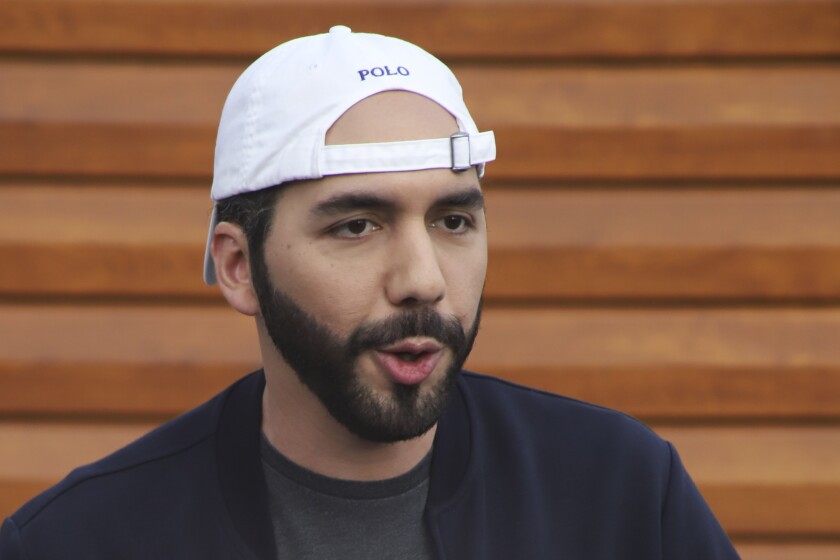
Salvadoran President Nayib Bukele
Salvadoran President Nayib Bukele.

    When Nayib Bukele first took office years ago, he acquired a 90% approval rate through providing political solace for Salvadorians. In 2019, the political parties of El Salvador were plagued by corruption and scandals. Therefore, Bukele created his own political party, New Ideas, which turns away any ideas from the left or right parties that divided El Salvador (L.A. Times). More specifically, he promised to "to fight gangs, squash corruption and break with the country’s entrenched political parties" (L.A. Times). This might seem like a president who wants the best for his people but, the creation of a new party is a tactic done by other dictators in Latin America, specifically the Dominican Republic, to ensure a stable power for the leader. The tactic mobilizes support for the political leader and attacks democracy by limiting the power of other political parties (Journals). Bukele's actions show that this is the type of future that he wants. 

    In Bukele's first couple of years in office, he has restructured the democracy of El Salvador. Earlier this year, Bukele's party won majority in Congress, allowing Bukele to enact any and all legislation that he desires (The Washington Post). Additionally, On September 3, 2021, the highest court, who were elected by the majority New Ideas congress, ruled that the president can serve two consecutive terms in office (CNN), when previously, the democratic republic only allowed the president to be in power for five years (Justice). Moreover, Bukele emphasized the sovereignty by isolating El Salvador from other countries. He wants El Salvador "to [begin] a 'new history'". He goes so far as to claim that he is "an instrument of God," insinuating that he is the only way to "save" El Salvador (L.A. Times). Therefore, with Bukele's isolation tactic and grasp on power in major ares of the government of El Salvador, he will ensure that he stays in power for years and enact the changes that he wants to see, regardless if Salvadorians want it as well. 

President Nayib Bukele with his hands open in front of his face and his eyes cast upward    
President Nayib Bukele has called himself “an instrument of God.”

    Looking at the recent years of Nicaragua, one can see that the future is not pretty for the democracy of El Salvador under Bukele's rule. In 2007, Daniel Ortega took office as the Nicaraguan president. During his presidency, he has deconstructed the partitions put in place for presidential power. Additionally, Ortega filled his government with those of the same political party as him to ensure no resistance towards his ideas. Not only has he manufactured his own government, but he also guaranteed that his government would allow him to run for second term by changing the constitution in Nicaragua. Now the people Nicaragua struggle to enact their freedom of expression, follow other political parties, and get abortions (Human Rights Watch). With a such a similar history as the present of El Salvador, one can only wonder when El Salvador will start restricting its people of their freedoms. These similarities should not be taken lightly, as they will lead El Salvador's democracy into the hands of a dictatorship. 


https://www.washingtonpost.com/world/thousands-protest-against-bukele-government-in-el-salvador/2021/09/15/85cf3986-165a-11ec-a019-cb193b28aa73_story.html
https://www.latimes.com/world-nation/story/2021-05-16/nayib-bukele-the-most-popular-president-in-the-world-is-a-man-with-one-ideology-power. https://journals.sagepub.com/doi/full/10.1177/1866802X1600800101
https://www.cnn.com/2021/09/06/world/el-salvador-president-nayib-bukele-consecutive-terms-intl/index.html
https://www.justice.gov/sites/default/files/eoir/legacy/2013/11/07/COUNTRY_FACT_SHEET_5.pdf
https://www.hrw.org/world-report/2020/country-chapters/nicaragua#

Presidential Assassination and Political Instability in Haiti.


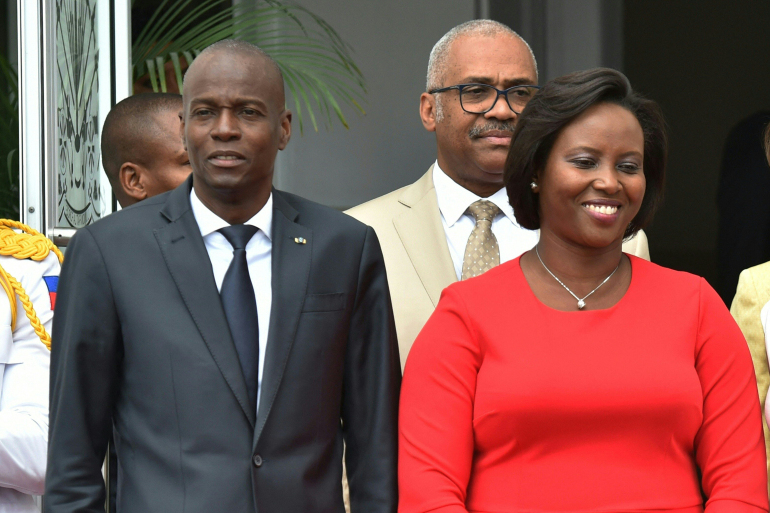
On July 7th of this year, Haitian President Jovenel Moïse, who took office in 2017, was shot dead in his residence, with his wife sustaining major injury as well. The Haitian police later arrested twenty-six Columbians along with two Haitian American mercenaries. A few days after the assassination, the U.S. looked into potential connections between America and the attack, and later denying Haitian requests for aid in securing key infrastructures. 


Haiti: Wife of assassinated President Jovenel Moise speaks out | Latin  America News | Al Jazeera

 Jovenel Moïse and his wife


New evidence suggests that the current prime minister of Haiti may have had a role in the assassination of the president. More than 40 people have been implicated in the killing, but Ariel Henry is by far the most prominent. Months after Moïses death, the fallout has been a descent into a political power struggle. Competing factions each attack each other for the murder, and the Haitian people's hope of finding true justice grows ever dimmer. 


Not only that but since the assassination, Haiti has been hit by two natural disasters, killing nearly 2,000 people and causing landslides and flooding. All in all, Haiti finds itself mired in an unstable political and social landscape. There is no guarantee that Bed-Ford Claude, the prosecutor on the case, will be able to demand Mr. Henry’s questioning or charge him in the assassination, as Haitian law forbids judicial officials from prosecuting senior civil servants without the authorization of the country’s leader, that leader currently being Henry. 

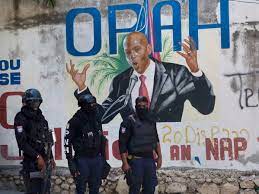
Haiti's President Was Assassinated: What's The Latest? : NPR

Haitian police in front of a mural of Henry


As the New York Times says “The investigation, which has been mired in irregularities and tampering since it began, has provided Haitians with few answers and has undermined what little trust many had in the country’s corrupt and dysfunctional legal system.” Those involved in the investigation have been on the receiving end of threats, and some have even died under suspicious circumstances. 


The whole situation lends itself far more to use as a political tool than it does finding definitive answers. Haitian politics have been ripped asunder, with former allies of Moïse on one side and Martelly, Moïses predecessor and expected front runner in the next presidential election, on the other. 


Amid the violence and uncertainty, it is expected that elections are to be delayed for a year. Many Haitians, already struggling financially, see this as evidence that their country cannot properly function.. Until political legitimacy returns to Haitian politics, the people of Haiti will suffer under a system so corrupt as to reward the murder of a president, with a legal system seemingly ensuring the powerful remain that way, in spite of their crimes. 


Links

https://www.nytimes.com/2021/09/14/world/americas/haiti-henry-moise-assassination.html

https://www.reuters.com/world/americas/haiti-one-month-without-assassinated-president-jovenel-moise-2021-08-06/

https://www.bbc.com/news/world-latin-america-57762246


Wednesday, September 15, 2021

A Win for Women in Mexico

   A historic decision has been made in an unexpected country. On Tuesday, September 7, 2021, the Supreme Court of Mexico decriminalized abortions and deemed that prohibiting them is unconstitutional. With Mexico being one of the more populous and religious (Catholic) countries in Latin America (The New York Times), a huge step has been taken in the right direction for Women's rights despite all the push back from conservative politicians and the Catholic church, where their reign over countries is slowly decreasing, for they greatly condemned the ruling.

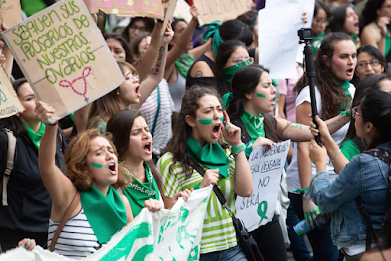
Pro-choice demonstrators are seen in Mexico City in September 2020. (Rebecca Blackwell/The Associated Press)

    Many Mexican feminists have been advocating this issue from all over the country since 2007 when the capital of Mexico, Mexico City, legalized abortions (the New York Times), as well as following other surrounding countries in central and south America, like Argentina who approved a bill to make abortions legal and accessible for women back in late 2020 (CNN). The movement in Argentina used green handkerchiefs which represent the support for sexual and reproductive rights and has become a well recognized symbol throughout Latin America for women's rights (The New York Times). On the other hand, countries like El Salvador, who the Catholic church has wrapped right around their fingers, have incredibly strict abortion laws. There are no exceptions to abortions in El Salvador, including if they have a miscarriage (CBS). In addition, the prosecution time for Salvadorian women can be as high as 35 years. This has only resulted in dangerous black market abortions and further inequality for Salvadorian women (CBS). 

    For a country where homicides of women are quite high, up to 10 women killed everyday in 2020 and more than 2,000 murdered in the first 7 months of 2021 (The New York Times), the social and political oppression that face these Mexican women is intense. Having thousands of women fighting for their rights knowing the backlash, odds, and life-threatening danger is nothing but courageous and admirable.

    Throughout the decade, states all over Mexico have been prosecuting women for up to three years and those who knowingly assisted these women who consented to abortions. Unfortunately, this new ruling will not result in any immediate changes (The New York Times) where women can now have abortions and are completely legal in every state. However, wrongfully imprisoned women will now have the ability to sue the state back and demand any charges to be dropped for having abortions (The New York Times).


        Women march for abortion rights in Mexico City on Sept. 28. (Anthony Vazquez/AP)


    Abortion has been a global hot topic for many years. A war of pro-choice and pro-life; From conception to birth. In the United States, Texas recently passed a new law, that took into effect September 1, 2021, where abortions after 6 weeks are strictly prohibited regardless of rape or incest cases thus making it the most restrictive abortion law in the entire U.S (The New York Times). In many cases, women would be completely unaware of their pregnancy at 6 weeks, so the amount of time to realize your period is late and to schedule an abortion, or even a doctor visit, are reduced to about a week. There are many ongoing arguments going on around the the United States either praising the "heartbeat bill" for protecting the unborn or deeply criticizing the means of controlling a women's body. 


Protesters march in Austin, Texas, in response to the state’s new anti-abortion law in May 2021. Sergio Flores/Getty Images


     Still, there will be many factors affecting women having the full abortions accessibility as there are many oppositions like because most of the country is a little more conservative, doctors can be morally opposed to the procedures. Nevertheless, Mexico demonstrated that even a developing country has the potential to advocate and fight for the rights of women and although there is still a lot more work to be done, Mexico has also paved the way for other Latin American countries to follow them in this slow progression. 


https://www.cbc.ca/news/world/mexico-supreme-court-abortion-1.6167196
https://www.washingtonpost.com/world/2019/10/04/mexico-is-taking-steps-toward-legalizing-abortion-across-latin-america-restrictions-are-widespread/
https://www.vox.com/the-goods/22660973/texas-abortion-lyft-att-godaddy-uber-bumble
https://www.cnn.com/2021/09/07/americas/mexico-criminalizing-abortion-unconstitutional-intl-latam/index.html
https://www.nytimes.com/2021/09/10/us/politics/texas-abortion-law-facts.html
https://www.nytimes.com/2021/09/15/podcasts/the-daily/mexico-abortion-supreme-court.html
https://www.nytimes.com/2021/09/07/world/americas/mexico-supreme-court-decriminalize-abortion.html
https://www.cbsnews.com/news/abortion-ban-el-salvador-lives-affected/

Tuesday, September 14, 2021

Taliban Rule in Afghanistan

For five years up until the US-led invasion after the 9/11 attacks, the Taliban had ruled Afghanistan. Now, two decades after they lost their control, the Taliban are back in power as. In August, the Afghanistan government collapsed and the Taliban took over Kabul. Over the last 20 years, the country has taken major steps to becoming a more modern, democratic state, and has made strides in the equal rights of women and ethnic minorities. However, many believe that the Taliban will set the country back and return to the brutal rule that they instated from 1996-2001.


What the Taliban has promised:


  • They will not seek to attack those who worked for the government

  • Media freedoms will be tolerated but with certain limits

  • They have ensured women’s rights and that women will have access to work and education


Why should we be skeptical of these promises? It’s hard to ignore the history of the Taliban in Afghanistan. During their initial rule, they forbade women the right to work and inhibited education for young girls. Women were not even allowed to leave their homes without a male relative accompanying them.


Even from what we have seen as of recent should raise an eyebrow to the promises made by the Taliban. In July, the Taliban went door to door looking for Afghans who had worked with the government. They ended up killing at least 27 civilians and wounding 10 more while also looting their homes. It is also hard to believe the Taliban's promise of media freedoms considering that the country is already considered one of the worst places to be a journalist and earlier this year, three female journalists were all killed on the same day.

Kabul airport: footage appears to show Afghans falling from plane after  takeoff | Afghanistan | The Guardian

The Afghans people have already shown how little faith they have in the Taliban when the videos of them trying to escape from the outside of planes went viral. Over 250,000 Afghans have fled their homes since the end of May because it appears unlikely that the Taliban will ever change its ways and improve the state of Afghanistan.

https://apnews.com/article/taliban-takeover-afghanistan-what-to-know-1a74c9cd866866f196c478aba21b60b6

https://apnews.com/article/afghanistan-taliban-13304940ec709865ca52aae2d832b963

https://apnews.com/article/religion-taliban-7ab054c063e4ea1c14be9e4811f42982

https://apnews.com/article/afghanistan-media-islamic-state-group-zabihullah-mujahid-arrests-a87cebea5a6f382874043cbb6fadfd17

https://www.pbs.org/newshour/politics/asia-jan-june11-timeline-afghanistan


Monday, September 13, 2021

The Women’s Movement in Mexico: Small Victories but More Change Needed

Tuesday, September 6th, marked a historical day in Mexico for women’s rights. The supreme court ruled a unanimous vote against an unconstitutional law in Coahuila state, effectively decriminalizing abortion across the nation. Ultimately, this precedent will allow women to challenge unlawful arrest and laws against abortion, providing more protections to women in Mexico (CNN).  In 2007, abortion was legalized in Mexico City, but the procedure was still attached to stigma and criminal charges (CNN).  Mexico follows suit after Argentina legalized abortion in December of 2020 (NYT). This is in stark juxtaposition to neighboring Texas, where restrictions were just tightened on abortion. In a predominantly Catholic and conservative country, this is a monumental step for women’s bodily autonomy and a win for women's health advocates. 


While this is a step in the right direction for the women's movement in Mexico, it also sheds light on the country’s abuse of women. Every day in Mexico, over ten women are killed. The last few months of 2021 have seen 2000 women murdered, mostly based on gender (NYT). The large majority of these statistics are underreported, as counts on the incidences of femicide only started in 2012 (CSIS). Systematic impunity has contributed to underreporting, as violence, in general, has increased in Mexico. 

In response to these violent acts, protests and demonstrations have popped up throughout Mexico. One of these demonstrations occurred on March 8th, on National Women’s Day. Women dressed in purple and stormed the national palace, writing the names of thousands of victims on a barrier erected to protect the president (CSIS). In response to these protests, President Andrés Manuel López Obrador (AMLO)  dismissed the whole mission of the demonstration. His administration has made some steps towards addressing femicide. For example, they have formed a general plan to mitigate the problem and issue a "gender violence alert" throughout 19 states in Mexico (CSIS). However, these policies are nothing but niceties to appease the public, and women are angry. They demand to be heard and are tired of being fearful in their everyday lives. 


The president himself has been passive in most decisions regarding the protection of women. He calls himself a ‘humanist’ (as opposed to a feminist) and progressive politician but has recently refused to even comment on the supreme court's decision for fear of angering his conservative base (CNN). One highest point of contention is AMLO’s support of former senator Salgado Macedonio, who has multiple rapes and sexual assault allegations against him (CBS). These actions and his generally dismissive attitude towards women prove he is not a champion for women. Instead, he does not understand the role of the patriarchy and gender-targeting that plagues Mexico. Women are and feel unsafe, even with victories from the Mexican Supreme Court. 

The Center for Strategic and International Studies provides some crucial insights, stating that "funding a special prosecutor's office for the investigation and prosecution of gender-based crimes, promoting early intervention domestic violence programs and publicly supporting demonstrators and activists" are strategies to address femicide (CSIS). The administration needs to be more on board with protecting their citizens, especially vulnerable women populations that are disproportionately murdered. Overall, the recent Supreme Court decisions show change is possible, but there needs to be more policy implementation and progressive thinking to decrease femicide and the mistreatment of women in Mexico. 

Sources:

Video Gamers Next Target in Chinese Government Crackdown

     Clear your schedule from 8pm-9pm on Friday, Saturday, and Sunday nights! Well, maybe only if you are a child in China that loves playing video games. The latest part of China's youth behavior crackdown has limited the amount of time people under the age of 18 can spend playing video games. This may seem ridiculous and not something the government should control, but as an authoritarian state the Chinese government is afforded that power.

    China has been known for it's strong, powerful government and at times, the obscure rules and laws they enforce. Perhaps most famously was the one child policy that had been in place from the 1970s until the mid 2010s. At the beginning of September it was announced that children (those under 18 years old) will only be allowed to play video games for three hours every week. This is the government's effort to limit the negative effects video games have on children.        


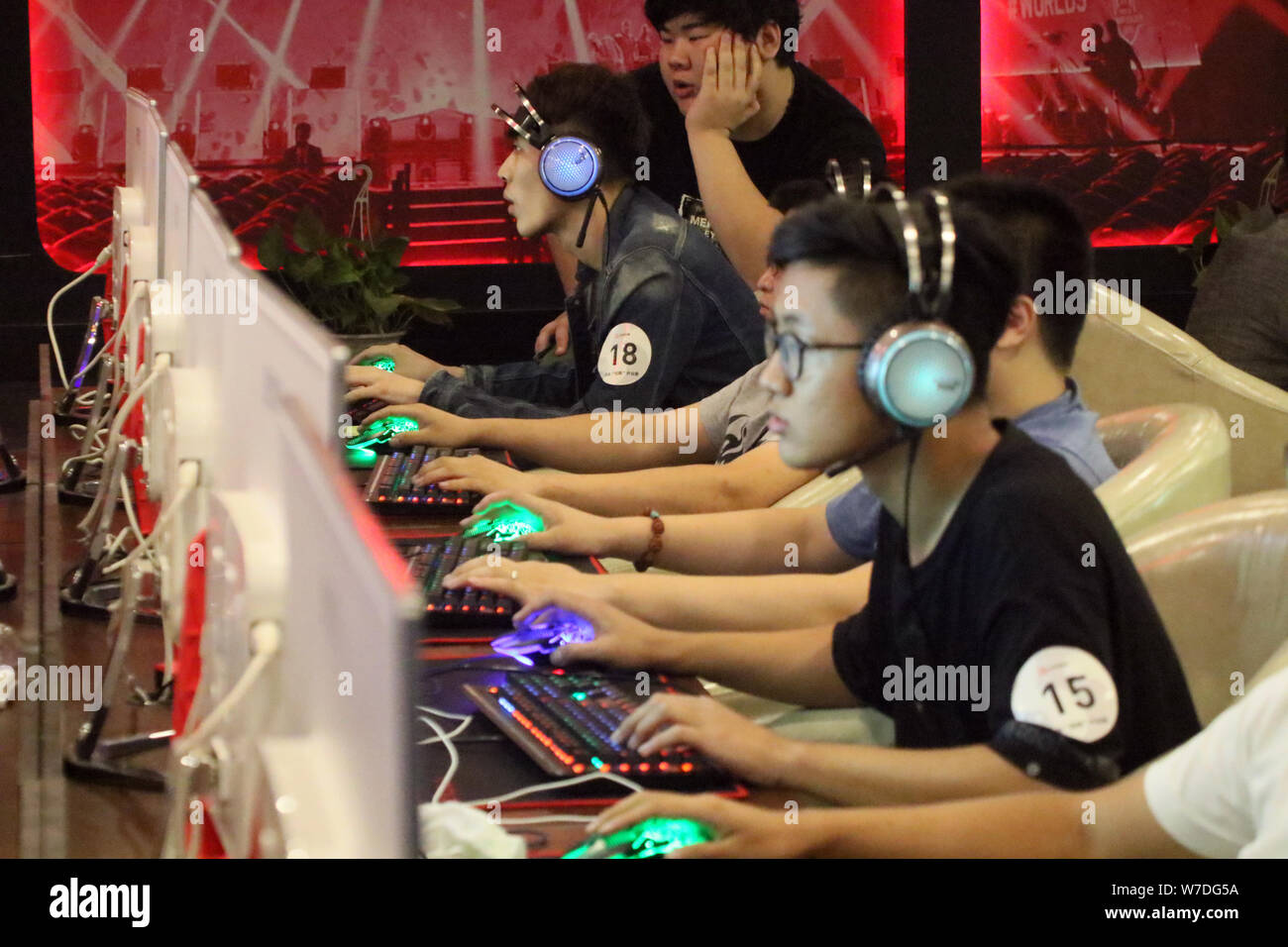
                            Young Chinese players play the online video game, PlayerUnknown's  Battlegrounds, during an electronic sports competition in Yantai city, east  China's Stock Photo - Alamy

                                                     Young video game players


    For some this may seem like the government overreaching and abusing their authority, but many in the country believe this video game ban is the government looking out for their well-being. This is an argument used in favor of a totalitarian state which can regulate how their citizens behave. In a free society, people can willing act in a manner that is not good for them. The power of the state can be used for protecting the people, but how far should the government go to "protect" them?

    In many countries people are guaranteed basic freedoms. The government only limits those freedoms if they believe it is for the good of the people. While many agree that video games have some harmful effects (especially overly violent ones), not as many would say the government should monitor children's usage. In fact, many studies throughout the pandemic have even offered that video games are helpful during times of isolation. Nonetheless, the Chinese government believes it is serious enough of a problem that it may lead to an addiction. This belief inspired the new video game restrictions.

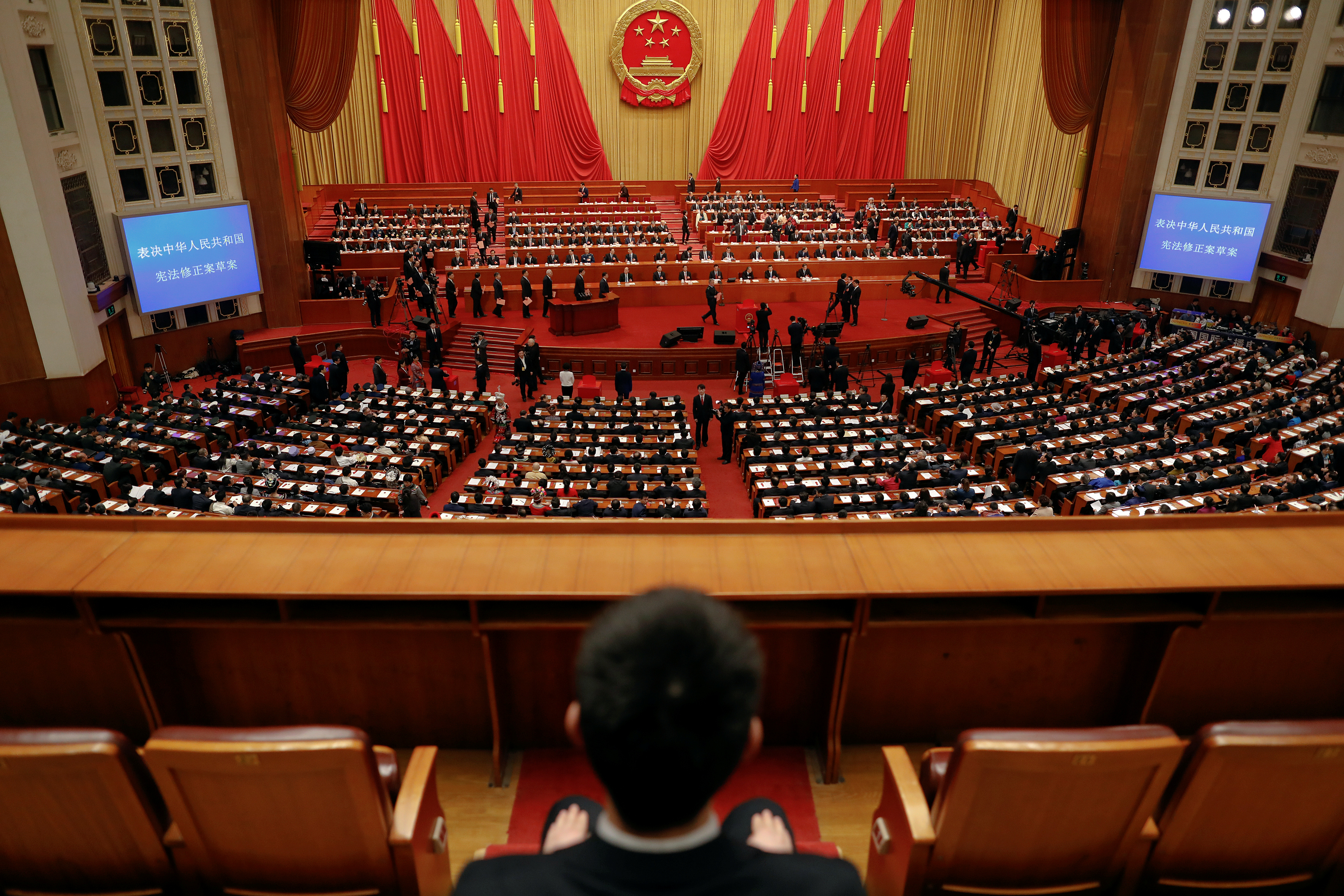
                                China's new top government leaders

                                                            Chinese government leaders


    While parents around the world envy the Chinese governments ability to limit screen time, they overlook the other actions taken that are less understandable. The government has been able to make "misbehaving celebrities" seemingly disappear. A tax evasion scandal led to actress Zheng Shuang's works being removed from the internet basically overnight. The government is trying to get rid of the worship culture that some celebrities generate. They want the state and the love of their country to be the only thing their citizens worship. Social media fan clubs for celebrities have been taken down as a part of this crackdown. Other celebrities have been taken down for being too "effeminate" as a man or having "incorrect" political views.

                                Actress Zheng Shuang killed her career by abandoning her babies born to  surrogate mothers in the U.S. – SupChina

                                                                Actress, Zheng Shuang


    Both the video game ban and the pop culture crackdown exemplify how an authoritarian state can do whatever they believe is best for their people even if it makes taking away basic freedoms. The video game crackdown overshadows the harsher, and less reasonable actions taken by this government. This serves as a reminder that the political systems in place in different countries yield vastly different lifestyles.


Sources

https://supchina.com/wp-content/uploads/2021/01/Zheng-Shuang-career-scaled.jpg

https://www.cnn.com/2021/08/30/china/china-entertainment-crackdown-mic-intl-hnk/index.html

Images

https://c8.alamy.com/comp/W7DG5A/young-chinese-players-play-the-online-video-game-playerunknowns-battlegrounds-during-an-electronic-sports-competition-in-yantai-city-east-chinas-W7DG5A.jpg

https://www.brookings.edu/wp-content/uploads/2018/03/china_plenary002.jpg

https://supchina.com/wp-content/uploads/2021/01/Zheng-Shuang-career-scaled.jpg 


Mexico’s Supreme Court Decriminalizes Abortion


                              Activists supporting the decriminalization of abortion in Mexico


Mexico’s Supreme Court voted on Tuesday, September 6, 2021, to decriminalize abortion, a striking step in a country that holds one of the world’s largest Catholic populations. The court took up the issue on Monday when eight out of eleven justices voted to revoke a law in the state of Coahuila that punished women with up to three years in prison for having an abortion, even in the case of rape. (The Washington Post) 

While the decision only addressed the law in two states, the justices assured that this would establish a precedent that applies to all states, which innately paves the way for systematic changes of the law across the country. (Wall Street Journal) This decision has been celebrated as a major victory for the women’s rights movement across Latin America that has been working to establish abortion rights for all women. 

“Mexico’s decision represents a turning point that Latin America and the Caribbean are making in recognizing women’s rights to abortion as a matter of fundamental rights and reproductive rights,” said Debora Diniz, an anthropologist and founder of a Brazilian women’s rights organization. (Wall Street Journal) This new step was not only necessary to continue to ignite change across the country, but it was also fundamental to establish more resources for women in Mexico. This decision was also influenced by female politicians who now make up half of the National Congress in Mexico and are working to ensure gender equality. (The Washington Post)


The decriminalization of abortion in Mexico follows after the new Texas abortion law that bans most abortions as early as 6 weeks of pregnancy —before many women know they are pregnant— which came into effect on Wednesday, September 1, 2021. The Texas law signed by Gov. Greg Abbott states that physicians can’t perform an abortion knowingly if there is “a detectable fetal heartbeat.” (Wall Street Journal) This new law makes Texas the most restrictive state in the United States for abortion access. In comparison to Mexico’s politics, the new Texas law is restricting and preventing women from making a choice about their pregnancies and their livelihoods. Their restrictive actions is not about being pro-choice, it is about dictating women’s bodies and creating an oppressive environment. This law is particularly concerning due to the impact it may have on black women in the state of Texas who already have high maternal mortality rates. About 70 percent of abortions in Texas in 2019,  were provided to women of color, according to the Guttmacher Institute. (New York Times) Now that women in Coahuila, which borders the state of Texas, can choose to terminate their pregnancies through the first trimester, Avila-Guillen, executive director of the Women's Equality Center, suggests that some American women may benefit from Mexico's new law.

With this new ruling in Mexico, the hope is that change will continue to occur to dismantle the oppressive systems in place. Like Melissa Ayala, coordinator of litigation for the Mexican feminist organization GIRE states “This will not only have an impact in Mexico; it will set the agenda for the entire Latin American region.” (Washington Post)


Sources: 

https://www.washingtonpost.com/world/2021/09/07/mexico-abortion-supreme-court/

https://www.wsj.com/articles/mexicos-supreme-court-decriminalizes-abortion-in-historic-shift-11631049288

https://www.npr.org/2021/09/07/1034925270/mexico-abortion-decriminalized-supreme-court

https://www.nytimes.com/2021/09/07/world/americas/mexico-supreme-court-decriminalize-abortion.html?searchResultPosition=1

https://www.texastribune.org/2021/05/18/texas-heartbeat-bill-abortions-law/

https://www.wsj.com/articles/texas-abortion-law-what-to-know-as-supreme-court-allows-it-to-take-effect-11630606238


Wednesday, September 08, 2021

Russian influence in Belarus

Why do some post-Soviet countries remain under Russian control and some don't? Are any of the countries in the Baltics, Balkans, or Eastern Europe safe from Russia's military or intelligence reach? What does Russia have to gain from influencing the politics of a country that seems to have little influence elsewhere? These questions are some of the most popular discussions in European foreign affairs, as each year every country must strategize about how they will continue their relations with Russia. 

This past year, Russia's influence in Belarus became unavoidably clear, as the two countries have been openly cooperating against anti-government movements. Just today, Russia sent fighter jets to help patrol Belarus's borders.

Over the last year, the world has watched Belarus's government, President Lukashenka in particular, increasing government control of the population and suppressing opposition parties within the country. The administration was supported by Russia's President Putin from the militarization of the government to limiting the freedom of speech, and public information. The tactics applied in Belarus are ones that Putin knows how to apply in his own country, and ones he would easily apply against the will of any other post-Soviet country.

Why should we talk about this today, if this has been going on for months? Russia's fighter jets have just added fuel to the already burning with anger NATO (anger that most likely won't result in anything but sanctions, but still...). With every year, tensions between Russia and Europe rise. Each time the Russian government attempts to further their military land base to countries that are allied with Europe (Georgia, Ukraine, the Baltics), new talks of the Russia issue arise. Yet, they rarely lead to anything because the European governments see the issues as too far removed, and the economic benefits from not getting involved as a too high set. 


This time might be one of the last ones before it is too late, therefore Europe and the US should finally begin thinking in the long run and forget about the short economic benefits. Promote freedom of speech within Belarus, start own anti-propaganda campaigns in the region, support those who speak out against the corrupt governments, and provide them with protection.

https://www.atlanticcouncil.org/blogs/ukrainealert/belarus-and-europes-new-iron-curtain/
https://www.reuters.com/world/russia-moves-sukhoi-su-30-fighter-jets-belarus-patrol-borders-minsk-says-2021-09-08/

Tuesday, September 07, 2021

Secularism in France and Québec at the Expense of Muslim Women

Since the 1980s, France has been battling with keeping the country secular, by implementing laws specifically targeting Muslim women from wearing hijabs and face coverings. Last April, France’s dominant conservative party, Les Républicains, came on stronger, amending the laws to include forbidding anyone wearing visible religious attire to participate in sporting events, the outlawing of the burkini (a full body swimsuit), and prohibiting anyone under the age of 18 from wearing a hijab. 

Banning a source of pride and identity for Muslim women in France is not empowerment, it is oppression. The secular law bans civil servants from wearing hijabs, and appearing in a hijab for both students and parents. Not only does the amendment cut Muslim hijab-wearing mothers from participating in their children’s school activities but also denies them access to all governmental employment opportunities (The Guardian). Instead of allowing the freedom of choice for muslim women to express their religion, politicians claim the “anti-separatism” measures are in the name of public safety and empowerment, despite having the largest Muslim population in Western Europe (Times). French politicians believe that by allowing hijabs and religious wear, parents would ‘impose harmful dogmas’ onto their children at an age too early for their comprehension (Washington Post). Yet, if that assertion was true, regulations on hijabs and religious outfits would not exist at all. The government’s facade as savior and deliverer from oppression is deplorable and disturbing given how blatant their actions are to reclaim women’s freedoms. 


In rebellion, French women created the viral hashtag, #PasToucheAMonHijab, to protest the regulation of Muslim women’s bodies in the name of secularism and Islamophobia. While the redundancy is banal, women’s bodies are still being ruthlessly questioned, and what’s worse, Muslim women are intentionally excluded from the conversation (Washington Post). 


Following in France’s footsteps, in late April Quebec passed Bill 21, prohibiting government workers in positions of authority the right to wear religious symbols (BBC). Although those opposed have labeled this law “an assault on religious minorities,” Quebec Premier, Francios Legualt, argued that while serving the public, those in public positions should not be adorned in attire that could potentially encourage their faith (Washington Post, Quebec). He furthers the Catholic Church has long held unfair control, but however hypocrtically, chooses to take aggressive actions that are directed at muslim hijab-wearing women.


It is highlighted here an underlying theme of comparative politics- countries lead by example. What is unjust and inhumane will continue to penetrate other areas of the world if measures are not taken to resist oppression, the audacious will of a patriarchal society and the unrelenting, insidious nature of inequity across borders. 


https://time.com/6049226/france-hijab-ban/

https://www.vie-publique.fr/loi/277621-loi-separatisme-respect-des-principes-de-la-republique-24-aout-2021

https://www.washingtonpost.com/opinions/2021/04/21/france-hijab-ban-vote-exclusion/ 

https://www.bbc.com/news/world-us-canada-56821752 

https://www.washingtonpost.com/world/2021/04/20/quebec-canada-religious-hijab-turban-ban/ 

https://www.theguardian.com/world/2021/jul/27/i-felt-violated-by-the-demand-to-undress-three-muslim-women-on-frances-hostility-to-the-hijab
https://www.newstatesman.com/world/europe/2018/05/outrage-over-hijab-reveals-hypocrisy-french-secularism
https://m.facebook.com/PasToucheAMonHijab/photos/?ref=page_internal&mt_nav=0

Featured Post

Turkey's Ban on Insults against Erdogan

 Since 2005 Turkey has had a law against insults against Erdogan known as Article 299. The article declares that citizens can be imprisoned ...