Monday, November 07, 2005
Is Genocide Uniquely African?
From 600,000 to 1 million souls slaughtered in just 100 days in Rwanda. Thousands killed, raped and mutilated in Darfur, Sudan. On-going civil war and instability in the Democratic Republic of Congo (DRC), Somalia, Cote D'Ivoire, Northern Uganda .... is violence and genocide unique to the African continent? Why does it persist? Below, our 2 guest bloggers this week, Sarah G., and Kennan J present their views.
Dr. D.
Sarah G.
There will always be genocide in Africa as long as "tribalism" exists...
"There will be no rescue, no intervention for us. We can only save ourselves. Many of you know influential people abroad, you must call these people. You must tell them what will happen to us... say goodbye. But when you say goodbye, say it as if you are reaching through the phone and holding their hand. Let them know that if they let go of that hand, you will die." -Paul Rusesabagina, Hotel Rwanda. The atrocities of the Rwandan genocide certainly turned heads around the world. In only three months, an estimated 800,000 Tutsis and moderate Hutus were slaughtered in the hands of the Hutu extremist group known as the Interahamwe. On the surface, this massacre appears to be the result of tribalism. However, this is a common misconception as the Rwandan genocide was not the result of tribalism but rather of lingering ideals and policies implemented during colonialism furthered by deficient government and economic disparity. This theory serves as a microcosm of the situation throughout Africa.
Unfortunately, the term "tribalism" usually carries a negative connotation in which society is divided into a myriad of small groups prone to hostility and violence towards one another. While enmity does exist within tribalism, it is often the product of invariable factors such as scare resources and corrupt governance. In fact, it is arguable whether or not the degree of brutality within tribal societies overshadows that of civilized societies. African tribalism parallels the theory of ethnocentricity in the sense that the disparity between in each tribe is the same by which we can all be culturally defined. In other words, the religious, linguistic, and cultural lines that identify a Tutsi or Hutu are no more than what makes someone an Irish Catholic American. In the same ways that large populations have grouped together to form states and nations, so have small ones to form tribes, and in this way is tribalism no more than a sub category of social evolution. Who is to say then, that existence of tribalism cannot be a peaceful one? If tribes of Chinese, Japanese, Italians, and Indians can all make rest in New York City, than why not in Africa? The answer to this question does not point towards flaws in tribalism but rather the faults of colonialism.
The recent situation in Rwanda serves perfectly to link colonialism to genocide. German and Belgian rulers brought with them to Rwanda pre-conceived notions of racial hierarchy and white supremacy. The kindness and elegance of Tutsi tribe, coupled with their European-like features greatly impressed them as they implemented a system of indirect rule. In this case, not only did colonialism create tribal divisions but it also fostered a sense of primacy between the Tutsi and Hutu tribes, which led the Tutsi's oppression of the Hutu erupting in the 1994 genocide. "When people ask me, good listeners, why do I hate all the Tutsi, I say, "Read our history." The Tutsi were collaborators for the Belgian colonists, they stole our Hutu land, they whipped us. Now they have come back, these Tutsi rebels. They are cockroaches. They are murderers. Rwanda is our Hutu land. We are the majority. They are a minority of traitors and invaders. We will squash the infestation. We will wipe out the RPF rebels. This is RTLM, Hutu power radio. Stay alert. Watch your neighbours" -George Rutaganda, Hotel Rwanda.
While direct rule may not always be the case as it was in Rwanda, the effects of colonialism and their pertinent link to genocide are numerous and widespread. In his book How Europe Underdeveloped Africa, Walter Rodney examines the way in which European nations economically exploited African resources, creating monocultures that divested national economies. Post-colonial theorist Franz Fanon investigated the psychological effects of colonialism, arguing that years of domination and subjugation led to an overwhelming sense on inferiority and inadequacy, which in turn barred nation's growth following independence. European nation's cherry-picked Africa's wealth, squandering her resources, demoralizing her people, and causing nations to fall into a pattern of dependency. Following independence nations were abruptly forced to fend for themselves. Economically and socially they were weak and divided and politically they were inexperienced and the continent became poverty stricken and politically corrupt. It was this that paved the way for coup d'etats and genocide.
All in all, African tribes do not innately lean toward genocide, but rather has colonialism influenced and instigated them. The peaceful existence of tribes in Africa is completely plausible, but it has been hindered by colonialism's numerous long-lasting effects.
Helpful Links:
http://www.globalissues.org/Geopolitics/Africa/Intro.asp#TheLegacyofEuropeanColonialism
http://www.foreignaffairs.org/20010501fareviewessay4773/jeffrey-herbst/the-unanswered-question-attempting-to-explain-the-rwandan-genocide.html?mode=print
http://floydn.blogspot.com/2005/09/societal-tribalism-in-south-africa.html

Monday, October 31, 2005
NEPAD (New Partnership for African Development) is a Sham

The New Partnership for African Development (NEPAD) came into existence in 2001. It is purportedly a new partnership between African countries and the West in an attempt to bring Africa out of its steady decline. Will it work, or will it be another African-led disappointment? Our 2 guest bloggers this week, Roz D, and Paradon M, offer their perspectives below. Dr. D.
When we take a look at the New Partnership for Africa’s Development (NEPAD), established in July 2001 by the Organisation of African Unity (OAU) and accepted by the G8 Summit of 2002 at Kananaskis, Alberta, Canada, we already see the failings of another to-be failed endeavor. An endeavor spearheaded by only five head of states at the time and supported by Western money and institutions, both private and government acting. Like much of Africa’s constitutions throughout the continent, the goals and wording are visionary in nature, with flowery language and phrases of idealism such as “good governance as a basic requirement for peace, security, and sustainable political and socio-economic development (www.nepad.org),” but are highly improbable to achieve in reality, at least for the time being. What is addressed below is not that African countries do not appreciate outside help from various countries and organizations…it is that many African leaders are blind to their actual countries needs, blinded by the Western education, blinded by an idealism that is hardly based in reality. Of course, African leaders try to legitimize their political, economic, and social reforms under the heading of OAU, NEPAD, or even the UN. What are needed instead are truly African organizations, based in realistic goals, with greater autonomy from Western influence, via money or Western policy-making dictating this or that over the other. What are needed are organizations that are not a sham.
Too often there are program initiatives that are brainstormed, produced, and implemented by legitimate organizations, in this case the NEPAD. What organizations such as NEPAD fail to recognize is that “fixes,” if you can even call them that, expect too much in too little time. We are not talking about the three to five year terms of projects that often get started. What is needed are truly long-term projects lasting at least ten years, preferably fifteen years as a median term for change. That is not to say that because now there is more time that more “goals” can be established; it goes against the whole idea. For example, on www.nepad.org website, there is a heading titled What are the immediate desired outcomes of NEPAD? with “conflict prevention and the establishment of enduring peace on the continent” and the adoption and implementing “principles of democracy and good political economic and corporate governance, and the protection of human rights.” One thing to say about those goals: ARE YOU KIDDING ME???!!! Those are immediate goals? What is your long-term goal: world peace? The remarks are not meant to be cynical. It is just that when one’s “immediate desired outcomes” are those goals that are still continually fought everyday in even developed countries, one has to wonder if NEPAD is living in a fantasy world. One has to keep in mind that many African countries are lead by corruption and the cult of personality, some would say a legacy from the colonial age. Instead, NEPAD, if it is truly going to be effective, must tone down its immediate goals and focus and work locally with respective African nations in establishing the basics such as food, shelter, and education. Although this is a simple statement with many caveats, essentially once you have a country with an educated populace that has enough food and shelter, a governance structure and along with it, rule of law, will begin to emerge.
To establish a credible and legitimate governance within a country, what is needed are not necessarily Western forms of thinking and governance. Instead, what is need are respective African country versions of governance. Too often, Western nations hope to influence how a country develops and “grows up.” They do so by using money as the carrot. That is, basically saying that if you want our money to develop your country, you are going to have to develop according to our terms and conditions. Already, the NEPAD is mired in Western bureaucratic mess. Even the leaders of the respective countries in the NEPAD think like Westerners. What many African leaders and most Western leaders fail to recognize is that problems within a country are not necessarily just internal but also inter-state conflict. For example, that is a “civil war” in the Congo has already involved individuals from eight countries. Even more, the NEPAD must distance itself from organizations like the G8. Yes, those countries mean well but they do not understand how to help. It is like asking a car mechanic to fix a plumbing issue in a house: yes, the car mechanic wants to help and does so but does not quite understand the intricacies and needs of the plumbing system as a fully certified plumber would. To allow for greater autonomy, the NEPAD must take a stand. NEPAD must demand to those nations willing to offer help that, “We welcome your money but we’ll fix our own way. What works in Senegal does not necessarily work in Sierra Leone.”
Lastly, there is a lack in the perception of historical success among many African nations. There is the thinking that nations can be restored to their “former glory.” To be honest: there NEVER was a former glory for many African nations. Instead, most African nations are experiencing success, or at least attempts for it, on their own and for the first time. As such, there are no leaders, including those from NEPAD, that can truly say that what they are doing has been tried and tested and works. Whoever says that is lying. How does one person, how does one organization know the key to success? They do not. It takes a group of people, the citizens of a country to make success happens. Yes, an individual can prompt a reform…but it is the citizens that want to carry it out.
In the end, NEPAD, for all its talk is a sham. It needs to realize that its goals need to be more realistic and/or increase the number of years. It needs to realize that Western influence and policies do not work for every single country. Finally, it needs to realize that what they are attempting to do has never been done before and to take baby steps.
Paradon M.
NEPAD: Africa’s Pursuit of Successful Destiny
By: Rosalyn D.
Now only four years old, NEPAD (New Partnership for Africa’s Development) has become an integral part of Africa’s progress made towards economic growth. The start of a millennium signaled Africa to take charge of their destiny, and pursue a new ambitious goal towards economic development. The continent saw a need to design an alternative strategy to the PRSPs (Poverty Reduction Strategy Papers) in order to confront its challenges of rising poverty levels, continual underdevelopment, and marginalization of its markets within the global economy. Hence, in July of 2001, NEPAD was adopted by the African Union.
NEPAD specified major areas of particular development assistance, including urgent debt relief; significant resources for infrastructure development; sustained financial outlays so that Africa can meet the United Nations millennium development goals of halving poverty rates by 2015; and, the end of trade distortions and agricultural subsidies by rich nations so that Africa can trade its way out of poverty through better access to lucrative Western markets.
Largely influenced by Thabo Mbeki and his idea of ‘African Renaissance,’ the institutionalization of key NEPAD principles are based on the idea that African dependence on aid and foreign intervention is a major barrier to African success. The main NEPAD principles and components are: African ownership and responsibility for
the continent’s development; the promotion and advancement of democracy, human
rights, good governance and accountable leadership; self-reliant development to
reduce dependency on aid; building capacity in African institutions; promoting intra-
Africa trade and investment; accelerating regional economic integration; advancing
women; strengthening Africa’s voice in international forums; and forging
partnerships with African civil society, the private sector, other African countries and
the international community. The efficiency of the program is characterized by executing these principles.
Endorsed by the G8, the NEPAD policies and priorities have become the internationally approved framework for Africa’s development. The APRM, African Peer Review Mechanism, has been largely successful. This peer review system has helped to establish camaraderie among the fifty-three nations, creating a forum in which each country is accountable for one another.
NEPAD has helped spread democracy and improve financial conditions. For example, in Mozambique, the world has observed peaceful changes of leadership for the first time. Also, since the implementation of the program, the average economic growth rate of Africa has increased from 2.9 in 2002 to 5.1 in 2004.
Copying is said to be the sincerest form of flattery. The NEPAD ‘Fight Against Aids’ campaign is a plan that addresses the impact of HIV and AIDS in Africa through integrated health sectors and new training techniques. This African program has been so successful in achieving positive results that other countries around the world have implemented the NEPAD Health Strategy.
Also, improvements and innovations have been made within the field of education. NEPAD has helped endorsed African partnerships through distance education learning, and exchange programs among African nations. These programs are geared for students interested in pursuing teaching, and focus on training and development.
The examples mentioned are a few of the many NEPAD successes. Clearly, the success of this program has helped to uplift Africa’s civil society. NEPAD has curt-tailed development within Africa, and has built the platform for all of Africa’s socio-economic success.
NEPAD is actualizing the AU vision of an Africa integrated, prosperous and peaceful, an Africa driven by its own citizens, a dynamic force in the global arena.
Ultimately, only time will tell how successful NEPAD will be in achieving economic development of Africa. However, the monumental progress made in just the first four years is quite notable. The initiative undertaken by the NEPAD plan is the first time Africa has banned together and taken charge of their plight. Taking charge means being held accountable for the issues that have continually plagued Africa, These include resolution of conflicts, poverty reduction, fighting corruption, eliminating the burden of disease and strengthening the capacities of African states. Arguably, the most important aspect of NEPAD is its initiative to facilitate the idea of African ownership of development issues. Unlike other development programs that have come and gone, NEPAD was created by Africans for Africans, ensuring the sustainability of success in the future.
Works Cited:
Coleman, Sarah. “ The NEPAD Formula” [Online] World Press Review. http://www.worldpress.org/Africa/578.cfm. 27 October 2005.
NEPAD – The New Partnership for Africa’s Development (October 2001), 57 pp. e-disk
“NEPAD” [online] Wikipedia, the free encyclopedia. http://en.wikipedia.org/wiki/nepad. 27 October 2005.
“Nepad, the AU and the EU: the challenges of a relationship” European Union: Delegation of the European Union Commission of South Africa. [Online] http://www.eusa.org.za/PDFdownload/Speeches/Lake_Nepad_AU_EU_2003.pdf. 27 October 2005.
Taylor, Ian (2004) “Why NEPAD and African Politics Don’t Mix”, Foreign Policy in Focus e-disk
Monday, October 24, 2005
100% Debt Relief: The Answer for Africa?
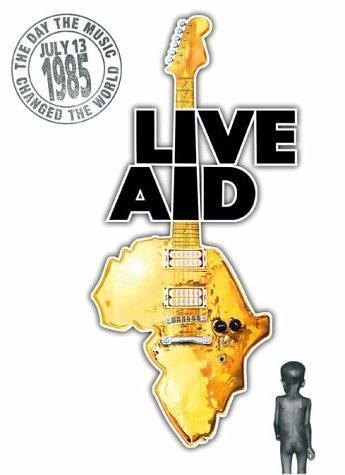
 Who couldn’t agree with British Prime Minister Tony Blair and rock stars Bono and Geldolf that something has to be done about poverty and underdevelopment in Africa? A quick fix of debt relief and more foreign aid would make everyone feel better. But in this feel-good age, jumping on the debt relief and foreign aid bandstand to assuage Western guilt and right some historical wrongs is not the silver bullet for Africa the recent superstar hype promises.
Africa does not simply need another quick fix of more money and debt relief – it needs to enter the twenty-first century. There is an important jump in logic here: debt relief does not ensure better governance, accountability, transparency, a better standard of living, or more effective use of foreign aid. The track record suggests that it does the opposite: it allows less than democratic leaders to co-opt opposition, beef up militaries and Swiss Bank accounts, and court thoughts of being President-for-Life.
The celebrated Columbia University economist, Jeffrey Sachs, may insist that Africa’s problems are mainly due to economics, but this ignores the more serious political causes: bad government.
Africa is the only continent in the world to have become poorer since independence – even though Africa has received over $568 billion from 1960 to 2003 (in today’s dollars) to end poverty. Where has this money gone? Not in education, health care or infrastructural development – often more simply into unmarked Swiss bank accounts of self-described Presidents-for-life. One governance expert for the African Union contended that billions of dollars leave the continent each year for secret bank accounts in the West – with capital flight estimated to have reached $148 billion since the end of colonialism to 2003.
Some may argue that this is too pessimistic of an analysis – blaming Africa for all its woes and absolving the West of its responsibility in perpetuating the problem. But by forgiving debts and giving more foreign aid, we would simply be perpetuating the problems of the past. Africans are not stupid, untalented people – they are some of the most resourceful people in the world. Africa is not resource poor – it is simply poorly resource managed. Many Africans will tell you that what Africa needs is the promotion of trade not aid. Africa wants to be an equal partner, not a pathetic poor cousin to the rest of the world.
The late Albert Mukong, a respected Cameroonian human rights octogenarian activist once asked me, “Why do you people in the West continue to give money to our bad leaders?” “Why do you help keep them in power?” It may not the West’s responsibility to make African leaders accountable to their people -- only the African people themselves can make their leaders accountable. However, the West must do its best not to help keep corrupt, repressive leaders in power by funding them with more foreign aid, or relieving them of any responsibility for repaying debts that they may have incurred or former dictators before them.
Instead of giving African leaders a carte blanche, more effort needs to be made by foreign governments, international institutions, the African Union, and current African governments to freeze and recoup the assets of former dictators and their families that stole from their own people and to punish those that continue to rob the children of their future.
The G8 have proposed to immediately forgive the debts of 18 countries, 14 of which are African (Benin, Burkina Faso, Ethiopia, Ghana, Madagascar, Mali, Mauritania, Mozambique, Niger, Rwanda, Senegal, Tanzania, Uganda and Zambia). These countries have successfully completed the Highly Indebted Poor Countries (HIPC) initiative. This would free these African countries of an estimated $16.7 billion they owe international lenders, specifically the International Monetary Fund, the World Bank and the African Development Bank. Nine other countries in Africa will be eligible for debt relief under the HIPC initiative in 12-18 months, including Cameroon, Chad, Democratic Republic of Congo, Gambia, Guinea, Guinea Bissau, Malawi, Sao Tome, Sierra Leone.
None of these countries are not democratic powerhouses. According to Freedom House (a non-profit organization that measures the level of freedom in the world by examining civil liberties and political rights) five of these countries are ranked “free” (Benin, Ghana, Mali, Sao Tome and Principle, and Senegal), five are ranked “not free” (Chad, Mauritania, Rwanda, Cameroon and the Democratic Republic of Congo) with the rest “partly free”. More disturbingly, most of these countries are at the bottom of Transparency International (a German-based non-governmental organization that ranks perceptions of corruption within various countries) list. So when push comes to shove, who will the leaders be accountable to? Certainly not their own people.
Consider one case study: Cameroon, in line for HIPC initiative relief in 12-18 months, has been lead by President Paul Biya for 23 years (1982-present). He was re-elected for another 7- year term in the 2004 presidential elections, which were fraught with voter irregularities and fraud. Cameroon also has the dubious distinction of being ranked the most corrupt country in the world two years in a row (1998, 1999) by Transparency International. Torture is widespread and systematic in Cameroon with government repression of minorities commonplace. Cameroon continues to suffer from high levels of corruption. Debt relief will simply further entrench this leader like other African leaders in line for one-hundred percent debt relief.
The U.S. Millennium Challenge Corporation established by the Bush administration, although off to a shaky start, has the right idea about what is necessary for sustainable poverty alleviation and development, namely good governance, with a focus on anti-corruption efforts, economic freedom, and investment in the African people through increased commitments to education and health care. Unless African leaders are held accountable for spending, there is no guarantee that any debt relief or aid will go to the neediest.
Do Africans a favor – not by dumping more aid into the pockets of their corrupt leaders – but by refusing to keep them in power by stocking their Swiss bank accounts. Fighting for more debt relief and foreign aid for Africa might make you feel better, but it won’t help the poorest of the poor. For that, accountable, representative and honest government needs to be promoted in Africa.
Below, we have 2 guest bloggers, Ron A., and Ashley I, who have some other suggestions about 100% debt relief. Dr. D.
Proponents of 100% debt relief for African countries have capitalized upon the massive public support for such a program which promises to facilitate economic growth and development in 3rd World countries by simply erasing the countries foreign debt. The rational underlying this call for total debt relief is that eradicating the debt of these impoverished countries will enable their governments to allocate a greater portion of their federal budget towards social welfare programs and the establishment of political and economic infrastructure which can attract foreign investment, thereby helping to foster economic growth. While ideally 100 % debt relief could provide African Governments with the necessary revenue to enact social and economic programs designed to facilitate growth, the persistence of structural and environmental obstacles which have impeded economic growth in the past remain likely to undermine opportunities for growth in the future. Total debt relief for African countries is not sufficient in and of itself to engender economic growth without accompanying changes in the political culture of African society.
One of the main problems associated with granting complete debt forgiveness to African countries is that it completely ignores one of the fundamental realities of governance on the continent; corruption. Studies have shown that approximately $148 billion, a figure equivalent to 25% of the continents annual GDP, are wasted on corrupt activities by African governments each year. Thus, the ultimate result of any program of debt forgiveness without conditionalties attached only serves to increase the funds available to these corrupt regimes. Until this culture of corruption is eradicated from the African continent, the effectiveness of any relief package is going to be undermined.
Many of the social and economic programs enacted will not be based upon the perceived benefits they will provide to the developmental process, but to the degree to which they solidify entrenched patron-client networks and develop new such networks. Not to mention the portion of the funds which will go to lining the leaders own pocket. One of the main arguments supporting multilateral debt relief is that since multilateral debt (which includes debt to IMF, WB, African Development Bank, etc) is generally financed on time, each dollar saved through forgiveness programs will be available for the government to use on welfare and development programs. However, believing that this will actually happen naively ignores the degree to which corruption dominates the political culture of the African continent.
Another argument commonly made in opposition to calls for total debt relief is that doing so creates a moral hazard. According to this line of reasoning, debt forgiveness is harmful because it sets a bad precedent which discourages creditors from lending to these countries again in the future. It also leaves the debtor country with the impression that any future money which the country borrows will not have to be paid back in full, thereby discouraging debtor countries from showing any degree of fiscal restraint. This is a particularly relevant point given the corrupt nature of many African regimes. The leaders of many African countries more are likely to divert the money which was intended for debt servicing through illegal channels than towards positive social and economic programs.
Moreover, based upon the socio-economic history of many of these African countries, it is safe to assume, even in a best-case scenario, that at least some of these countries are going to need additional funding in the future. If these countries prove unable to maintain a sense of credibility with the international lending community, these funds are unlikely to be made available in the future. African countries need to demonstrate to investors that they are capable of handling their own economic crisis' without depending upon third parties to bail them out.
Any program of 100% debt relief not only decreases the likelihood that such funding will be made available in the future, it also runs the risk of decreasing the actual amount of funds that are available. If lending institutions forgive the debts of third world countries, they are not only going to be less inclined to make future funds available to these countries, they are going to be less able to do so. Without the inflow of funds from debtor countries, multilateral credit institutions are not going to be able to make future loans available, either to African countries or to underdeveloped countries in other regions of the world.
Thus, when some underdeveloped county, or group of countries, runs into some sort of financial crisis, they are not going to have anyone to bail them out. The IMF and WB have enacted the HIPC program as means of reducing debt burdens to sustainable levels. These levels must remain sustainable not only so that debtor countries can afford to service these debts, but also so that lending institutions can continue to grant additional loans in the future.
The notion of 100% debt relief for Africa carries wide popular appeal because in principle, it sounds like a fair path to economic development. Apologists for colonial/neo-colonial exploitation of Africa see debt forgiveness as a way by which they can both clear their own conscience and help to pave the way for real economic growth on the African continent. However, a program of total debt forgiveness has unseen implications which make other alternative paths to African development far more attractive. Foremost of these would be the removal of subsides and external tariffs for agricultural goods among industrialized countries. Studies have suggested that the removal of government support/protection for agricultural goods among the developed countries would make a more significant impact on African development than all of the current aid programs combined. Reducing obstacles to trade makes more economic sense than a program of complete debt forgiveness. It provides African Governments with the ability to alleviate foreign debt through mechanisms that exist within the structure of the world economy, thereby maintaining, and actually improving their financial credibility and investors confidence, without incurring the risks of moral hazard or those associated with providing significant new funds to corrupt regimes.
Ron A.
Related Links:
http://www.imf.org/external/np/exr/ib/2001/071001.htm
http://www.globalpolicy.org/socecon/develop/debt/2005/0708downside.htm
http://www.africafocus.org/docs05/dbt0501b.php
100% Debt Relief the Answer? NO!
Canceling the debt of underdeveloped and impoverished countries would only be a temporary solution to the problems that are plaguing Africa, because the 100% debt relief initiative does not address the root causes of the continent‚s problems. This summer, people from all around the world gathered together at the Live 8 concerts in hopes of reliving experiences from “the day that rock 'n' roll changed the world” 20 years earlier. The original Live Aid concert, in July 1985, brought artists together for two huge concerts in Philadelphia and London with a goal to rally worldwide attention, and gain support for African countries suffering from poverty and famine. Similarly, this year‚s Live 8 concert was also aimed at mobilizing concern for Africa, but endorsed a very different agenda than the first concert by shining light on the root causes of the continent‚s poverty, rather than asking for donations to alleviate it.
I n addition, it was no coincidence that this year‚s Live 8 concert was held just days before the leaders of the industrialized world met at the G8 summit in Scotland. The reason for the date of the concert was to promote the ”historic” change being made to the global agenda, 100% debt relief for Highly Indebted Poor Countries (HIPC) that qualify for debt cancellation. Under HIPC, countries that want these levels of debt cancellation are required to execute six years of structural adjustments. Unfortunately, in order to qualify for debt relief under HIPC, countries often have to do some things that are very harmful to them. For example, in order to gain HIPC status, Mozambique privatized its water system just as the World Bank had ordered. One year later, floods devastated the country and the French Firm, Saur, pulled out of the 15-year contract that it had entered into a year earlier. Much of the country was left beneath water, at an enormous cost. The World Bank also pushed Mozambique to raise user charges for health care. If people don‚t pay, they don‚t get service. This shows how dangerous liberal economics can be, and in this case, even fatal.
The G8 agreement enforces liberalization and privatization by saying that developing countries must combat corruption, increase growth and expansion in their private sectors, attract investment and eliminate barriers to both foreign and domestic private investment. Forcing countries to adopt a liberal economics system is as burdensome and difficult as it would be for them to have to pay back the debt that the agreement relieves them of. Subjecting these developing countries‚ fundamental services to the harshness of market forces will have very severe costs and consequences. In these countries, where people live on $1.00 a day or less, they cannot afford to pay what a commercial business would demand for these services.
While African countries should not be forced to partake in the international market, they should be given direct investments from the West to build hospitals and schools, and to construct industries. Handouts will not benefit Africa in the long run. In order to further development and end its poverty and misery, Africa will need true investments and substantial education. By benefiting businesses within Africa, they will cause industrial revolutions, growth in employment and an increase in revenues. By creating employment opportunities in Africa, rather than giving cash, the states and the citizens of underdeveloped countries are “being taught to fish” and with these new institutions they “will never go hungry”. G8 leaders need to review the 100% debt relief agreement and their trade policies and reconsider them so that they will produce business growth in Africa.
Debt and poverty is not the only issue troubling Africa. Solution to Africa‚s problems, as can be seen by looking at Ethiopia‚s grim record of human rights violations (the 1985 Live Aid concert raised over $100 million for the famine stricken country). G8 leaders should place just as much time and energy addressing human rights abuses as they are in their efforts to fight the countries‚ poverty and to cancel their debts. These human rights abuses account for a great deal of the miseries that plague the continent of Africa.
Granting African countries 100% debt relief would only solve the countries‚ problems for a temporary amount of time, if at all. In some cases, this initiative will even be damaging to the countries that strive to make themselves eligible for debt relief. G8 leaders need to reconstruct their plan in a way that addresses the root causes of the continent‚s poverty and misery in order to bring about its development and happiness.
Ashley L.
LINKS:
http://www.globalpolicy.org/socecon/develop/debt/2005/0708downside.htm
http://www.globalpolicy.org/socecon/develop/debt/2005/0704tyrrany.htm
http://news.bbc.co.uk/1/hi/talking_point/4617397.stm
Tuesday, October 18, 2005
Foreign Aid is a WASTE of Money
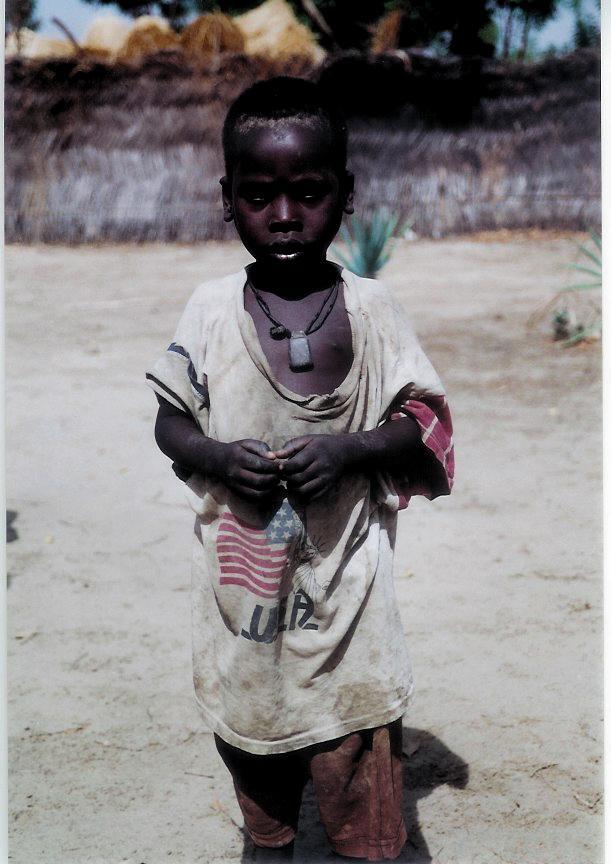
So, is foreign aid a waste of money? With all the hoopla going on with Bono and others clamoring for more foreign aid to Africa, how can it be a waste of money? After all, many are still starving to death, others are dying from preventable or treatable diseases like diarrhea or malaria. How can the West turn a blind eye to the plight of millions of Africans that still rely on foreign aid? A recent Christian Science Monitor article ("To eliminate Poverty", CSM, 17 October 2005) suggested that "The noblest charity is to prevent a man from accepting charity; and the best aims are to show and to enable a man to dispense with aims". Are we making Africa as a continent continually dependent on the West for handouts? How do we end this cycle of poverty? Is debt relief, more aid, or disengagement the answer? Below we have two guest entries from Jeff L., and James K on whether foreign aid is a waste of money...
Dr. D.
I would imagine that an initially negative response to the concept of economic aid is hard to come by. Besides, isn't it the ethical and moral duty of any wealthy nation such as the United States to support less fortunate countries like those belonging to the African continent? It would be easy to respond with an emphatic "yes!" if you were unaware of the underlying conflicts involved with this affair. Suppose however, that economic aid wasn't the solution to the problems in Africa. Suppose that economic aid only fueled African conflict. If you believed these statements, would you still support the practice of foreign aid grants to the continent?
The United States has developed a trade based relationship with many African nations, in which it exchanges manufactured goods and economic aid in return for raw materials. An individual could easily assume that Africa is gaining necessary items for economic and industrial development through these interactions. This however, is not the case. Many African nations are being exploited by the United States (Segal). Aside from a few exceptions, African nations have developed a "negative balance of payments in the flow of aid, trade, and other resources" (Segal). That means in essence that America has taken more from Africa than it has offered. How can Africa ever develop industrially if it continually exports raw resources at a lower rate than it imports foreign goods? The answer is that it can not. Africa will never develop economically until it is able to compete with foreign markets, and the practice of foreign aid is only allowing outside nations to exploit Africa for its cheap goods.
There are a few places throughout Africa that have gained more through trade than they have given, namely South Africa. Ironically enough, South Africa is home to a certain level of "white-dominance" (Segal). According to Aaron Segal, the only places in which these exceptions occur are places in which a large white population is present or the Pentagon has interest in developing a military base (Segal). Although to America it may seem that economic aid is a very productive agency, to Africa, the supposed benefactor, it is a cause of exploitation and a breeding ground for mistrust directed at the western world.
To look at economic aid from a different perspective, we can explore the use of it once it reaches the African nations. Although African nations have received over 110 billion dollars in aid since 1995, they remain among the poorest and uneducated countries in the world (Dicklitch). A large percentage of the foreign aid, which was intended to improve African governments, education and various other ailments, has been pocketed by the political leaders (Dicklitch). Not only does this handicap the development of Africa, but it allows kleptocratic single-party states to thrive. By sending economic aid Africa"s way, America is only empowering corrupt leaders and disturbing any chance Africa has at escaping their current problems and developing new society.
After familiarizing myself with the corruption and greed associated with the practice of foreign aid it is much easier to denounce the concept as unnecessary. Not unnecessary in the sense that Africa is no longer in need of aid or that America no longer has a commitment to third world countries, but rather, unnecessary in the sense that foreign aid is being granted and used for the wrong reasons. I would go as far as to say that foreign aid is a waste of money. Why should we continue to exploit the federal treasury, in order to fill the pockets of corrupt leaders? Or on the moral level, how can we continue to use aid as an excuse to exploit Africa for its goods? The concept of economic aid on its most basic level is easy to agree with, but once it becomes manipulated it is better left unpracticed. In fact, economic aid isn't the answer at all. In order to help African countries, we need to find solutions to their problems of industrialization, corruption, and exploitation.
Dicklitch, Susan. "African corruption is a crime against humanity." Christian Science Monitor, August 9, 2004.
Segal, Aaron. "United States African Relations." J-stor online journal.
For more information on foreign aid relations with Africa, visit J-stor's online research database.
Jeff L.
Is Foreign aid in Africa a waste of money? In short, right now in the non-democratic countries -- it is. Foreign aid is not a new concept; it has been successfully used since the Marshall Plan to help rebuild Europe after WWII. Foreign aid given to Africa is different then aid to most areas of the world because of the rampant corruption in politics and abysmal conditions of economic and sometimes social channels. Since the 1960's foreign aid to sub-Saharan Africa is has reached about 500 billion dollars. In Africa most of the aid sent goes from our government to the government of the African country, and not directly to the people who need it most. Once the African government has the aid money they are free to do with it as they wish, and the governments who submit the aid do not have too much control as to how it's distributed. The corrupt leaders do not provide relief to those who need it most and instead spend the money on programs and services designed to keep the current regime in power. According to Doug Bandow, from 1982-1985 Ethiopia received 1.8 billion dollars in aid and spent 1.6 billion dollars on military, Zambia received 1.6 billion dollars and spent 700 million dollars on military, and Zimbabwe received 1.5 billion and spent 1.3 billion dollars on military. Donating billions of dollars in additional aid likely will continue to finance military projects within a country and keep the leaders' Swiss bank accounts well stocked in the millions. It seems logical at first that more aid should be sent to those countries, which are experiencing bloody civil wars because of the number of refugees and displaced people who need help. However, sending aid to these countries is an absolute waste because the money never reaches the people who need it, instead the money is used to continue fighting the civil war and more people end up dead or needing help.
So then why is there a global call to send more aid to African countries? Many multi-national corporations lobby for increases in aid because not only does it make them look like the "good guys" but they too end up seeing the benefits. Corporations that are friendly with the authoritarian leaders are likely to receive breaks from the government because of the persistence of cronyism in these corrupt countries. These corporations do not need the relief money, which is meant to feed the poor people; they simply want to turn more of a profit. The poor continue to suffer because the incoming aid reaches only the rich and powerful.
I believe that most people are some what disenfranchised over the amount of aid already sent to Africa with little to no progress being shown. In order for foreign aid to be effective as relief to the poor, the corrupt officials of African countries have to become accountable for their actions. Until then more aid might as well be halted because continuing to fund the corrupt government helps to keep the poor suppressed. Do you believe that providing more money to countries such as Sierra Leone or Niger, which rank last and second to last on the Human Development Index, will change the situation at all? I think it will actually make the situation worse. Infusing more money into a politically, economically, and socially unstable countries is a recipe for disaster. Like the infamous Notorious B.I.G. said "more money more problems." Before any aid is sent to any African country, the country needs to be relatively stabilized. Corrupt authoritarian leaders need to be deposed and democracy needs to be instated, otherwise the aid will continue to perpetuate the vicious cycle of oppression. I am not saying that we shouldn't give any money to these African countries that need it the most. What I am saying is that other measures need to be taken first so that more aid is not wasted and starts to make a difference. James K.
Monday, October 10, 2005
African Corruption is the Heart of the Matter
Recently in The Economist, another article about corruption in Kenya surfaced, again focusing on Sir Edward Clay's (former UK ambassador to Kenya) condemnation of continual corruption (The Economist, "The Corruption is Sickening", 11 August 2005). When will it end? How will it end? Are Africans destined to suffer from poor leadership motivated by personal aggrandizement? Below is a reprinted article on corruption I wrote in 2004 -- it's still relevant and still problematic. Also featured below is guest blogger Matt C's analysis of corruption in Africa.
"African corruption is a crime against humanity" (Reprinted from Chrisitian Science Monitor, August 9, 2004)
By Susan Dicklitch LANCASTER, PENN.
You'd have to be living in a cave not to know that Martha Stewart got a "five and five" sentence a few weeks ago for lying about her stocks. Chances are, you're not living in a cave, but you still don't know about one of the biggest con jobs of our time: The misuse of foreign aid to Africa.
Perhaps this is because it's not as sexy as Ms. Stewart's trial or as gut-wrenching as the genocide in the Darfur region of Sudan. Or perhaps, it is because it has been such an embarrassment to Western governments and private organizations who keep on believing that foreign aid will help Africa.
As long as corruption exists at its current levels in Africa, and as long as donors continue to look the other way, foreign aid will simply serve to keep African kleptocrats in power.
Consider this: Sub-Saharan Africa has received an estimated $114 billion in bilateral and multilateral aid from 1995-2002. Yet African countries have consistently ended up at the bottom of the United Nations Development Program's Human Development report, which measures life expectancy, gross domestic product per person, and literacy.
So you may ask the billion-dollar question: Where did the money go? Perhaps the British high commissioner to Kenya, Edward Clay, was asking the same question about official graft last month when - suggesting donor aid to Kenya could be suspended - he publicly accused unnamed Kenyan officials of behaving so gluttonously at the aid trough that they are now "vomiting on the shoes" of donors.
And sub-Saharan Africa has seen the likes of many gluttons. Some of the most infamous include Mobutu Sese Seko, the former president of Zaire (now the Democratic Republic of Congo) who allegedly stole $5 billion, and Sani Abacha, former president of Nigeria, who allegedly looted more than $2 billion. Both former leaders are dead, but their legacy of corruption continues to afflict their nations.
Corruption may not be as bad as genocide, but it is also a crime against humanity. Corruption is a killer of initiative and trust. It drives away foreign investment and undermines the development of the rule of law.
But most callously, corruption robs African children of a better future. Just ask the students in Kenya who could have had 15,000 new classrooms with the $188 million that Mr. Clay alleged has gone missing under President Mwai Kibaki's so-called anticorruption administration.
Transparency International, a Berlin-based nongovernmental organization (NGO) that tracks global corruption, ranks most African countries at the bottom of its list. Even some of the purported African success stories, such as Uganda, are at the bottom of that list.
But is there hope for the future? Much hope has been placed in the New Partnership for African Development (NEPAD), an Africa-wide initiative that calls for good governance, accountability, and a peer-review mechanism as part of its monitoring process.
The African Union (AU) - the successor of the Organization for African Unity - even adopted a Convention on Preventing and Combating Corruption last year, and 30 countries have signed it. But only three countries have ratified it - and it requires 15 ratifications to take force.
The UN has also initiated a UN Convention Against Corruption that has been signed by more than 100 countries, including Kenya which has also ratified it.
But why should America care? While many Americans are debating whether Martha Stewart should have gotten more or less than the five months in prison and five months house arrest she got for lying about her stocks, African bureaucrats are literally getting away with millions. For donor agencies and nations, as well as African societies themselves, not to make political and civil leaders accountable for aid money is to be complicit in the perpetuation of corruption.
Congress is poised to increase foreign development assistance to the world's poorest nations by nearly $2 billion, with most of that money going to combat HIV and AIDS. But HIV and AIDS spending is not free from corruption either. Fly-by-night briefcase NGOs have sprung up everywhere, even with AIDS funds and even in countries that have a great track record like Uganda.
Some donors have taken a hard line against corruption, such as DANIDA (Danish International Development Agency) which cut off aid to Malawi and Kenya as a consequence of blatant corruption. The IMF and the World Bank have also instituted the HIPC Initiative (Highly Indebted Poor Country), which provides debt reduction tocountries that have developed transparency, accountability, and a poverty reduction strategy. To date, 23 of the 27 countries under the HIPC initiative are African.
The US Millennium Challenge Account - which disburses aid to recipient countries on the basis of their good governance, health and education initiatives, and free market economic policies - is a step in the right direction.
Ultimately the only real security against corruption is if Africans make their leaders accountable and demand transparency. The international community has an obligation to help eradicate poverty, but the international community also has the right and the obligation to demand accountability and transparency as well. Donors should work more closely with each other to ensure that African governments that turn a blind eye to corruption get cut off from foreign aid.
Kudos, not criticism, should go to Edward Clay for having the courage to speak bluntly against corruption in Africa.
Susan Dicklitch is associate professor of government at Franklin & Marshall College and has conducted research in Uganda, Cameroon, and Ghana. She wrote 'The Elusive Promise of NGOs in Africa: Lessons from Uganda.'
Corruption is defined as the dishonest exploitation of power for personal gain. In my opinion, this term can be applied to any situation where a human being, typically a male, due to their increased probability of breaking moral standard, is put in a position where „bending‰ the rules allow for enormous personal financial gain. Corruption exists in all parts of the world for different reasons. The rich want to get richer, as seen in the Enron scandal where „Arthur Andersen's Chicago-based lawyer Nancy Temple, who, according to the legalese, played the "corrupt persuader" who led others astray‰IV, or the starving want to feed their families and survive, as in many African countries today. Let‚s set aside corruption as a lingering issue in all parts of the world, and focus on Africa. I think that corruption is not the heart of Africa‚s problem, but an expressed consequence of their situation.
Having traveled to Tanzania, Kenya and Uganda, the three major countries of East Africa, I‚ve seen corruption take place first hand. Imagine sitting on a bus traveling with other honest paying customers from one end of Tanzania to the other. Suddenly, the bus stops at the simple flick of a traffic police officer‚s hand standing ahead of the bus, the driver gets out and speaks with the police officer about the „problem‰, he says he needs to check the luggage compartment for its security and proceeds to open the compartment with a suggestive look towards the driver. The police officer fakes a visual inspection of the compartment while taking a bribe from the driver, out of the pot of money the honest paying customers paid to travel on the bus, to simply be allowed to proceed down the road. This is an example or how blatant corruption can get in Africa and an experience I witnessed many times last summer in Tanzania.
Why does corruption exist? I found myself asking the same question as I sat there watching it occur. Later in my travels I spoke with many Tanzanian citizens about the issue of corruption and found that most people, regardless of their financial status, hate the reality of it. This was striking to me. I was expecting them to justify it because of their poor situation and have it be more spread out among everyday citizens. After talking with people, I found that it was mostly government employees that exercised corruption as a means of income, border patrol, traffic police and even hospital workers, not regular citizens. This is consistent with a proper study done concluding „that there is less corruption where there are fewer trade restrictions; where governments do not engage in favoritist industrial policies; and perhaps where natural resources are more abundant; and that there is somewhat less corruption where civil servants are paid better, compared with similarly qualified workers in the private sector.‰ (Van Rijckeghem and Weder, 1997)I
I believe that corruption is not the root of Africa‚s problem, but a problem that is allowed to occur as a result of other problematic situations such as poverty and lack of government infrastructure. It is difficult to „show conclusively that the cause of the problem is corruption alone, rather than the institutional weaknesses that are closely associated with it.‰II I think if poverty and civil services could be fixed than corruption would not be as big of an issue. Corruption is slowing economic progress but not completely inhibiting it. One solution to the problem of corruption among African government officials calls for the international community to monitor their individual assets. „It proposes that all public officials should declare their assets when they take office, that governments should take powers to seize bank documents where necessary, and that those convicted should have their assets confiscated.‰III
The fact is that corruption is everywhere. It is so visible in Africa because there is not a solid infrastructure set up to reliably find or punish those guilty. If a better system where present as a deterrent, like in the United States, corruption would not be as widespread. It‚s a function of the situation not the people. Fix the system and you minimize the problem. It‚s going to take a little faith from the Western world to aid Africa against this very problematic rut, but eventually I think it will work itself out. People can‚t be fooled and taken advantage of forever.
What are your opinions? Please enlighten me.
IV http://www.time.com/time/business/article/0,8599,263006,00.html (10/5/2005).
I http://www.worldbank.org/fandd/english/0398/articles/010398.htm (10/5/2005).
II ibid. (10/5/2005)
III http://news.bbc.co.uk/1/hi/world/africa/2265387.stm (10/5/2005).
For more information, please see the above websites.
Matt C.
"African corruption is a crime against humanity" (Reprinted from Chrisitian Science Monitor, August 9, 2004)
By Susan Dicklitch LANCASTER, PENN.
You'd have to be living in a cave not to know that Martha Stewart got a "five and five" sentence a few weeks ago for lying about her stocks. Chances are, you're not living in a cave, but you still don't know about one of the biggest con jobs of our time: The misuse of foreign aid to Africa.
Perhaps this is because it's not as sexy as Ms. Stewart's trial or as gut-wrenching as the genocide in the Darfur region of Sudan. Or perhaps, it is because it has been such an embarrassment to Western governments and private organizations who keep on believing that foreign aid will help Africa.
As long as corruption exists at its current levels in Africa, and as long as donors continue to look the other way, foreign aid will simply serve to keep African kleptocrats in power.
Consider this: Sub-Saharan Africa has received an estimated $114 billion in bilateral and multilateral aid from 1995-2002. Yet African countries have consistently ended up at the bottom of the United Nations Development Program's Human Development report, which measures life expectancy, gross domestic product per person, and literacy.
So you may ask the billion-dollar question: Where did the money go? Perhaps the British high commissioner to Kenya, Edward Clay, was asking the same question about official graft last month when - suggesting donor aid to Kenya could be suspended - he publicly accused unnamed Kenyan officials of behaving so gluttonously at the aid trough that they are now "vomiting on the shoes" of donors.
And sub-Saharan Africa has seen the likes of many gluttons. Some of the most infamous include Mobutu Sese Seko, the former president of Zaire (now the Democratic Republic of Congo) who allegedly stole $5 billion, and Sani Abacha, former president of Nigeria, who allegedly looted more than $2 billion. Both former leaders are dead, but their legacy of corruption continues to afflict their nations.
Corruption may not be as bad as genocide, but it is also a crime against humanity. Corruption is a killer of initiative and trust. It drives away foreign investment and undermines the development of the rule of law.
But most callously, corruption robs African children of a better future. Just ask the students in Kenya who could have had 15,000 new classrooms with the $188 million that Mr. Clay alleged has gone missing under President Mwai Kibaki's so-called anticorruption administration.
Transparency International, a Berlin-based nongovernmental organization (NGO) that tracks global corruption, ranks most African countries at the bottom of its list. Even some of the purported African success stories, such as Uganda, are at the bottom of that list.
But is there hope for the future? Much hope has been placed in the New Partnership for African Development (NEPAD), an Africa-wide initiative that calls for good governance, accountability, and a peer-review mechanism as part of its monitoring process.
The African Union (AU) - the successor of the Organization for African Unity - even adopted a Convention on Preventing and Combating Corruption last year, and 30 countries have signed it. But only three countries have ratified it - and it requires 15 ratifications to take force.
The UN has also initiated a UN Convention Against Corruption that has been signed by more than 100 countries, including Kenya which has also ratified it.
But why should America care? While many Americans are debating whether Martha Stewart should have gotten more or less than the five months in prison and five months house arrest she got for lying about her stocks, African bureaucrats are literally getting away with millions. For donor agencies and nations, as well as African societies themselves, not to make political and civil leaders accountable for aid money is to be complicit in the perpetuation of corruption.
Congress is poised to increase foreign development assistance to the world's poorest nations by nearly $2 billion, with most of that money going to combat HIV and AIDS. But HIV and AIDS spending is not free from corruption either. Fly-by-night briefcase NGOs have sprung up everywhere, even with AIDS funds and even in countries that have a great track record like Uganda.
Some donors have taken a hard line against corruption, such as DANIDA (Danish International Development Agency) which cut off aid to Malawi and Kenya as a consequence of blatant corruption. The IMF and the World Bank have also instituted the HIPC Initiative (Highly Indebted Poor Country), which provides debt reduction tocountries that have developed transparency, accountability, and a poverty reduction strategy. To date, 23 of the 27 countries under the HIPC initiative are African.
The US Millennium Challenge Account - which disburses aid to recipient countries on the basis of their good governance, health and education initiatives, and free market economic policies - is a step in the right direction.
Ultimately the only real security against corruption is if Africans make their leaders accountable and demand transparency. The international community has an obligation to help eradicate poverty, but the international community also has the right and the obligation to demand accountability and transparency as well. Donors should work more closely with each other to ensure that African governments that turn a blind eye to corruption get cut off from foreign aid.
Kudos, not criticism, should go to Edward Clay for having the courage to speak bluntly against corruption in Africa.
Susan Dicklitch is associate professor of government at Franklin & Marshall College and has conducted research in Uganda, Cameroon, and Ghana. She wrote 'The Elusive Promise of NGOs in Africa: Lessons from Uganda.'
Corruption is defined as the dishonest exploitation of power for personal gain. In my opinion, this term can be applied to any situation where a human being, typically a male, due to their increased probability of breaking moral standard, is put in a position where „bending‰ the rules allow for enormous personal financial gain. Corruption exists in all parts of the world for different reasons. The rich want to get richer, as seen in the Enron scandal where „Arthur Andersen's Chicago-based lawyer Nancy Temple, who, according to the legalese, played the "corrupt persuader" who led others astray‰IV, or the starving want to feed their families and survive, as in many African countries today. Let‚s set aside corruption as a lingering issue in all parts of the world, and focus on Africa. I think that corruption is not the heart of Africa‚s problem, but an expressed consequence of their situation.
Having traveled to Tanzania, Kenya and Uganda, the three major countries of East Africa, I‚ve seen corruption take place first hand. Imagine sitting on a bus traveling with other honest paying customers from one end of Tanzania to the other. Suddenly, the bus stops at the simple flick of a traffic police officer‚s hand standing ahead of the bus, the driver gets out and speaks with the police officer about the „problem‰, he says he needs to check the luggage compartment for its security and proceeds to open the compartment with a suggestive look towards the driver. The police officer fakes a visual inspection of the compartment while taking a bribe from the driver, out of the pot of money the honest paying customers paid to travel on the bus, to simply be allowed to proceed down the road. This is an example or how blatant corruption can get in Africa and an experience I witnessed many times last summer in Tanzania.
Why does corruption exist? I found myself asking the same question as I sat there watching it occur. Later in my travels I spoke with many Tanzanian citizens about the issue of corruption and found that most people, regardless of their financial status, hate the reality of it. This was striking to me. I was expecting them to justify it because of their poor situation and have it be more spread out among everyday citizens. After talking with people, I found that it was mostly government employees that exercised corruption as a means of income, border patrol, traffic police and even hospital workers, not regular citizens. This is consistent with a proper study done concluding „that there is less corruption where there are fewer trade restrictions; where governments do not engage in favoritist industrial policies; and perhaps where natural resources are more abundant; and that there is somewhat less corruption where civil servants are paid better, compared with similarly qualified workers in the private sector.‰ (Van Rijckeghem and Weder, 1997)I
I believe that corruption is not the root of Africa‚s problem, but a problem that is allowed to occur as a result of other problematic situations such as poverty and lack of government infrastructure. It is difficult to „show conclusively that the cause of the problem is corruption alone, rather than the institutional weaknesses that are closely associated with it.‰II I think if poverty and civil services could be fixed than corruption would not be as big of an issue. Corruption is slowing economic progress but not completely inhibiting it. One solution to the problem of corruption among African government officials calls for the international community to monitor their individual assets. „It proposes that all public officials should declare their assets when they take office, that governments should take powers to seize bank documents where necessary, and that those convicted should have their assets confiscated.‰III
The fact is that corruption is everywhere. It is so visible in Africa because there is not a solid infrastructure set up to reliably find or punish those guilty. If a better system where present as a deterrent, like in the United States, corruption would not be as widespread. It‚s a function of the situation not the people. Fix the system and you minimize the problem. It‚s going to take a little faith from the Western world to aid Africa against this very problematic rut, but eventually I think it will work itself out. People can‚t be fooled and taken advantage of forever.
What are your opinions? Please enlighten me.
IV http://www.time.com/time/business/article/0,8599,263006,00.html (10/5/2005).
I http://www.worldbank.org/fandd/english/0398/articles/010398.htm (10/5/2005).
II ibid. (10/5/2005)
III http://news.bbc.co.uk/1/hi/world/africa/2265387.stm (10/5/2005).
For more information, please see the above websites.
Matt C.
Tuesday, October 04, 2005
Why so many coup d'etat's in Africa?
Many look at the African continent and shake their heads. It's too complicated, too volatile, ever changing to understand. But what accounts for this volatility? Why has the African continent been so unstable -- politically, economically, and militarily?
Some theorists suggest that it has to do with colonial legacies. If you want to understand why the African continent -- over four decades after independence continues to be so underdeveloped, politically and economically -- turn to colonial legacies. Artificial states, a focus on politicized ethnicity, regionalism -- all of these factors are negative legacies of colonialism. But what about bad political leadership? The African continent has had its share of the Idi Amins, the Bokassa's, the Mobutu's and the Mugabe's. Why has this continent suffered so much for so many years? Is there something unique to the African continent? The African people? African society? Or are the problems of coups d'etats just the process of development?
And what can be done? Should Africans have to deal with continual political upheaval, or has a page been turned in African history? Has the democratic flower taken root in African soil?
Some theorists suggest that it has to do with colonial legacies. If you want to understand why the African continent -- over four decades after independence continues to be so underdeveloped, politically and economically -- turn to colonial legacies. Artificial states, a focus on politicized ethnicity, regionalism -- all of these factors are negative legacies of colonialism. But what about bad political leadership? The African continent has had its share of the Idi Amins, the Bokassa's, the Mobutu's and the Mugabe's. Why has this continent suffered so much for so many years? Is there something unique to the African continent? The African people? African society? Or are the problems of coups d'etats just the process of development?
And what can be done? Should Africans have to deal with continual political upheaval, or has a page been turned in African history? Has the democratic flower taken root in African soil?
Monday, September 26, 2005
Structural Adjustment:Helping or Harming Africa?
Bono made a stand with his Live8 concerts urging the G7 + Russia (G8) to give 100% debt relief to poverty-stricken countries. But is this the most effective way of helping African countries? The International Monetary Fund (IMF) and the World Bank (IBRD) have encouraged African countries to engage in structural adjustment -- to embrace neo-liberalism and globalization, focusing on each country's comparative advantage. How effective has this been? Two African countries, Ghana and Uganda, underwent structural adjustment in the 1980s and now qualify for 100% debt relief. But overall, have SAPs helped or harmed African countries?
Sunday, September 18, 2005
Development Tradeoffs?

 What does Development Mean?
Is there a "model" for development that is most appropriate for Africa?
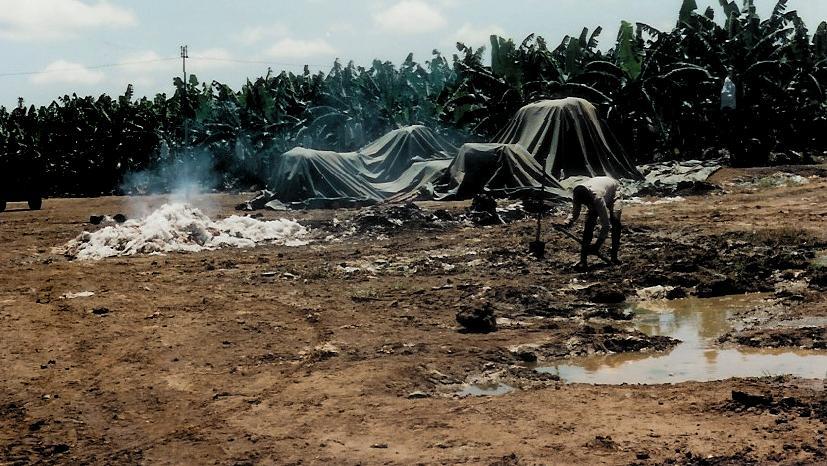
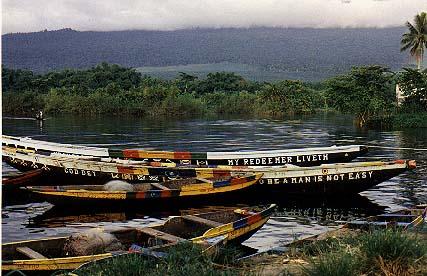
Pictured here on the left is Buea, Cameroon, and on the right, garbage disposal at a banana plantation in Cameroon
On the causes of Underdevelopment in Africa, Kristy G: wrote:
Before I delve into the reasons of Africa‚s underdevelopment, I would like to point out that Africa is a continent and not a country. Over two thousand ethnic groups live in Africa, each with its own diverse culture and ideology. There are fifty-four sovereign states within the continent, therefore, to try and come up with a universal answer as to why Africa is the most underdeveloped continent would not only be absurd, but very difficult. In order to derive an explanation, one must look at the history of each individual country and find the causes for whatever problems the country currently faces.
Many socioeconomic, cultural and political factors contribute to Africa being the most underdeveloped continent, yet for most African countries, it is in my opinion that the colonial legacy in Africa has done the most damage. Colonialism resulted in exploitation of labor, unfair taxation, the creation of artificial states, the siphoning of natural resources, and unfair terms of trade. These are just a few of the policies that were implemented during colonialism that have had lingering effects on the development of Africa.
But African cannot be the only cause of underdevelopment. Ethiopia and Liberia are two countries in Africa that never came under colonial rule, but they share the same problems that the rest of Africa is currently facing.
Africa‚s state of underdevelopment is also caused by external factors, such as the presence of Multinational Corporations (MNCs). These corporations have exploited the African labor force, degraded the environment, and facilitated corruption by supporting African dictators. These MNCs continue to contribute to the development of the First World at the expense of African countries.
Although external factors may be the probable causes of the underdevelopment of Africa, can the African people themselves be at fault for some of their problems? Absolutely.
For instance, in Africa, there is a huge problem with deforestation. Due to the scarcity of arable agricultural land, farmers cut down the virgin forests to obtain land for farming. When all of the trees are removed, flooding results during rain storms because there are no longer enough tree roots to absorb the water. In addition, flooding brings mosquitoes; and mosquitoes carry the deadly disease of Malaria. So Africans themselves have indirectly added to this huge health issue that prevents them from leading a better quality of life. I believe that Africans should take some kind of responsibility for this problem.
Another possibility is the fact that there are about 2,000 different ethnic groups living on the continent can be a problem in itself. That means that there are 2,000 different ways of life, belief systems, and competing ideologies. I would like to point out that wars happened throughout African history, long before European colonialism, and they continue to occur to this day. So you cannot argue that because colonial powers „created‰ ethnic „tribes,‰ they instigated tension among ethnic groups. Some form of tension already existed among ethnic groups long before colonials arrived. The bottom line is that an African country may work hard to achieve development, and all of it could go to waste if a war breaks out.
Coup d‚etats have also destabilized many African countries. It is difficult for a country to establish an efficient economic system when there is so much military unrest.
Yet another internal factor for underdevelopment is corruption by government officials. Money that is allocated for the creation of schools and jobs is siphoned out of the country, by government officials, into Swiss Bank accounts and this leads to another cause for underdevelopment. Sometimes, this is exactly what happens with debt relief money. As debt relief money continues to „disappear‰ at the hands of government officials, donor countries begin to think twice about contributing in the future.
People can spend a lot of time arguing over the cause of underdevelopment on the African continent as a whole. Meanwhile, it continues to endure a vicious cycle of problems that prevent development. Instead of pointing fingers and playing the blame game, everyone needs to put the causes to the side and think about the solution. African countries must come together as a whole to help each other solve the problems at hand. Since they are all suffering from the same problems, why not come up with a solution together to fix them?
Africans need to rely on each other instead of Western organizations˜some of whose past attempts to help African countries have failed. The International Monetary Fund (IMF) and the World Trade Organization (WTO) tried helping many African countries by lending them money with high interest rates for development projects. Since many of the development projects failed, African countries sunk farther into debt and now they are in a worse position than before they borrowed the money. Reliance on Western organizations is not the solution.
Therefore, some type of African unity must take place. One possibility would be in the form of the European Union, or maybe in the form of „The United States of Africa.‰ In my opinion, the best form of unity would be the latter because it would encompass all ethnicities under one nation. Elections should be held based on proportional representation, so that way every ethnic group would have a voice in government. A system of checks and balances should be instituted to prevent corruption at the national level. Also, with all of the „new states‰ working together under this system of checks and balances, they can prevent corruption from happening at the state level and legally kick corrupt officials out of office.
As stated by Ayittey, the people of Africa need „African solutions for African problems.‰ Since no one knows Africans better than Africans themselves, they must use their own ideas to come up with the best solution for development. They should not simply copy the footpaths of Western countries‚ development. Maybe a form of Western government will end up being the solution, or there may be the possibility that Africans will come up with a completely new type of government. Whatever the result, African people need to work fast to solve their problems so that they will have reasons to invest in their future.
Thursday, September 15, 2005
Subscribe to:
Posts (Atom)
Featured Post
Turkey's Ban on Insults against Erdogan
Since 2005 Turkey has had a law against insults against Erdogan known as Article 299. The article declares that citizens can be imprisoned ...

-
 Great news! Now you can sit back in the comfort of your own home and actually see (provided you have access to high-speed internet) the phys...
 -
Who couldn’t agree with British Prime Minister Tony Blair and rock stars Bono and Geldolf that something has to be done about poverty and u...
-
From 600,000 to 1 million souls slaughtered in just 100 days in Rwanda. Thousands killed, raped and mutilated in Darfur, Sudan. On-going civ...

