Wednesday, October 06, 2021

The Missing Persons Phenomena of Mexico

 According to Mexico’s National Search Commission, headed by Karla Quintana Osuna, a Harvard-trained lawyer, almost 100,000 people have been reported disappeared or missing in Mexico since 1964. In a society where 30,000 murders occur per year, death feels pervasive and nearly common. Disappearance is almost worse because there is no consolation, and the names and faces of missing loved ones are plastered everywhere. Clothing and human remains are rarely found, and when they are, they are incredibly difficult to identify because of the weathering and time that has passed. According to the attorney general of Chihuahua, Cesar Peniche Espejel, improved forensic technology and search equipment have assisted in helping to find bodies. Still, until authorities can fully take down organized crime groups, Espejel says these efforts “will remain a drop in a bloody tide that add thousands to the list every year” (Lopez 2021). 


Mothers searching for their lost children. Photo courtesy of Fred Ramos. 


In 2014, forty-three students from a rural teachers’ college from the town of Ayotzinapa disappeared. An investigation was opened under the president at the time, Enrique Pena Nieto, but the blame was placed on a local drug cartel and the municipal police. This explanation, however, has been widely condemned by international scholars, including the United Nations, who argue the process had been impaired by “torture and cover-ups.” Not only does this speak to a prevalence of organized crime throughout Mexico, but also that the government is involved in said violence. 


Town squares plastered with the names and faces of missing loved ones. Photo courtesy of Fred Ramos.


However, under current President Andres Manuel Lopez Obrador, authorities are attempting to help families find answers. President Obrador reopened the investigation pertaining to the forty-three missing students and has given his full support to the Mexican National Search Commission. When Quintana first started her work with the MNSC,  only around 40,000 missing persons were accounted for because state prosecutors were not reporting correctly. She was able to conclude that this number is, in fact, lacking by around 60,000. In a society where a fraction of the crimes are solved, the task of finding justice for those missing seems hopeless. “As long as there is no justice, a clear message is being sent that this can continue to happen,” Ms. Quintana states (Lopez 2021). Between September 2020 and the end of July 2021, only ten months, 6,453 people have been reported missing or disappeared. Families are left to search for their loved ones in the hope that they may still be alive and may be reunited or find some sense of peace and closure in this horrible circumstance. 


Clothing remains of a missing person. Photo courtesy of Fred Ramos. 


Lopez, Oscar. 2021. “In Mexico, Nearly 100,000 People Are Missing.” The New York Times. https://www.nytimes.com/interactive/2021/10/03/world/americas/mexico-missing-people.html (October 5, 2021). 


Tuesday, October 05, 2021

“I will not drink the water you touch”


What does equality mean to you? To many who live in the United States, the first thing that comes to mind is racial or gender equality. To many living in Southeast Asia, this will question not just their culture and traditions but also their religion. To many, this system comes from a religious background according to which Hindus are divided into groups based on their karma(work) and dharma(duty) from the past life. Depending on your good deeds and sin from your past life, you will be sent to a higher or lower caste family when you reincarnate. Although the caste system is often associated with India, countries like Nepal and Sri Lanka also partake in this.


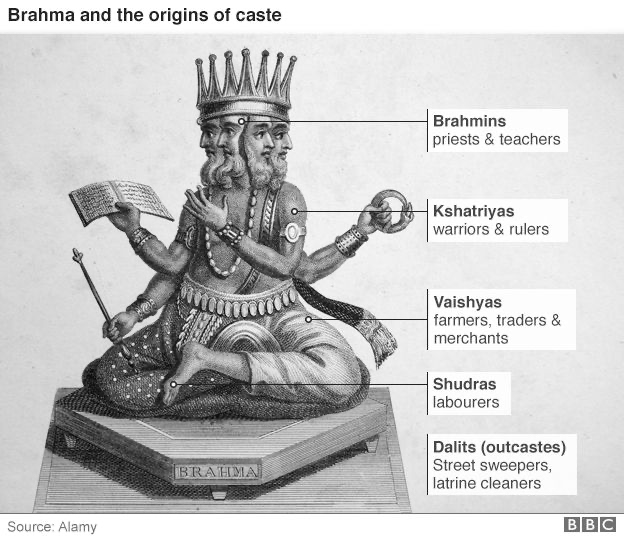
The most practiced caste system has five levels. At the top of the system are the Brahmins. They represent the head of the Hindu god Bharma and are very knowledgeable which is why many of them are priests and teachers. In many of the Hindu texts, they play an essential role in teaching the rulers and princes. The ancient Indian teacher, philosopher, economist, and royal advisor Chanakya is an example of a Brahmin. In the second level are the Kshatriyas, who represent the arm of Bharma. They come from rulers and warriors. An example of these rulers and warriors are the Pandavas from the epic Mahabharata. The Vaishyas come from the thighs of Bharma. They come from farmers, traders, and merchants. Many Vaishyas during old times worked for the rulers and help them run their land through cultivation and trade. The Shudras are the fourth level of the system and they come from the feet of Bharama. They are the working class. They repressed people who used to cook for the ruler’s family, take care of their children, and help build palaces. The Dalits are known as the outcastes and are separated from the other four castes. They are said to come from people who do the “dirty” jobs in the community. The water they touch becomes “unpure” for many of the other castes. They are not only separated but also looked down on by many Hindus that follow the caste system.


Rohith Vemula was a 26-year-old Ph.D. student at Hyderabad Central University in India. He was an advocate for Dalit rights and belonged to the Ambedkar students’ Association. The college he went to had many caste-related incidents in the past. This created hostile situations for students that went there. Rohith and his four friends faced an allegation that they were behind the attack on a member of the Akhil Bharatiya Vidyarthi Parishad Party (student party of the BJP- party that the current prime minister Modi is backed by). They were cleared of all charges in the first inquiry but then the decision was reversed in December of 2015. They started protesting against their expulsion from their college housing facility. This led to Rohith and his friends gaining national attention and support from other Dalit students who for years were discriminated against because of their caste. Many protests were held for the Dailt students' rights. During these times the slogan “Jai Bheem” became the chant for their fight against the biased decision. Rohith dreamed of creating change and he was smart enough to do so yet his dreams were compromised just because he was from a lower caste. On 17 January 2016, Rohith committed suicide. A young mind who fought for the rights of many Dalit students no longer had fight left in him.


Sources:
https://www.bbc.com/news/world-asia-india-35650616
https://www.abc.net.au/news/2019-04-07/indias-untouchables-how-caste-system-affects-politics/10900280
https://www.bbc.com/news/world-asia-india-35349790
Rohith’s Letter:
https://thewire.in/caste/rohith-vemula-letter-a-powerful-indictment-of-social-prejudices

First Massive Protest Across Cuba In 62-Years.


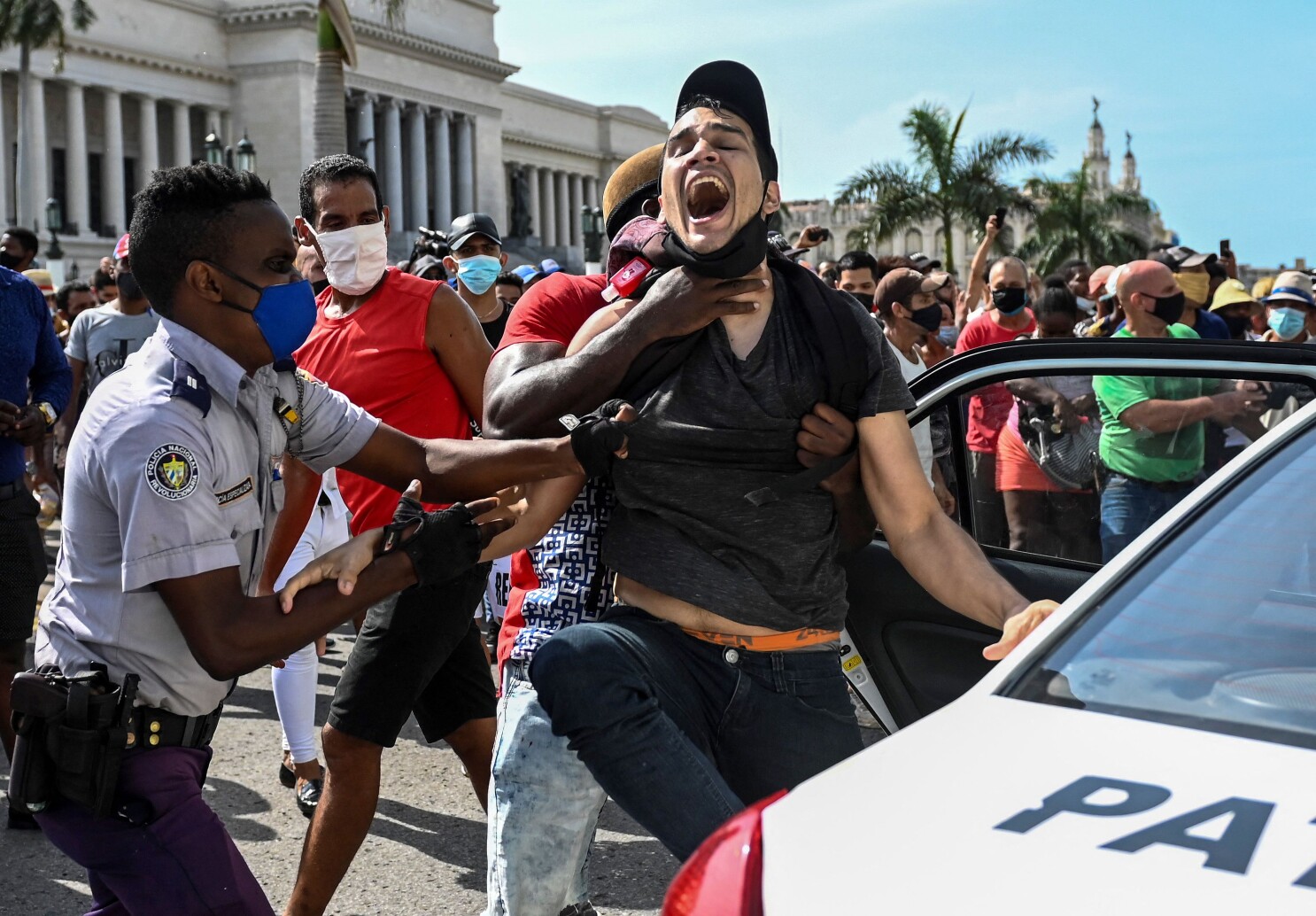
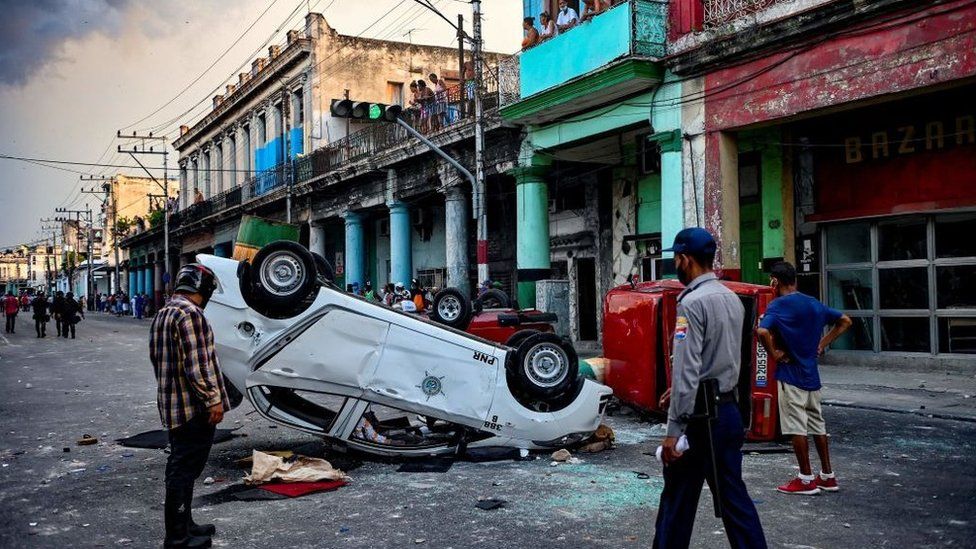
For the first time in over 62 years the People of Cuba took the streets across the island on July 11th of 2021. The protest first started in a Town called San Antonio de Los Banos, in the province of Artemisa (and through the use of social media rapidly expanded across the entire country. The Communist Regime responded by cutting internet access and with strong military oppressive action. The people of Cuba screamed “Libertad '', Their cries were those of “liberty, freedom and change after 63 years of one-party rule” (BBC). This was a historic landfall in Cuba's fight for freedom as the last major uprising took place in the 1990’s.

Biden says U.S. stands with Cuban protesters, but policies slow to change -  Los Angeles Times
(Los Angeles Time)

Cuba has been under a Communist Authoritarian Regime Since January 1st, 1959. This was after Fidel Castro and his revolutionary army Overthrew Fulgencio Batista. At first Castro promised that he wasn't planning on implementing a Communist agenda (NBC). But soon Castro placed Cuba under Soviet wings and proclaimed Cuba as a Communist state in 1961. In 1962, John F. Kennedy strengthened the 1960 embargo against Cuba, as a response. As a result Cuba's International trade has heavily limited the island's foreign trade, costing the regime about $130 billion(NBC). The Cuban regime has heavily rationated goods on the island for a typical Cuban, even the private businesses. These strong government restrictions among others have left the Cuban people heavily dependent on a failed state, with extremely low capacity. There is no food, no medication, and the response of the government to Covid 19 all leading to the tipping point for the Cuban people. The Embargo placed against Cuba by JFK has been the fuel of the anti imperialist and anti American propaganda. As they blame their low capasity on the American Embargo. This has been backed up by radicals in the U.S. like the BLM organization where in a statement they said: “The people of Cuba are being punished by the U.S. government because the country has maintained its commitment to sovereignty and self-determination,”(NBC News). Essentially blaming the American Embargo for Cubas dehumanizing conditions.


In addition there have been violent forms of oppression towards anyone who dares to think differently, leading Cubans to migrate (NBC). The political instability of the island has led to civil unrest. The protest soon led to international demonstrations (NBC). In the U.S the Cuban American population manifested in cities like Miami where they demanded American Military intervention. The call for military intervention came as a result of the regime's strong military response to the manifestors in the Island. The regime sent to the frontline of the manifestation special operation forces called ​​"Black Berets" (BBC). Hundreds of Cubans were arrested, some even being underage (BBC). In a country where the government controls all aspects of life it's to no surprise that protests have been arrested and criminally prosecuted. Many families informed the BBC that they “were given summary trials and that many were sentenced without a defence lawyer present.” This emphasies the level of auhtoritasnism expreinced in Cuba, where the government is able to sentence their citizens to prison without even due process of the law. 


Unrest in Cuba | News, Sports, Jobs - Altoona Mirror
                                                                (Altonna Mirror)


The massive protest in Cuba serves to emphasize the power of the authoritarian regime. The government was able to quickly mobilize to oppress the protestors and cut access to the internet. Shortly after the manifestations the current “president” in power was showcased on national television, as he called for the revolutionaries to combat the protestors (TheNewYorker). Essentially calling for an unfair and bloody civil war, as the Cuban people were defending against the military forces with anything they could find in the streets sticks and rock, while the military had weapons of mass destruction. The protests in Cuba demonstrate the importance of internet access in today’s modern world. With the usage of social plataforma the demonstrations were able to disperse around the island, encouraging others to join the fight for liberation. This also emphasizes the state of low capacity of the Cuban regime, as they are incapable of delivering basic necessities like food and medicine. It’s important to note what this uprising could mean for other authoritarian regimes in the world like in Venezuela, where the seed of “socialism” was planted with the help of the Castro's brothers themselves. And what would it mean if Cubas authoritarian regime falls? Will it be the end of other governments like in Venezuela or Nicaragua since they work to serve each other. Cuba is also facing a challenge of lack of legitimacy as there is not legitimate Cuban head of state (NBC). Fidel Castro, enjoyed nearly 60 years of charismatic legitimacy, always seen as a true hero and father figure of the Cuba of today, but his brother Raul wasn’t that charismatic, and the current “president”, Miguel Diaz- Canel is facing stronger opposition than the other two commander in chief since the start of the Revolution. Its important to emphasize how the idea of charismatic legitimacy can be applied to other country around the world like NorthKorea and China.

Cuba protests: Tax on food and medicine imports lifted - BBC News
                                                                        (BBC)


What can be appreciated from all of this is the start of the end. July 11th of 2021, will go on in the Cuban history books, as a day where fear was lost and the Cuban people started to claim their natural right to life,liberty, and the pursuit of happiness. The “socialist” revolution sold to the Cuban people over six decades ago has turned into an authoritarian nightmare, where those in power feed off those in the bottom.


#VivaCubaLibre


https://www.youtube.com/watch?v=Lu7Se4pczA4


https://www.bbc.com/news/world-latin-america-58255555


https://www.usatoday.com/story/opinion/voices/2021/08/13/cuba-protests-freedom-communism-socialism-july-inflation-food/8099165002/


https://www.usatoday.com/story/opinion/voices/2021/08/13/cuba-protests-freedom-communism-socialism-july-inflation-food/8099165002/

Coup doomed for failure


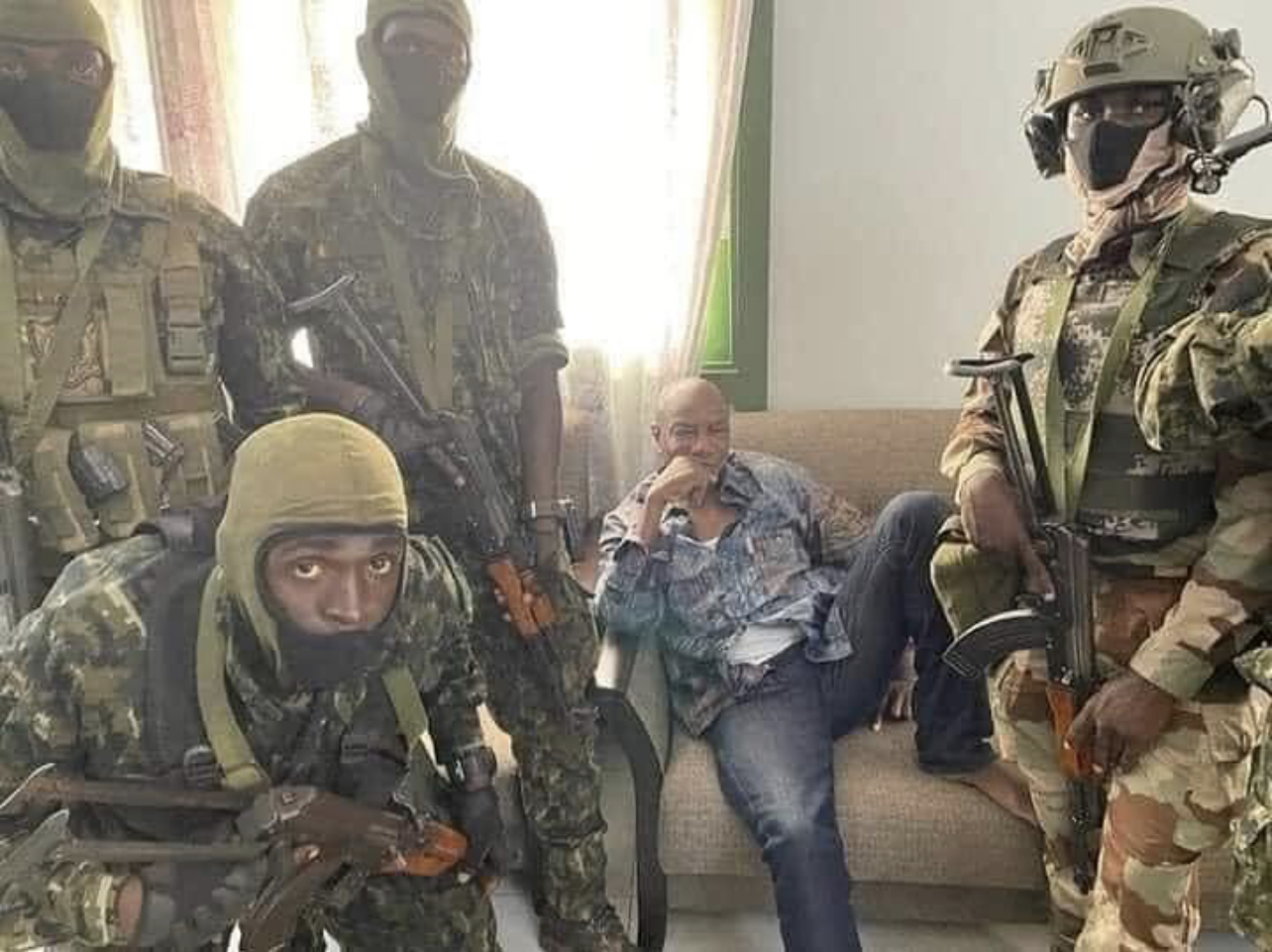
On September 5, 2021, President of Guinea Alpha Condé was captured by the country's armed forces in a coup d'état after gunfire in the capital, Conakry. Condé, 83, took office 11 years ago in the country’s first democratic election since independence from France in 1958. A lot of disapproval and  deadly riots sparked last fall after Condé sought a third term which is against Guinea’s democratic constitution. This coup d'état was led by special arms forces commander Mamady Doumbouya contending that people’s basic human needs and rights weren’t being met. The Junta live streamed on national television announcing the arrest of Conde and the dissolvement of the government”.


Who is Doumbouya?

41 year old Doumbouya is a successful commander of Guinea’s elite special forces group with training from the U.S, French, and Isreal military. On October 1, 2021 he was sworn in as interim president of Guinea. He promises to oversee a transition that would include the drafting of a new constitution, fighting corruption, electoral reform and the organization of free and transparent elections.The junta has said its members will be barred from standing in the next elections.


What does this mean for Guinea now?

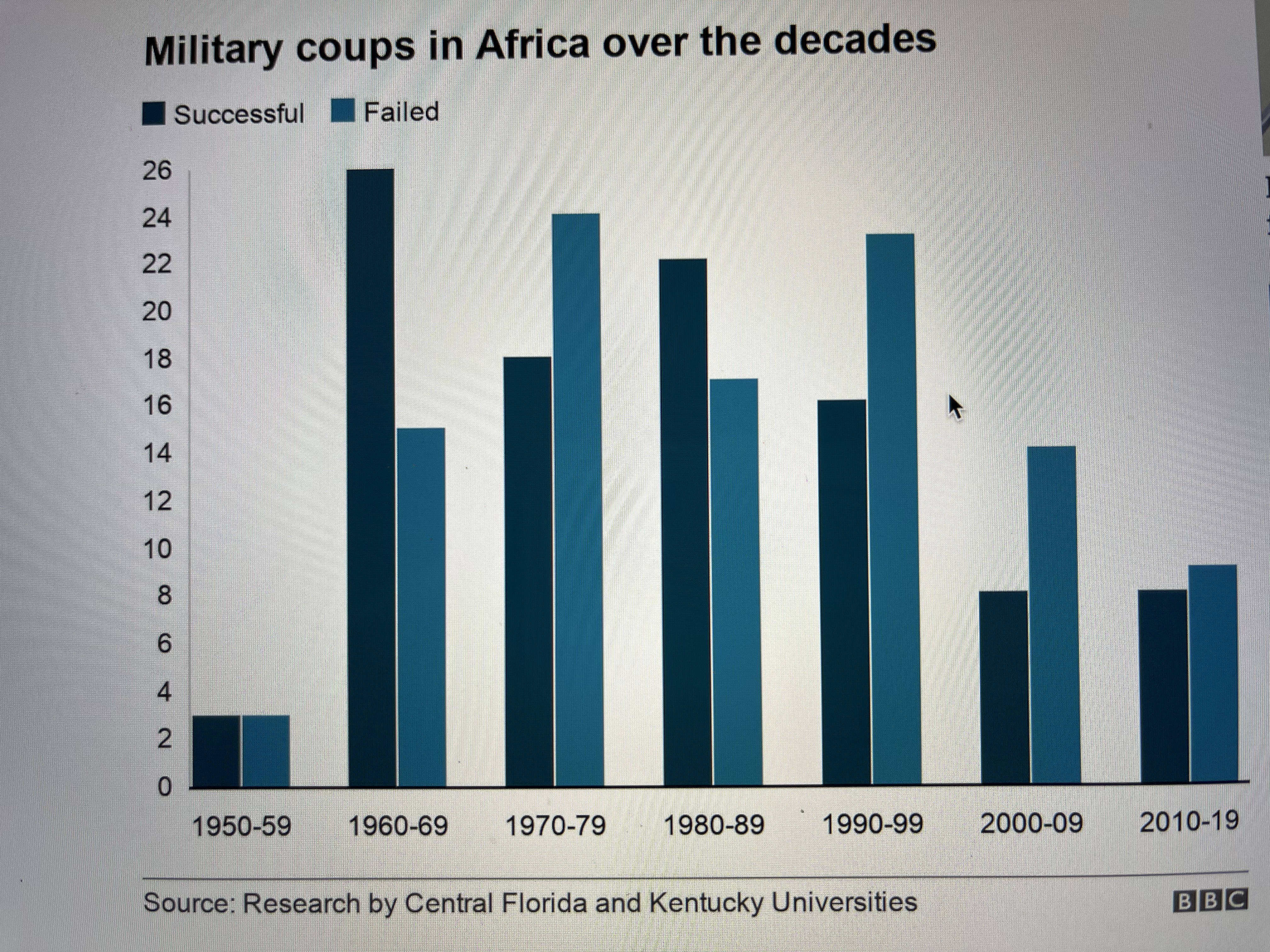
It's the fourth attempted coup in West Africa in just over a year. There have been two military takeovers in Mali and a failed attempt in Niger since August 2020. This successful coup may lead to more instability for guinea in addition to making the region more vulnerable to attacks by Islamic Militant. The country is one of the largest suppliers of bauxite, a key source of aluminium. And this violent disruption may severely impact commodity prices. 


How did international leaders respond?

 UN secretary-general Antonio Guterres and the African Union have condemned the apparent coup and demanded the immediate release of President Condé. The Economic Community of West African States, a regional bloc, has frozen assets and imposed travel bans on the junta, hoping to encourage a swift return to democracy. A spokesperson for the U.S. State Department also issued a statement denouncing the military takeover, saying, "violence and extra-constitutional measures will erode Guinea's prospects for peace, stability, and prosperity."


The new coup/ government is destined for failure?

 With no-one to hold them to account, there's no guarantee they'll deliver on their promises. The incoming transitional government will be ill-equipped to respond to civil grievances and lacks sufficient accountability measures to ensure good governance. Ultimately, it is the Guinean people who will pay the price of this democratic setback.These power grabs threaten a reversal of the democratization process Africa has undergone in the past two decades and a return to the era of coups as the norm.This increasing probability of coups will make Africa in general less predictable and stable, a negative for investors that could end up worsening the economic situation.


https://www.washingtonpost.com/national-security/2021/09/06/guinea-coup-explained/

guinea coup 2021

https://www.bbc.com/news/world-africa-58461971

https://www.csis.org/analysis/guinea-causes-and-consequences-west-africas-latest-coup

https://www.bbc.com/news/world-africa-58453778

https://www.cnn.com/2021/09/12/africa/africa-coups-resurgence-intl-cmd/index.html

https://theowp.org/mamady-overthrows-the-alpha-the-impact-of-guineas-coup/


Monday, October 04, 2021

96-Year-Old Nazi Skips Her Court Date After Being Arrested by German Police

Irmgard Furchner is a 96-year-old former secretary in a concentration camp, and she is now facing more than 11,000 counts of accessory to murder. Her court date was set for last Thursday, September 30th, and she failed to appear in front of the judge in Germany. Furchner has previously informed various journalists and the judge that she did not want any part of this trial, but she was contacted but the police after the court reported her for missing her trial date. There have been decisions made by the court that she would not have to sit in for an extended trial because of her age, so they were already planning to have much shorter court appearances in this trial. Even under these circumstances, it was assessed that Furchnder is healthy/ "physically fit" enough to stand and appear before the judge, and if she does not do so at her new court date October 19th, she will be facing even further legal troubles. Efraim Zuroff, a head Nazi hunter working in one of their main offices in Jerusalem, told the press that he feels, "if she is healthy enough to flee, she is healthy enough to be incarcerated" (NPR).


Irmgard Furchner is just one example of the many people that the Germans have arrested recently in regards to war crimes during World War 2. Furchner was indicted in February of 2021 after an extensive investigation into the work she was doing as a secretary to the commander at the Stutthof concentration camp which was located in Poland between June 1943 and April of 1945. At this camp in particular, there were more than 60,000 people killed by being given lethal injections of things like gasoline, or by being shot or starved to death. This was mainly targeted of course at Jewish people, but there were also many other groups such as anyone suspected to be involved in “homosexual activity”, political prisoners, accused criminals, and Jehovah’s Witnesses. Regarding Furchners' case, “the court said in a statement before the trial that the defendant allegedly ‘aided and abetted those in charge of the camp in the systematic killing of those imprisoned there between June 1943 and April 1945 in her function as a stenographer and typist in the camp commandant's office'’” (NPR). This particular indictment was part of the attempts that German prosecutors are currently making (which has been going on for around ten years) to hold the less prominent figures of the Holocaust accountable for their highly illegal actions. These prosecutors also have to deal with the challenge of working quickly, because these people are all extremely old at this point. Last year there was another conviction of a 93-year-old guard from the same concentration camp who had over 5,000 counts of being an accessory to murder. 


Sources:

https://www.nytimes.com/2021/09/30/world/europe/irmgard-furchner-germany-nazi.html


https://www.npr.org/2021/09/30/1041821397/nazi-concentration-camp-secretary-flees-trial-irmgard-furchner


https://www.abc.net.au/news/2021-10-01/former-nazi-camp-secretary-caught-after-skipping-trial/100505870


Guantanamo Bay: A Violation of Human Rights & International Law


Guantanamo Bay: A Violation of Human Rights & International Law

Background Pt I: What is Guantanamo Bay? 

Guantanamo Bay is a highly militarized detention center in Cuba, described by the ACLU (American Civil Liberties Union) as a “symbol of injustice, abuse, and disregard for the rule of law” both “at home and around the world” and Amnesty International as a “symbol of a government’s failure to respect its international human rights obligations” (USA: Right the Wrong, 2). The prison was established in 2002 by the Bush administration as part of the war on terror in response to the 9/11 attacks and is known for its use of both psychological and physical torture along with coerced confessions. It is also known for escaping the law and denying detainees of their basic human rights. In The International and Comparative Law Quarterly, attorney Johan Steyn states that “the purpose of holding the prisoners at Guantanamo Bay was and is to put them beyond the rule of law, beyond the protection of any courts, and at the mercy of the victors. The procedural rules do not prohibit the use of force to coerce prisoners to confess” (8). The lack of justice Steyn refers to at Guantanamo Bay represents a human rights crisis and has received significant international attention as a result. It has also raised questions as to what a democracy really means.

  • Background Pt II: What is the war on terror?


    • According to Brown University’s Costs of War project, the war on terror has cost the United States around eight-trillion-dollars and over 900,000 people. One of its main objectives was to minimize the threat of terrorism in the Middle East and all around the world. It has been emphasized in the news in the past few months because of the United States withdraw of troops from Afghanistan and the takeover of the Taliban.

Putting it in Perspective Part I: An Individual's Story (from the New York Times)

Mohamedou Ould Slahi


Mohamedou Ould Slahi was tortured in Guantanamo Bay in the year of 2003. He faced isolation, abuse from both guards and attack dogs, sleep deprivation, and threats from interrogators. He is now fifty-years-old and free in his homeland of Mauritania after spending almost fifteen years as a detainee. He explains that during his time in the prison he was “very naïve” and “did not understand how America works.” He now has a successful memoir and stated “I wholeheartedly forgive everyone who wronged me during my detention. I forgive because forgiveness is my inexhaustible resource.” Despite the seemingly hopeful aspect to his story and his survival, he may never recover from what he endured at Guantanamo, as he exhibits multiple signs of PTSD.


Putting it in Perspective Part II: International Obligations & the Law


United Nations
: The United Nations has made it clear they do not support the treatment of detainees at Guantanamo Bay, as it violates both human rights and international law. Below are some key quotes from their experts.

  • "We welcome the goal of closing the detention facility, consistent with our previous calls to end impunity for the human rights and humanitarian law violations committed during the war on terror.”

  • “Democracies can and should do better, and the United States must clearly put this dark chapter in its history behind it and demonstrate that it is not only prepared to close the prison facilities but ensure that such practices cannot be used again, and that the crimes committed there will not remain unpunished."
  • "Many of the individuals currently and previously held at Guantanamo Bay have spent the bulk of their lives in a Kafkaesque situation where the rule of the law was meaningless."

Amnesty International: Amnesty International has published a 52-page report about the wrongdoings and injustices that have been occurring at Guantanamo Bay. Below are some key quotes from the report.

  • “Those still held in Guantánamo today were originally detained by authorities in Afghanistan, Djibouti, Egypt, Georgia, Kenya, Iran, Pakistan, Thailand, Turkey, and United Arab Emirates. As far as Amnesty International is aware, none had access to any judicial oversight before being handed over to US custody."

  • “After a period in the USA in which many pressing social, environmental and justice issues have been set back, the Biden administration’s plate will undoubtedly be full. But not so full as to be unable to prioritize and resource closure of Guantánamo, to promptly begin to work for a lawful resolution of each detainee case, and to commit to a new and full respect by the USA for international human rights law.”

  • “While not all differential treatment between citizens and non-citizens violates international law, it does if it comes, as here, at the expense of rights reflected in the Universal Declaration of Human Rights (UDHR) and enshrined in the International Covenant on Civil and Political Rights (ICCPR) and other international instruments binding on the USA.”

Conclusion: A Human Rights Crisis  

The treatment of prisoners at Guantanamo Bay is a breach of international human rights law and represents a broader human rights crisis. The use of torture at Guantanamo is unacceptable, and demonstrates an incredibly flawed system of justice, in which justice is not truly served. Change needs to occur. International along with domestic pressure to end Guantanamo Bay has been present for years, and while past United States presidents have failed in terminating Guantanamo, it will be notable to see what will happen in the current era, and how Guantanamo will make history. In their report, Amnesty International lists a series of suggestions to the Biden administration with reference to international law:


Commit to an assessment of the USA’s relationship to international law, and to accepting all outstanding recommendations made to it by the independent expert monitoring bodies established under human rights treaties” (48).


Will the Biden administration finally end Guantanamo Bay, and what will this mean in terms of the real-world significance of democracy?


Works Cited 


Brown University. “Costs of War.” Watson Institute of International & Public Affairs. https://watson.brown.edu/costsofwar/.


Rosenberg, Carol. “The Legacy of America's Post-9/11 Turn to Torture.” The New York Times. The New York Times, September 12, 2021. https://www.nytimes.com/2021/09/12/us/politics/torture-post-9-11.html?searchResultPosition=8.


Steyn, Johan. “Guantanamo Bay: The Legal Black Hole.” The International and Comparative

Law Quarterly 53, no. 1 (2004): 1–15. http://www.jstor.org/stable/3663134.


“UN Rights Experts Call for Us to Address Ongoing Violations at 'Kafkaesque' Guantánamo Military Prison | | UN News.” United Nations. United Nations. Accessed October 5, 2021. https://news.un.org/en/story/2021/02/1085492.


“USA: Right the Wrong: Decision Time on Guantánamo.” Amnesty International, June 6, 2021. https://www.amnesty.org/en/documents/amr51/3474/2021/en/.


Philippine President Orders Cabinet To Ignore Wrongdoing

What Happened

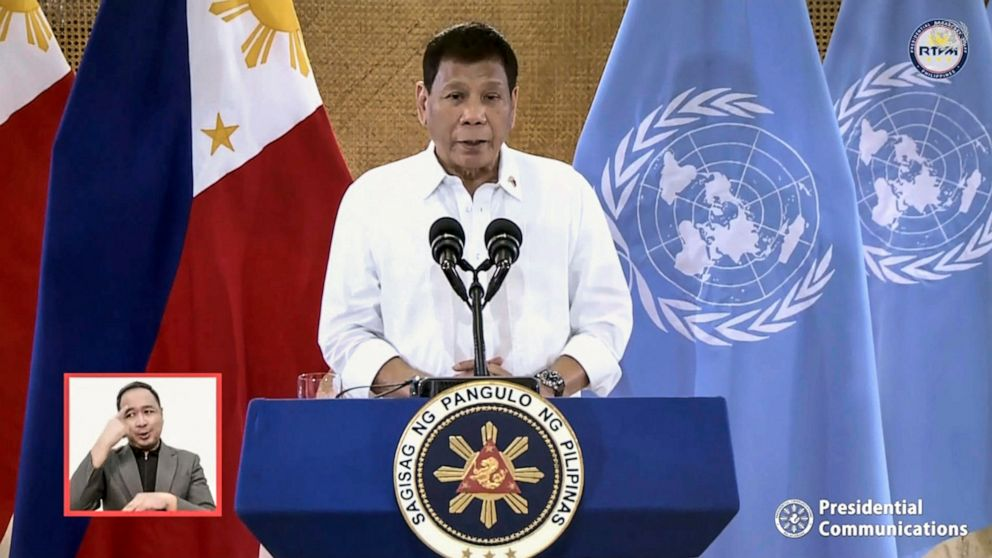
Philippine President Rodrigo Duterte on Friday banned cabinet officials from attending a Senate inquiry of suspected irregularities in massive government purchases of medical supplies.  Duterte on television Thursday night told the officials that he was making a written order banning them from attending the inquiry, which included three secretaries dealing with the Covid-19 pandemic. Along with announcing the banishment, Duterte also took the opportunity to bash senators, accusing them of using the probe to gain a political advantage in the country's upcoming elections. The Cabinet's banishment comes after Duterte's September 14th announcement that members had to earn his consent before attending the senate hearings. In the Philippine constitution, cabinet officials must obey Senate summons. If they are ignored, officials can be arrested for contempt. When confronted with this obstacle, Duterte explained, "I am the commander in chief anyway," ordering the military and police to refrain from aiding the Senate Sergeant at arms from enforcing arrests. 


Background on Investigation

Senator Richard Gordon, the probe leader, and others questioned whether there was overpricing and other abnormalities in the Philippine's purchasing of masks and PPE. Why? In 2019, Pharmally Pharmaceutical Corp., the company that supplied the Philippines with PPE, only had a capital of $12,500 but was able to secure multi-million dollar contracts. If that isn't suspicious enough, one of Duterte's former economic advisors was a Chinese Businessman with ties to Pharmally. Interestingly enough, in 2020, Duterte ordered a government-wide corruption probe because of the ongoing government corruption. Now, he is trying to impede the same activity he supported, implying he has something to hide. If Duterte knew that senator Gordon would not find any evidence, he would have his arms outstretched, displaying his innocence to the public. By doing the complete opposite, Duterte is showing his constituents that he is indeed corrupt and cannot own up to his mistakes.


Importance

Duterte asserting more control over his Cabinet could potentially be a stepping stone to more major constitutional defiance. Usually, when a leader in power defies laws and is increasingly controlling, it leads to an authoritarian regime, as seen in Russia. Even though Putin is technically the president, his control and defiance of the law made him a tyrannical ruler. If Duterte's constitutional disrespect isn't stopped, he could become a dictator, destroying the Philippines' democracy. 


Links:

https://www.washingtonpost.com/business/philippine-leader-asks-officials-to-ignore-corruption-probe/2021/10/01/8378fb02-22be-11ec-a8d9-0827a2a4b915_story.html

https://abcnews.go.com/International/wireStory/philippine-leader-asks-officials-ignore-corruption-probe-80348836

https://newsinfo.inquirer.net/1352947/duterte-orders-government-wide-probe-of-corruption

https://www.reuters.com/world/asia-pacific/philippines-duterte-accused-stifling-scrutiny-senate-probes-2021-09-14/


Germanys Most Diverse Parliament Makes History


About a week and a half ago, Sunday, September 26th, marked the national election for Germany's lower House of Parliament. The results were described as "more diverse and inclusive than ever" (usnews). For the first time in the history of the German parliament, there were two transgender women, at least three people of African American descent, and the number of females elected increased. The inclusivity and diverse representation of parliament will contribute to Germany's equality within their democracy and set examples for leadership opportunities for countries all around the world.


The Reichstag Building- the German parliament Bundestag building (wiki). 


Germanys center-left social democrats won the majority vote in the national election. They out beat Chancellor Angela Merkel’s Christian Democratic Union who had been in office for 15 going on 16 years. Members from all different backgrounds and orientations were elected to parliament. Hakan Demir, a member of the center-left Social Democratic Party, is one of the hundreds of people who ran for the lower house of parliament. One of the newly elected immigrants was Awet Tesfaiesus, is the first black woman to serve in parliament. Just at the age of 4, Tesfaiesus fled from Eritrea with her family to Germany. She is a member of the Green party and will represent Werra-Meissner constituency. Another new Social Democratic lawmaker is Armand Zorn who was born in Cameroon and came to Germany at age 12. Reem Alabali-Radovan, is the daughter of Iraqi migrants and she will serve in parliament, and Serap Guler the daughter of Turkish migrants, she has served as a deputy minister for the North Rhine-Westphalia state and will serve in parliament as well (usnews, dailysabah). 


Some legislation to be enacted in Germany's parliament is allowing LGBTQ mothers to adopt children, specifically Ganserer pushing for this. Slawik has pushed for homophobia, transphobia and improving laws on anti-discrimination. Even though homosexuality was decriminalized in 1969, hate crimes and homophobia are still very much present in Germany. Elected leaders will act on these issues and hopefully push for laws to protect these groups (AA). 


The key issue in German elections is that the party who wins does not win the majority and does not get to appoint the next Chancellor. This is because majorities are rare and there are many parties in Germany such as the green party, SDP, and others all competing during an election. For the next Chancellor to be appointed, first a coalition government must be formed, which can take a decent amount of time even months and Merkel will remain in office till they determine the next Chancellor. In a coalition, members of different political parties come together to form a government due to reason that no party won the absolute majority. The main contenders for the Chancellor title are Olaf Scholz who is a member of the SPD and Armin Laschet who is a member of the CDU party. Their task will be to engage with parties to attempt to form a coalition to ultimately win the seat of Chancellor (cnbc, bbc). 

Olaf Scholz has claimed that his leadership in government would offer relationships with the United States. His quote states,

"It is important that we understand ourselves as democracies and that we see that in a world that is becoming more dangerous it is important that we work together, even if we do have conflicts in one or the other question" (France24). 

Germany’s Turkish community with about 3 million people, is one of the largest ethnic groups, but they have been underrepresented in political life and in the Bundestag for a long time (AA). From this election, at least 18 politicians with Turkish roots and most of them being women, will take their seats in Germany’s new parliament. The Turkish community has finally been given the opportunity for their voices to be heard and their hope for political representation.


This chart depicts the percentages that each party won in this past election. As noted, the Social Democratic Party (SDP) won the highest amount of votes. Then in second was the Christian Democratic Union, third was the green party, fourth was the free democratic party and alternative for Germany came in last.

More than 500 candidates with immigrant roots ran for parliament this year and many of them won the election. As a German society, representation for those minority groups, immigrant groups, and citizens generally underrepresented was lacking. The increase in population and diversity in Germany has pushed for an accurate representation of the population and this is exactly what this year's election provided. With more diversity in parliament, the representation of Germany will be more focused and inclusive to its citizens and the ideals supporting a democracy. This includes political equality, fair representation, and the importance of new perspectives, ideas, and morals from people outside of the German identity. Countries all over the nation can look to Germany for inspiration as they take their government in the direction of positive change.


Sources:

https://www.usnews.com/news/world/articles/2021-09-28/germanys-new-parliament-is-more-diverse-than-ever-before

https://www.aa.com.tr/en/europe/germany-s-parliament-more-reflective-of-diverse-population-after-elections/2376203

https://www.dailysabah.com/politics/elections/18-lawmakers-of-turkish-descent-win-seats-in-german-elections

https://www.cnbc.com/2021/09/27/germany-election-whats-next-after-gridlock.html

https://www.bbc.com/news/world-europe-58712619

https://www.france24.com/en/europe/20210926-live-germany-goes-to-the-polls-to-elect-new-parliament-and-merkel-s-successor

https://en.wikipedia.org/wiki/Reichstag_building

Thursday, September 30, 2021

Vaccines Don't Grow on Trees... Or Do They?


    At this time, the global population is very well aware of what a coronavirus is and more relevantly what COVID-19 is. Spanning since December of 2019, this virus has reshaped the way that the global population has lived its past year and nine months. One of the attributes that has arisen has been a need to prevent the spread of the virus via vaccination efforts. Before the pandemic, developing vaccines was a rather closed industry and once one vaccine was found it was monopolized. However, COVID-19 broke this pattern inviting a counsel of the minds to challenge one another and try to come up with the best vaccine possible. With such a competitive spirit, this search has ultimately led to issues of political conflict and overall hurdles in making vaccines available. Worldwide, safe access to vaccines for those who desire to be vaccinated should be non-negotiable regardless of the form which the vaccine takes.


PHOTOGRAPH BY PHARMAJET

    National variations have challenged scientists globally to push medical boundaries toward groundbreaking extents. India's rendition, Zydus Cadila, is revolutionary in that "it's the world's first DNA vaccine, and it's also needle-free." This vaccine, ZyCoV-D, is administered through the firing of fluid at a high frequency to cells in the skin making it easier to administer with a decreased threat of biohazards or cross-infections. Further mind-boggling leaps have been made, such as the Canadian effort to grow vaccines on plants, specifically the Nicotiana benthamiana to ultimately become a quick and inexpensive option. The concept of developing vaccines through this plant works off of the fact that it contains proteins that mimic the structure of the virus, but does not contain any genetic material. Strides like these are opening doors to boundless medical possibilities.

PHOTOGRAPH BY MATHIEU BELANGER, REUTERS

    However, it is not all promising. Nations such as Iran and Taiwan are finding political unrest in vaccines they will promote. Despite developing their own, COVIran Barekat and Medigen respectively, these nations faced hardships with the virus with Iran itself reporting 700 daily deaths just last month. Iran resorted to creating COVIran Barekat out of desperation after U.S. sanctions limited their ability to acquire more widely used forms of vaccinations. Similarly, Taiwan developed Medigen refusing Chinese vaccines such as Sinopharm and Sinovac due to political conflict. Vaccine nationalism has also been a hurdle against widespread availability. Though it has arguably been done well by the Cubans, having given patriotic nomenclature to its vaccines. Though the Abdala vaccine, Soberana 2, and single-dose Soberana Plus all inspire pride in the Cuban people promoting vaccination domestically, many other nations see the vaccination race as a clear, one-winner game. Such as the Russians with their vaccine, Sputnik V, that has left Russia to portray itself as a world leader in science and foreign policy (despite domestic speculation of the vaccine) ultimately causing upheaval in European nations.

PHOTOGRAPH BY AGÊNCIA BRASÍLIA

    This competition among nations has left under-developed nations out as well with high-income countries reserving the bulk of the projected produced vaccines for the year. These nations are then left to develop their own (with very limited capabilities and funding) or remain unvaccinated. Ultimately, vaccination for the COVID-19 pandemic has been a scientific catalyst yet also a catalyst for international dispute. In order to put an end to this pandemic, its variants, and ultimately this international discord, the opportunity to make safe access to vaccination a global phenomenon is paramount regardless of the demographic composition of the nation. For this to be conceivable, concessions in pride and income must be made by corporations and national governments worldwide.

Sources:

 Kampfner, John. 2021. “Vaccine Competition May Now Be the World's Best Bet.” Chatham House – International Affairs Think Tank. https://www.chathamhouse.org/2021/06/vaccine-competition-may-now-be-worlds-best-bet (September 30, 2021).

Brasília, Agência. 2021. “Covid-19 Vaccine Viles Photo.” Flickr. https://www.flickr.com/photos/64586261@N02/ (September 30, 2021).

Handley, Erin. 2021. “Iran Banned US Vaccines, Taiwan SNUBBED China's. Here's What They Came up with Instead.” ABC News. https://www.abc.net.au/news/2021-09-22/covid-19-vaccines-homegrown-vaccine-nationalism-world/100464976 (September 30, 2021).

“Needle-Free Injection Technology.” 2021. PharmaJet. https://pharmajet.com/ (September 30, 2021).

“What Is Coronavirus?” Johns Hopkins Medicine. https://www.hopkinsmedicine.org/health/conditions-and-diseases/coronavirus (September 30, 2021).

Featured Post

Turkey's Ban on Insults against Erdogan

 Since 2005 Turkey has had a law against insults against Erdogan known as Article 299. The article declares that citizens can be imprisoned ...